Portland & Sugar
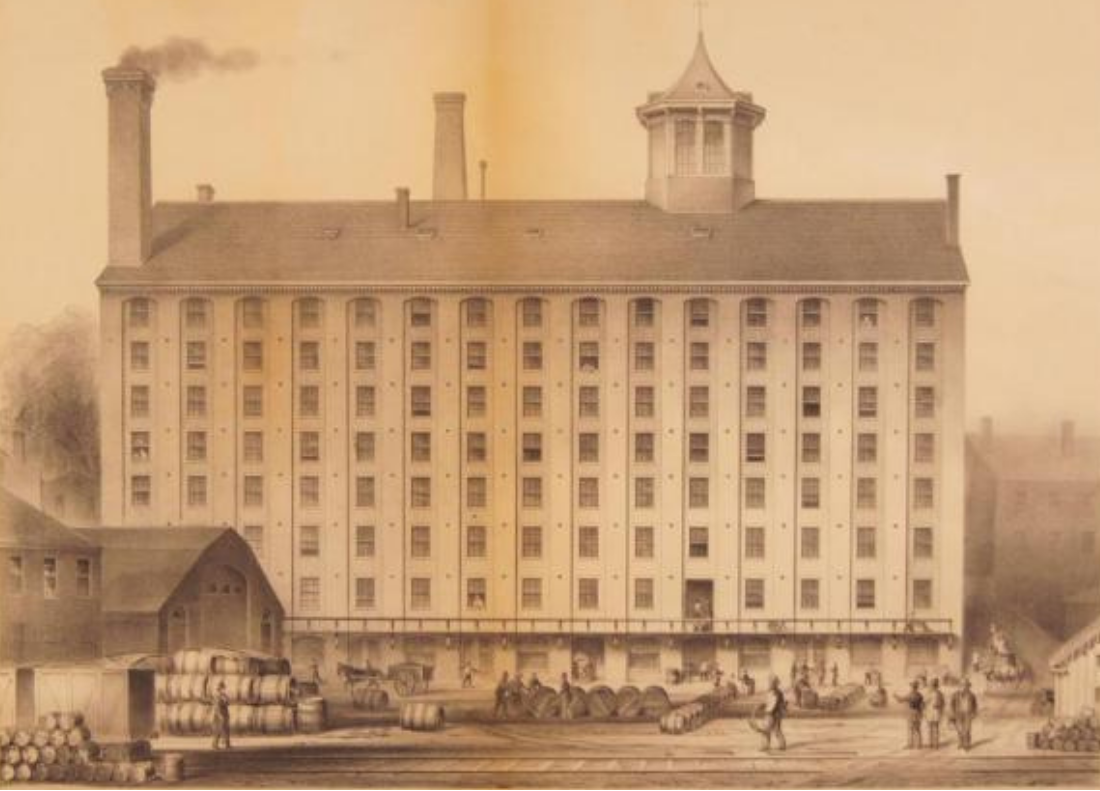
One of the largest buildings on the Portland waterfront in the 19th century was John Bundy Brown’s sugar refinery at the corner of Maple and York streets.
In the mid 1800’s, Portland imported three times as much molasses as did Boston. The Portland Sugar House, which opened in 1845, was processing 200 hogsheads (63-gallon casks) of molasses every day. By 1855, the business employed between 150 and 200 workers. Ten years later, it employed nearly 1,000 individuals. By 1860, 20 percent of all the molasses imported into the U.S. was processed right here in Portland, more than in any other city in the United States.
Where did all that molasses come from?
While the Portland Sugar House was all but destroyed in the Great Fire of 1866, J.B. Brown & Sons continues to operate today.
From the firm’s website: “Brown’s successors form an unbroken chain that has owned, developed, and managed commercial and industrial properties since 1830. Still family-owned today, J.B. Brown & Sons is characterized by its stable ownership and conservative long-term outlook.”
This research was compiled as part of The Walk to Unsettle Portland, which took place in Portland on June 22, 2024. For more information about this walk, click here.
For more research related to this area, click on the tags below. To download a hi-res version of the posters below for educational use, please contact where@atlanticblackbox.com.
This walk was a collaboration with The Third Place,Maine Audubon, and Atlantic Black Box.
Adapted from content provided by Seth Goldstein & Maine Historical Society