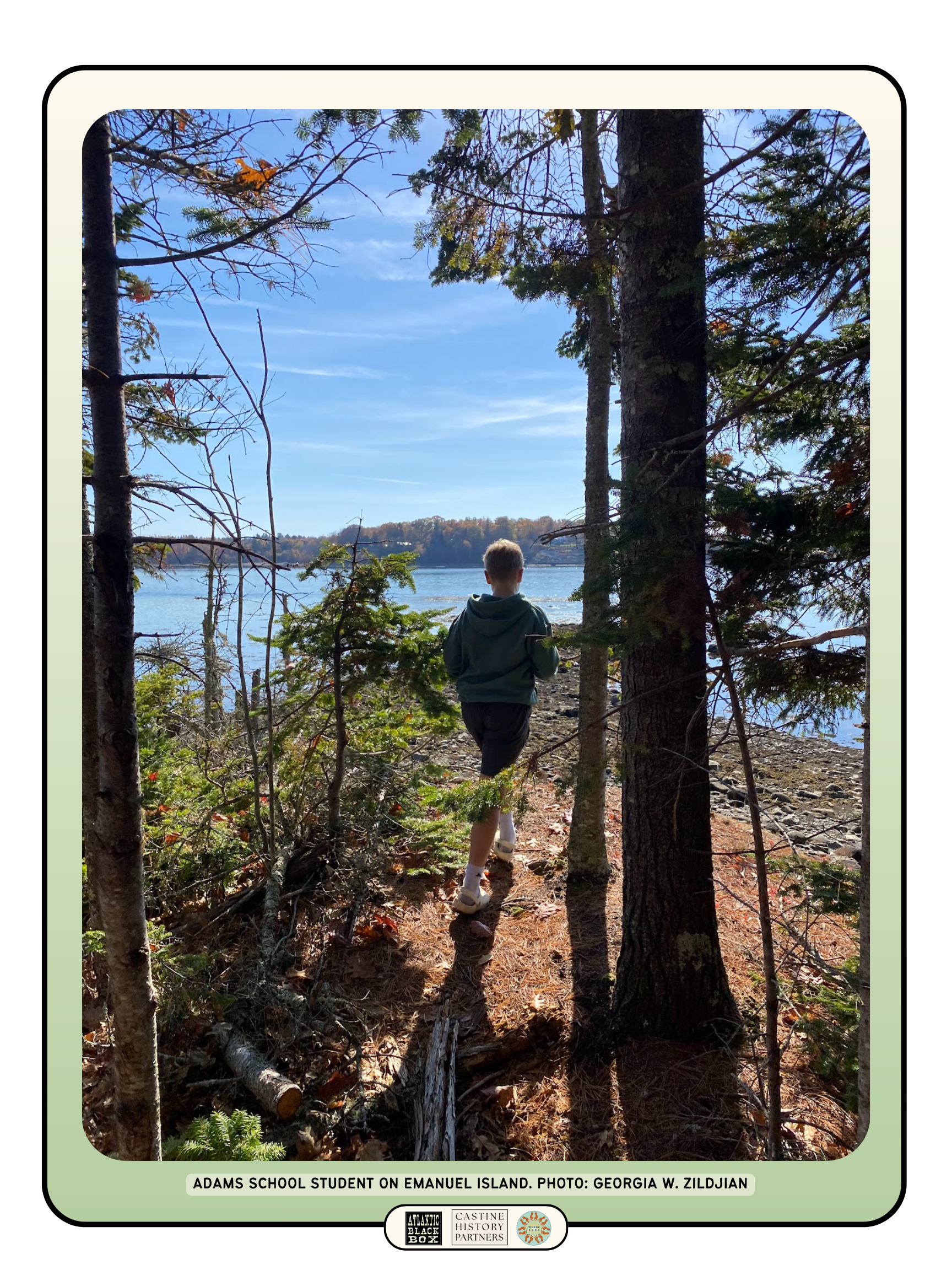
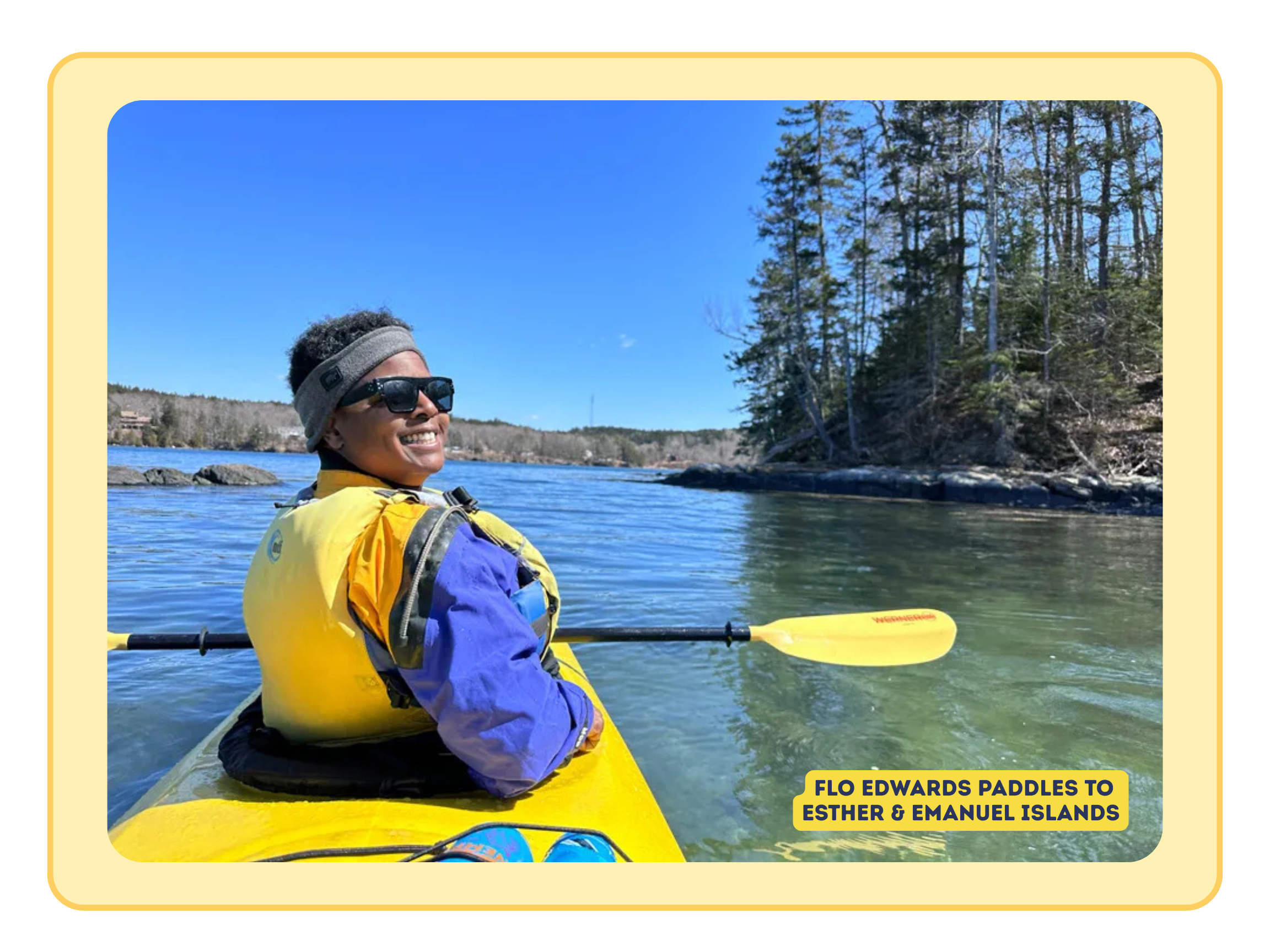
The wewətanakok - Esther & Emanuel Islands
What’s in a name?
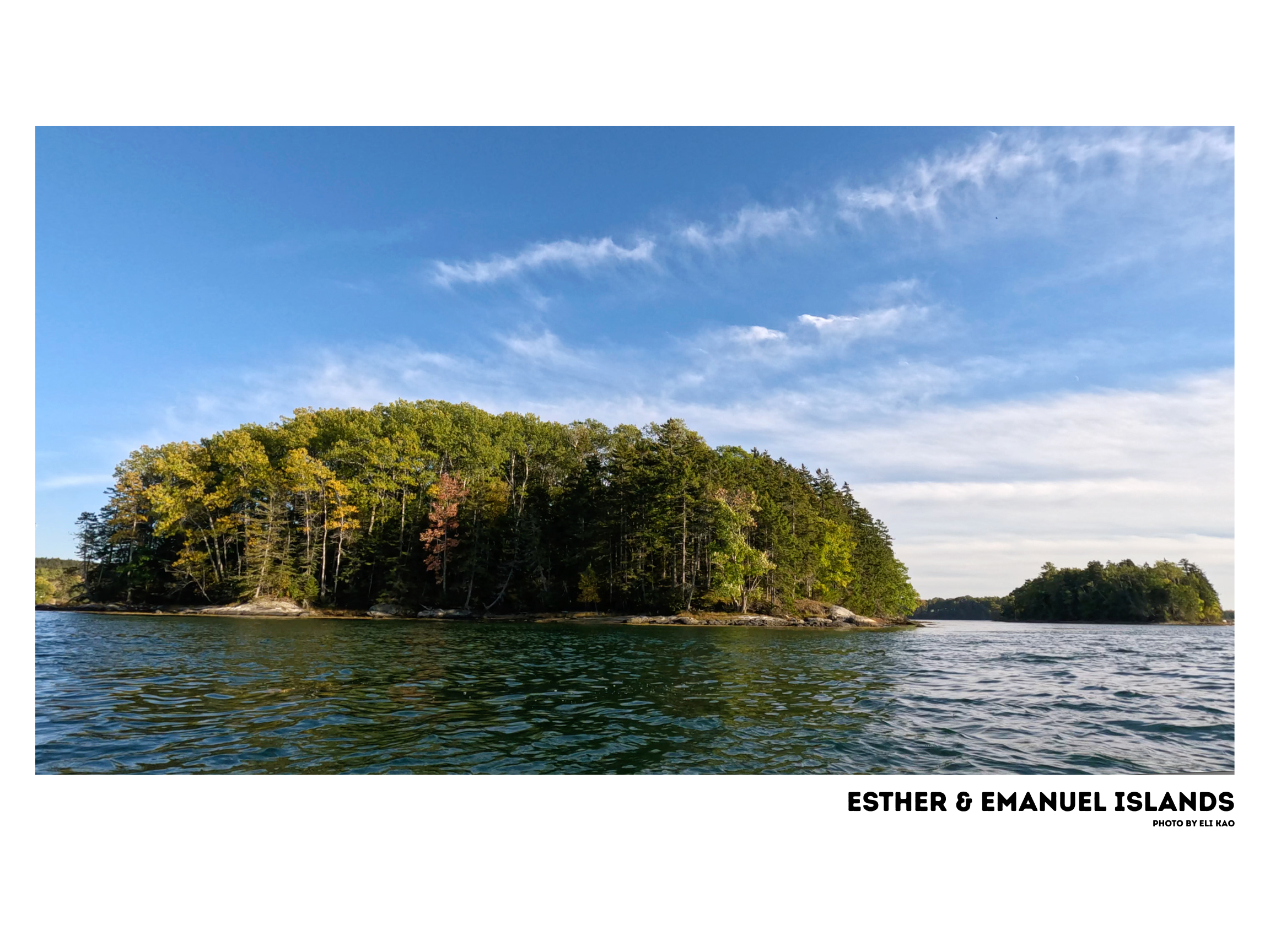
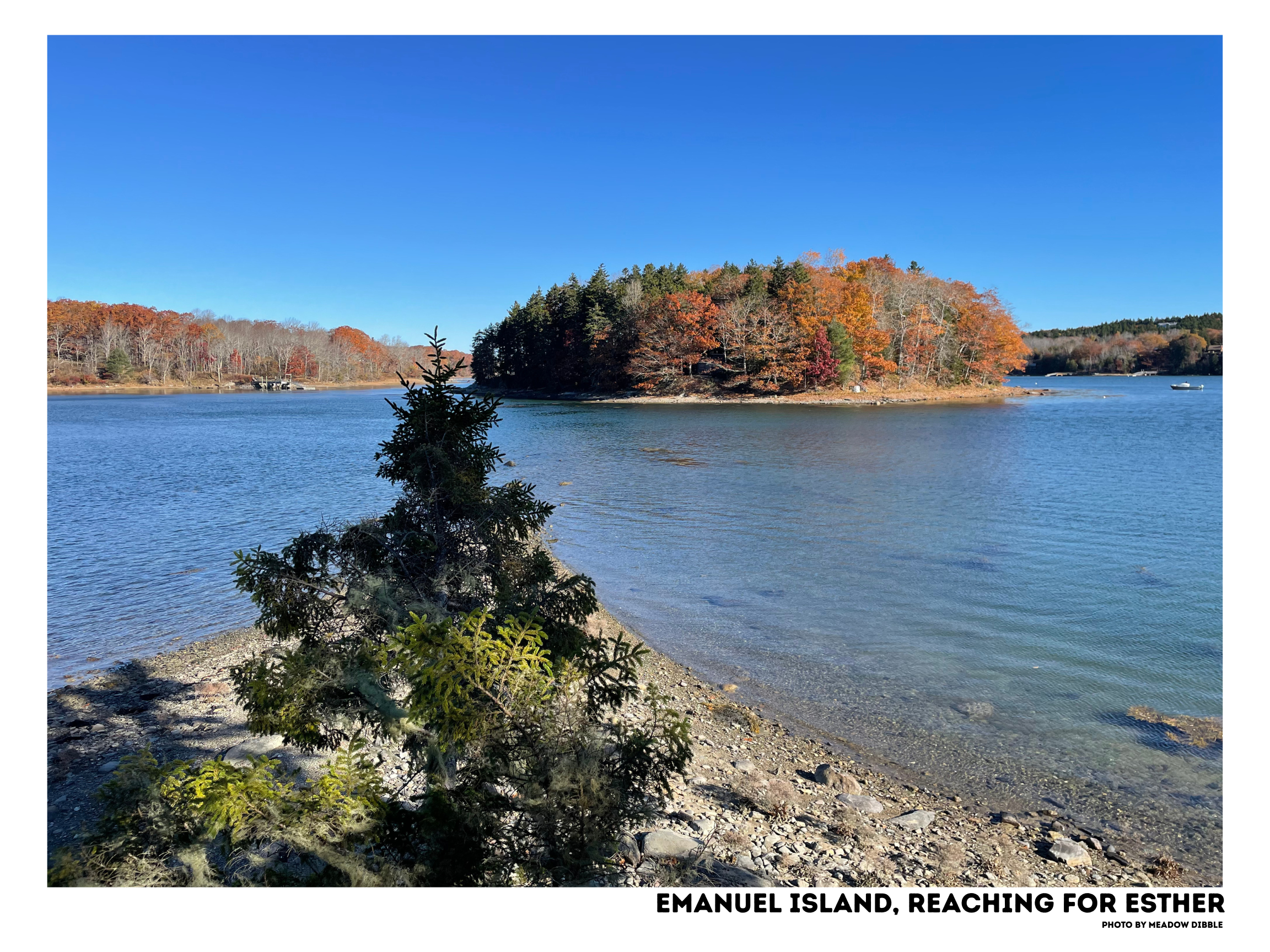
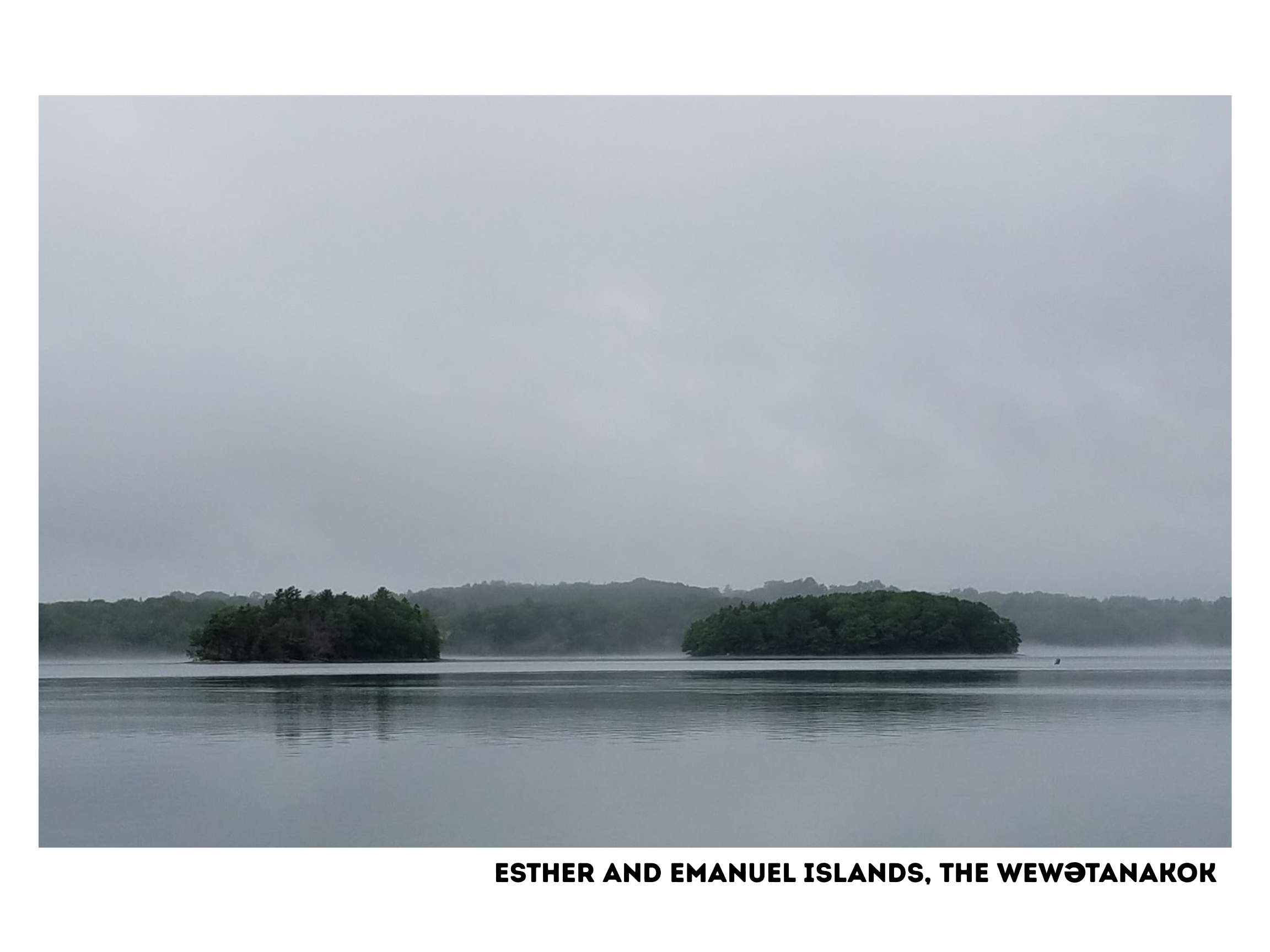
These islands, formerly known as the “Negro Islands” are now called Esther and Emanuel, with the collective chain name of wewətanakok (wheh-WOOD-na-go).
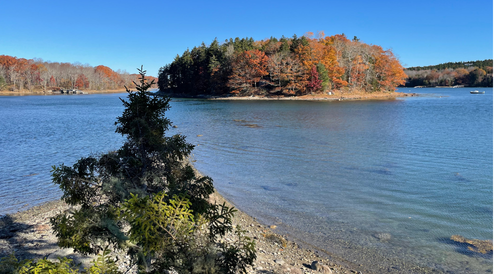
View of Esther island from Emanuel Island. Photo: Meadow Dibble
The islands sit at the mouth of the (Bagaduce River), the gateway to a watershed that has been significant to Penobscot peoples and their ancestors since time immemorial.
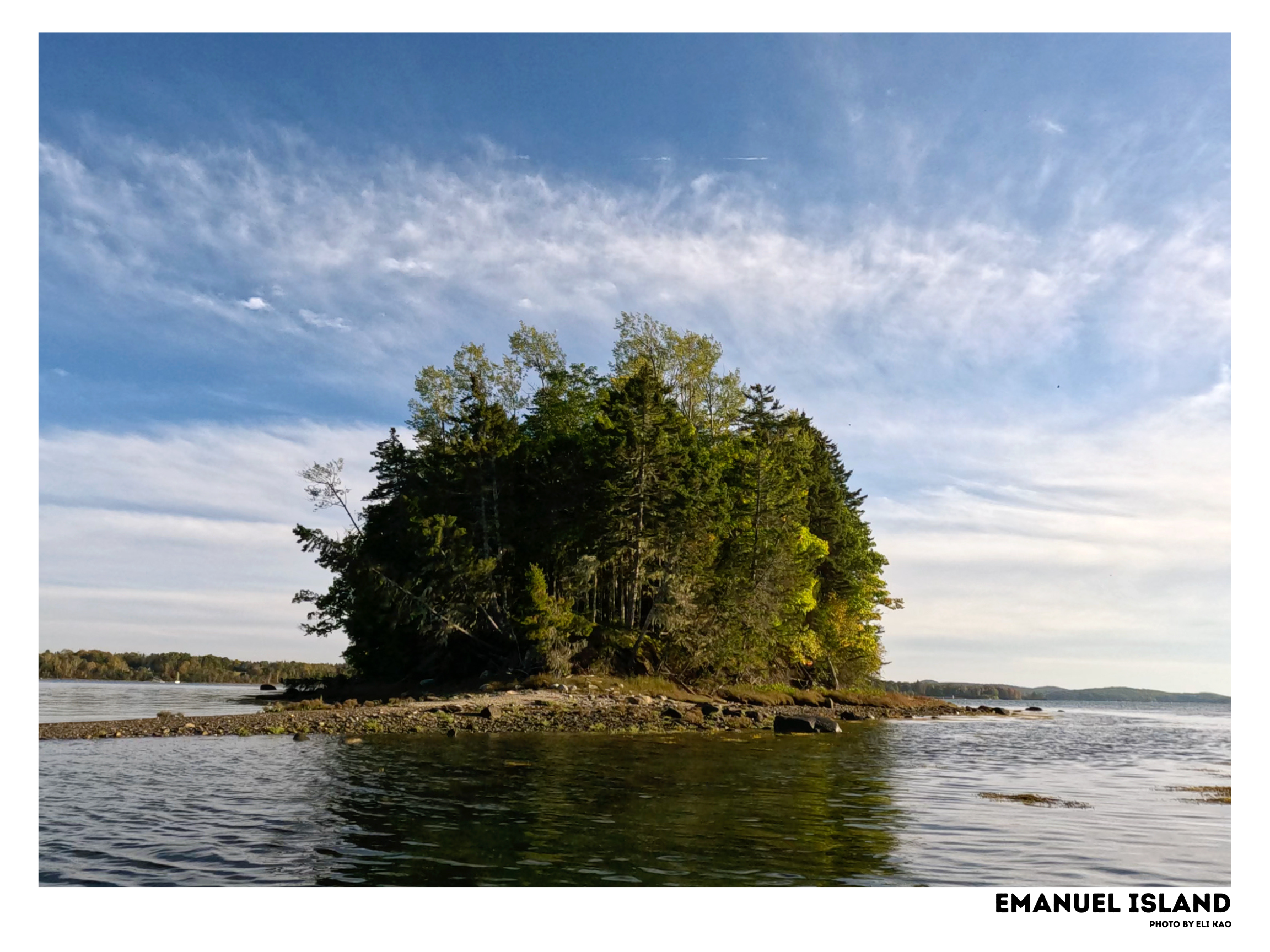
Signs in the landscape and waters help us understand their geologic past. At low tide, a large sandbar and mudflats connect the islands and the mainland. When Penobscot Director of Cultural and Historic Preservation James Francis Sr. observed this, he suggested that tides and erosion have likely transformed the islands from a peninsula to what we see today.
There are many theories as to how the islands came to be named. One legend says that the islands were a stop on the Underground Railroad, but archival research helps us debunk this myth:
The islands were first referred to by an offensive variation of this name in a letter from John Jarvis in 1770, well before the formal implementation of the Underground Railroad in the early 1800s.
Castine had only one explicitly abolitionist resident, the architect Doty Little (1766-1852). Castine’s economy and wealth was largely built on a merchant shipping system that relied on the labor of enslaved people.
In 2022, after a multi-year civic process, the town voted to change the individual names of the islands to Esther and Emanuel. These names honor the first recorded African or African American individuals in Castine between 1785-1790.
In 2024, James Francis Sr. traveled to the islands to generate a collective name for them in the Penobscot language. With the help of Gabe Paul (Penobscot Language and Cultural Department) the name Wewətanagok was submitted to the U.S. Geological Survey.
The proposed name "wewətanakok" is derived from the Penobscot language.
wewət- together, surface to surface, point to point, end to end, confront, come together, converge.
anakok- a locative ending that signifies "at the place where they come together, converge."
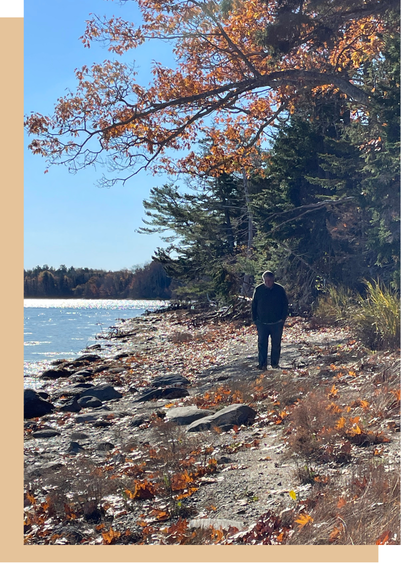
James Eric Francis, Sr. on Emanuel island, October 2024. Photo: Meadow Dibble
“This name beautifully encapsulates the essence of the two islands that merge at low tide, highlighting their physical and symbolic connection. ”
“When Maine place names had ‘Negro’ as the descriptor, these places were historically considered uninhabitable fringes, not for the general public. Islands bearing the name were segregated directly by water and indirectly by the presence of Black bodies — places of marginalization and displacement rather than refuge.”
Reflection Questions
What’s in a name? Why are names important?
Why might there not have been a specific / historic Penobscot name for these islands prior to 2024?
Keep an eye out as you travel through this walk. How do Wabanaki naming practices and Western naming practices differ?
This research was compiled as part of the Mači-pikʷátohsək: A Wayfinding Walk which took place in Castine on October 5, 2025. For more information about this walk, click here. For more research related to this area, click on the tags below. To download a hi-res version of the posters below for educational use, please contact where@atlanticblackbox.com.
This event was a collaboration between Castine History Partners (CHP) and the Walks for Historical & Ecological Recovery (WHERE), a series convened by Atlantic Black Box.
Castine History Partners is a collaboration originally established to create virtual history tours for Castine. CHP supports a variety of learning opportunities around the history of Castine. The partners include Castine Community Partners, Castine Historical Society, Castine Touring Company, Maine Coast Heritage Trust, Maine Maritime Academy, Wilson Museum, and Witherle Memorial Library.