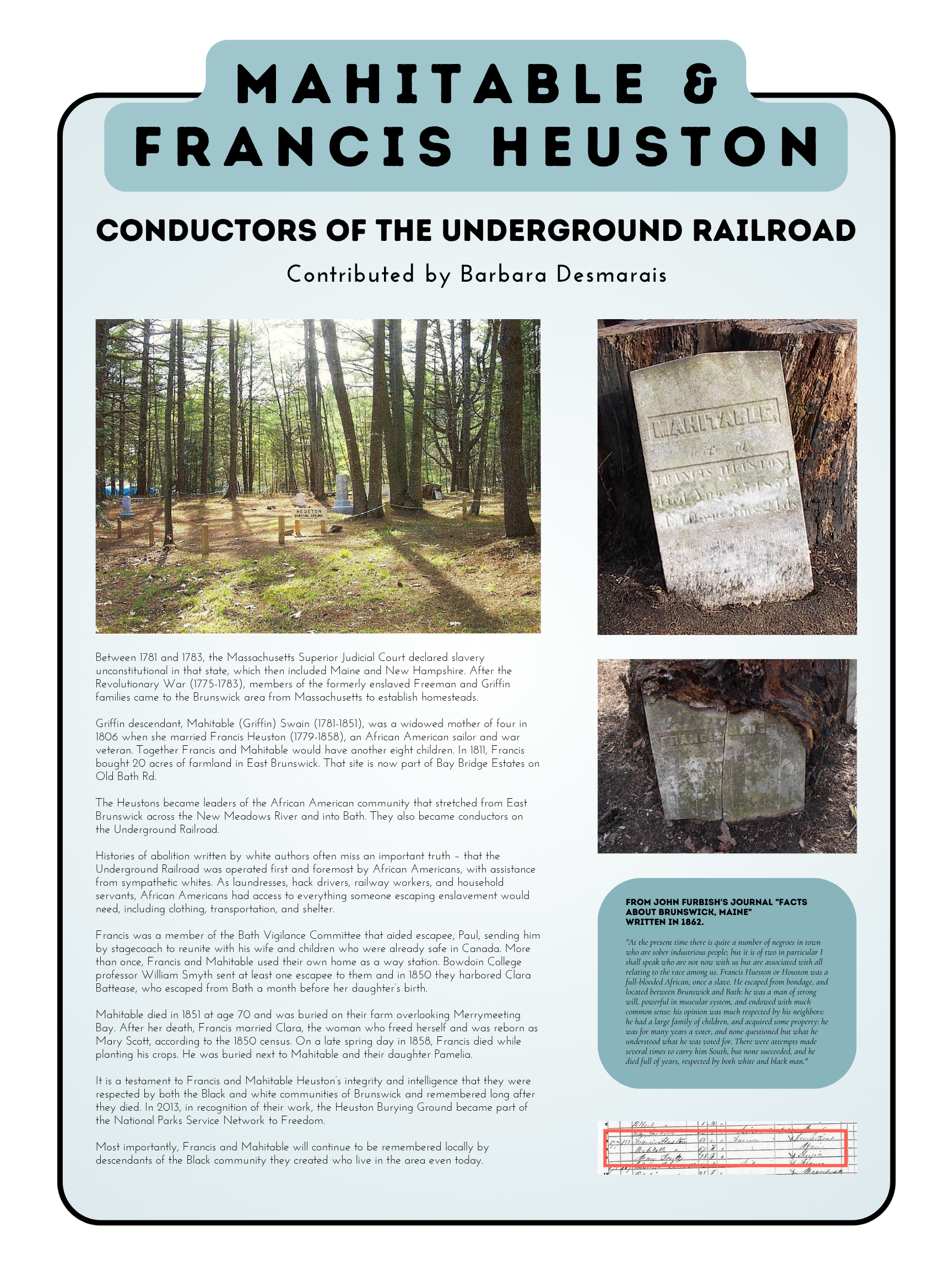
Mahitable & Francis Heuston: Conductors of the Underground Railroad
Between 1781 and 1783, the Massachusetts Superior Judicial Court declared slavery unconstitutional in that state, which then included Maine and New Hampshire. After the Revolutionary War (1775-1783), members of the formerly enslaved Freeman and Griffin families came to the Brunswick area from Massachusetts to establish homesteads.
Griffin descendant, Mahitable (Griffin) Swain (1781-1851), was a widowed mother of four in 1806 when she married Francis Heuston (1779-1858), an African American sailor and war veteran. Together Francis and Mahitable would have another eight children. In 1811, Francis bought 20 acres of farmland in East Brunswick. That site is now part of Bay Bridge Estates on Old Bath Road.
The Heustons became leaders of the African American community that stretched from East Brunswick across the New Meadows River and into Bath. They also became conductors on the Underground Railroad.
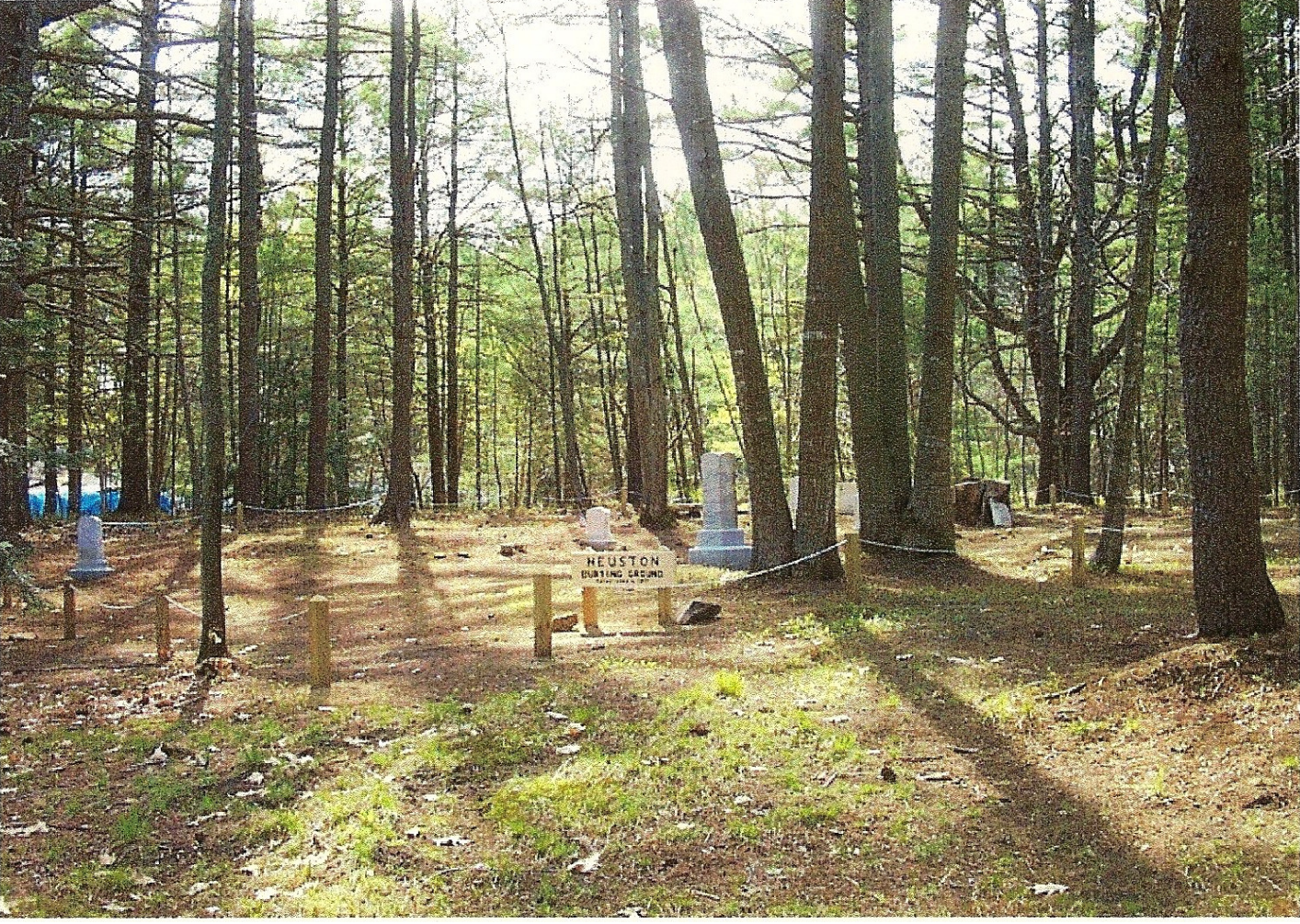
The Heuston Burying Ground, part of the National Parks Service Network to Freedom
Histories of abolition written by white authors often miss an important truth – that the Underground Railroad was operated first and foremost by African Americans, with assistance from sympathetic whites. As laundresses, hack drivers, railway workers, and household servants, African Americans had access to everything someone escaping enslavement would need, including clothing, transportation, and shelter.
Francis was a member of the Bath Vigilance Committee that aided escapee, Paul, sending him by stagecoach to reunite with his wife and children who were already safe in Canada. More than once, Francis and Mahitable used their own home as a way station. Bowdoin College professor William Smyth sent at least one escapee to them and in 1850 they harbored Clara Battease, who escaped from Bath a month before her daughter’s birth.
Mahitable died in 1851 at age 70 and was buried on their farm overlooking Merrymeeting Bay. After her death, Francis married Clara, the woman who freed herself and was reborn as Mary Scott, according to the 1850 census. On a late spring day in 1858, Francis died while planting his crops. He was buried next to Mahitable and their daughter Pamelia.
It is a testament to Francis and Mahitable Heuston’s integrity and intelligence that they were respected by both the Black and white communities of Brunswick and remembered long after they died. In 2013, in recognition of their work, the Heuston Burying Ground became part of the National Parks Service Network to Freedom.
Most importantly, Francis and Mahitable will continue to be remembered locally by descendants of the Black community they created who live in the area even today.
“At the present time there is quite a number of negroes in town who are sober industrious people; but it is of two in particular I shall speak who are not now with us but are associated with all relating to the race among us. Francis Hueston or Houston was a full-blooded African, once a slave. He escaped from bondage, and located between Brunswick and Bath: he was a man of strong will, powerful in muscular system, and endowed with much common sense: his opinion was much respected by his neighbors: he had a large family of children, and acquired some property: he was for many years a voter, and none questioned but what he understood what he was voted for. There were attempts made several times to carry him South, but none succeeded, and he died full of years, respected by both white and black man.”
This research was compiled as part of the Pejepscot Portage Walk, which took place in Brunswick on October 6, 2024. For more information about this walk, clickhere.
For more research related to this area, click on the tags below. To download a hi-res version of the posters below for educational use, please contact where@atlanticblackbox.com.
This walk was a collaboration between the Pejepscot Portage Mapping Project and Atlantic Black Box.