Pejepscot Falls
The falls at Pejepscot are just below Fort Andross Mill, also known as Cabot Mill. This place has many layers of history.
Wabanaki from throughout the region gathered here to fish, plant spring crops, renew ceremonial connections to place and community, and enjoy reunions with friends and family. The place was, as English colonists recognized in 1737, the place of the “annual Randevouze [rendez-vous] of all the tribes.”
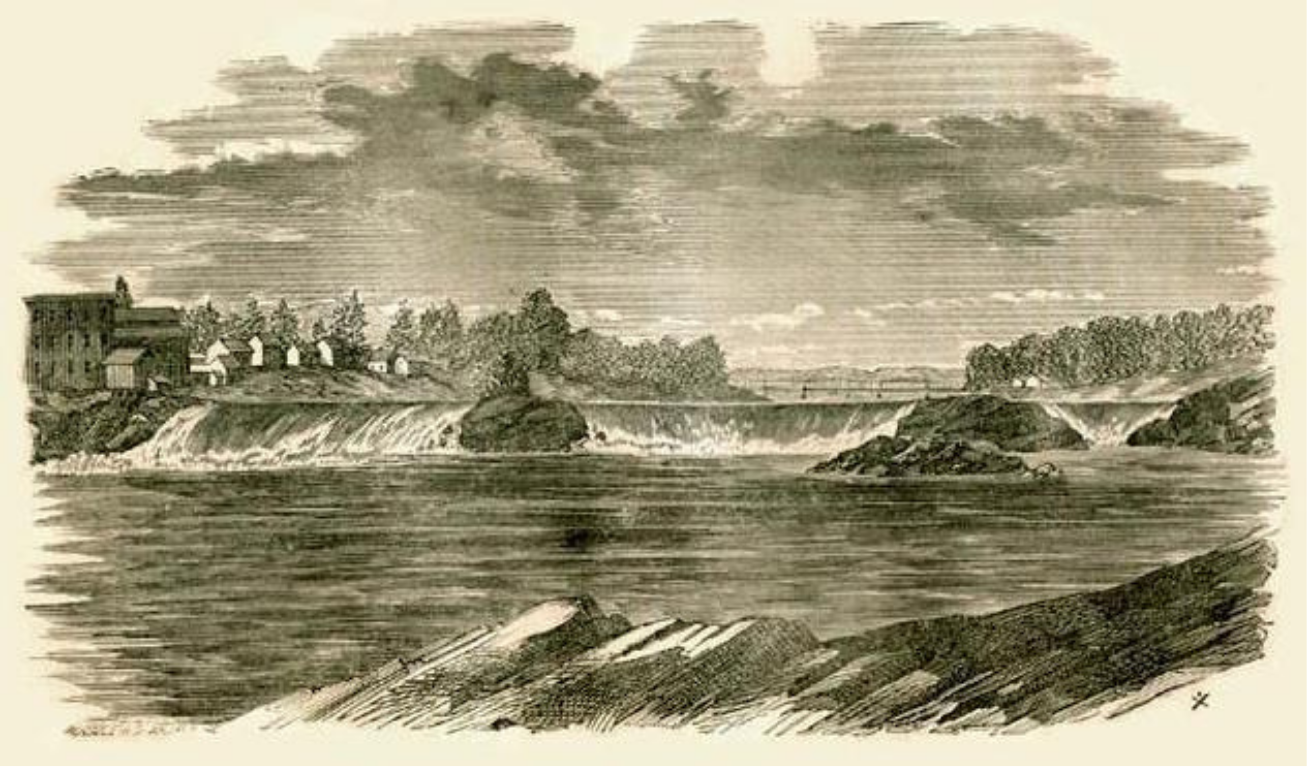
Wabanaki inhabitants knew the shallow rapids here as Pejepscot or Pejepscook, which probably means “long, rocky rapids place." Wabanaki traveling up or down river by birchbark canoe would portage, or carry, their canoes on a path that followed the riverbank. Others traveling between the river and Casco Bay could also portage along what later colonists called the “upper carry” that connected Pejepscot to Maquoit Bay. Pejepscot was also an important fishing site, where Wabanaki could catch fish like salmon as they migrated upstream each spring.
Early English colonists built a trading post nearby in the 1620s. By 1688 they had built a fort at the site. The fort was probably not named Fort Andross. That name (with an extra “s”) was later applied to the mill in memory of Governor Edmund Andros, who was royal governor of New England at about the time the fort was built. The military post allowed the English to monitor and potentially block the important portage and fishing site.
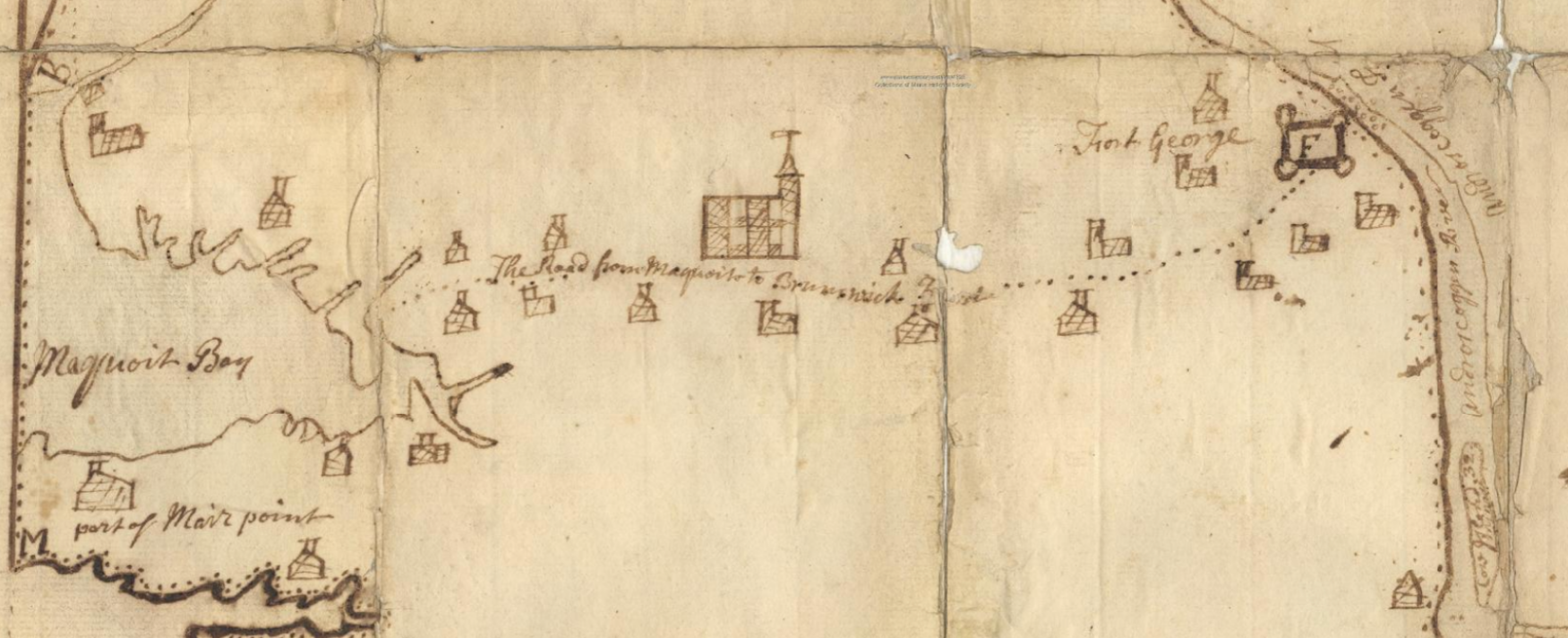
Wabanaki and their French allies destroyed the fort in 1694 during King William’s War. The British then rebuilt a stone fort in 1715, naming it Fort George in honor of the new King George I. Once again, British colonists asserted influence over the people who traveled on the river and fished its waters. During times of peace Wabanaki and British colonists continued to trade at the site, but Wabanaki leaders repeatedly protested that the colonists occupied the post without permission.
Colonists built the first dam across the falls in 1753 so that they could power their sawmills and other machinery. The new industrial activity blocked fish runs and also made it much harder for Wabanaki to inhabit the area.
The first cotton textile mills were built here in 1812, and these expanded in 1853. Industrialists built the current Cabot Mill building in 1892. Textile manufacturing contributed to the prosperity of this region, but this prosperity was made possible by men, women, and even children as young as seven working long, hard hours.
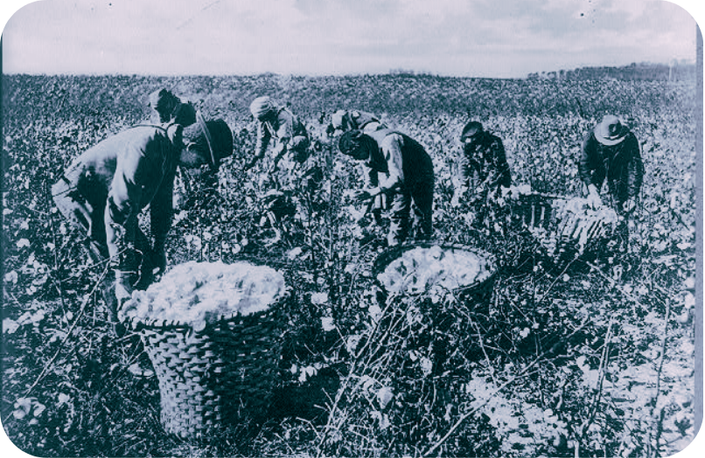
African Americans in the South were forced to produce the cotton that was then sold to the mills. Before 1865 they were enslaved. After emancipation many still were forced to labor as sharecroppers.
After the mill closed, this building was purchased and repurposed for mixed commercial use. It now hosts a wide variety of tenants, including restaurants, offices, an antiques market, the Brunswick farmers’ market, and studio spaces.
Telling the history of this site (or any place) is difficult because it is hard to agree not only on what occurred, but also on which details matter. When you visit the mill, notice, for instance, the story told on the plaque that was placed on the building in 1930. Who is missing from that memorial?
More recent efforts to remember the past also face challenges. In 2022-2023 the community debated a mural that was proposed for the exterior of the mill on a wall facing Route 1. The mural was eventually completed in the spring of 2023. Some Wabanaki and non-Wabanaki community members, including those who wrote this sign, criticized the mural because it did not engage with the Wabanaki communities it was representing.
As you think about what stories are missing from the 1930 plaque or the mural, you might also consider who is missing from the stories that we are telling here today. Representing the past is always incomplete. Which stories help us to better understand the past and ourselves?
Perhaps it is appropriate that Pejepscot—a place with so many layers of history—is also the name of the local history center.
This research was compiled as part of the Pejepscot Portage Walk, which took place in Brunswick on October 6, 2024. For more information about this walk, click here.
For more research related to this area, click on the tags below. To download a hi-res version of the posters below for educational use, please contact where@atlanticblackbox.com.
This walk was a collaboration between the Pejepscot Portage Mapping Project and Atlantic Black Box.