Black Residents of Brunswick
During the mid-19th century, most Black residents of Brunswick lived along Merrymeeting Bay near the northeastern town line bordering Bath. This community was home to more than a dozen families of farmers and fishers. Several Black families lived in town as well.
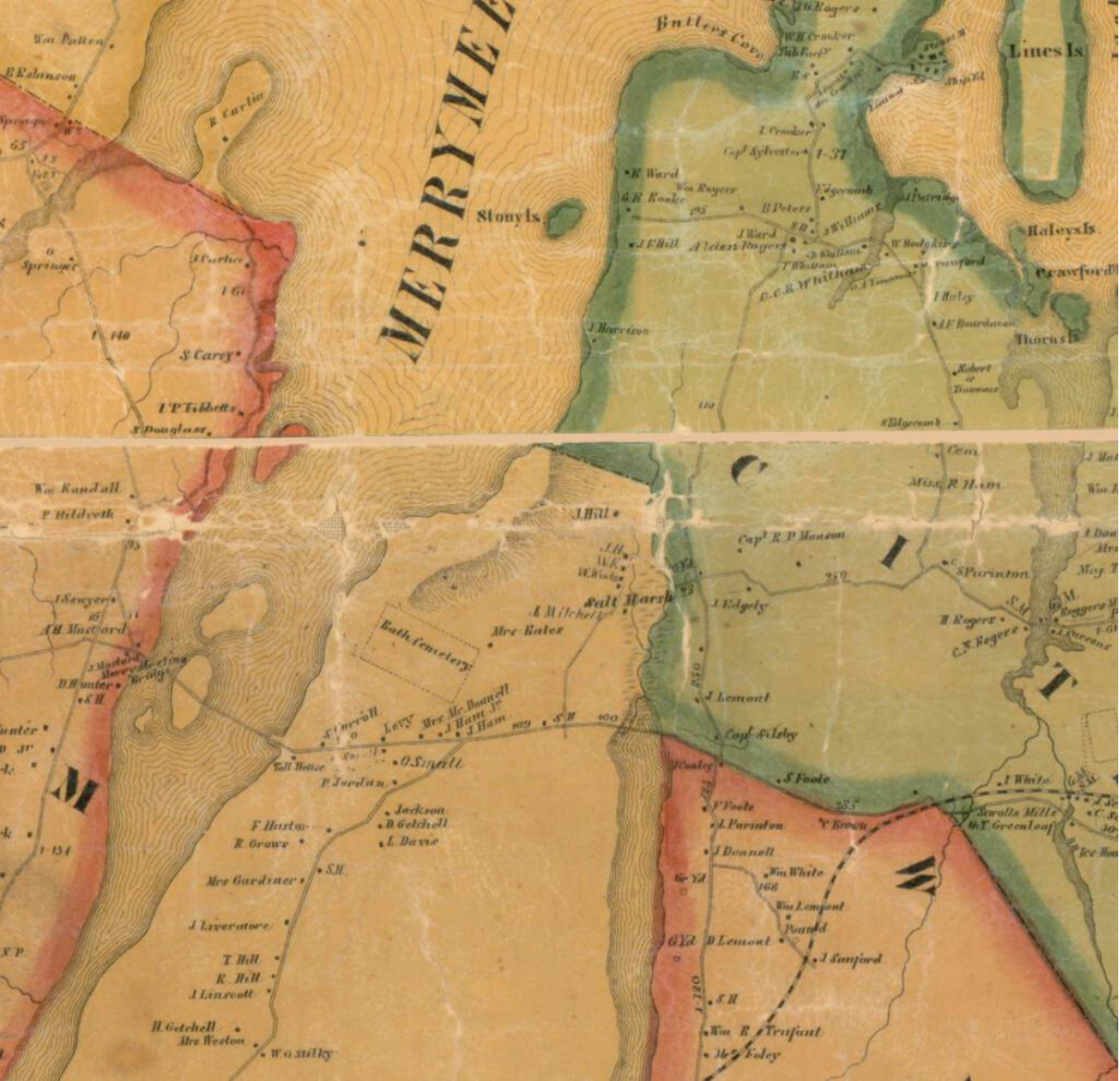
Map of Sagadahoc County, 1858
This was true of Egbert and Lydia Bow, who owned a farm along the Androscoggin River. The couple and their children were members of the First Parish Church. Three households located to the south of the church were home to Black Brunswick residents, though they do not appear on the 1846 “Plan of Brunswick Village.” Wealthy Bow and other Bow daughters were sought after for their services in cleaning, cooking, and caring for children in the households of prominent white Brunswick residents.
The home of Phebe Jacobs is among those identified on the 1846 map. Situated along Maquoit Street, it sits just south of the Bowdoin College campus. Born in New Jersey, Jacobs was enslaved by Maria Wheelock before accompanying the family of Bowdoin president William Allen to Brunswick as a domestic servant.
By the 1840s, Phebe resided in her own house, earning a living as a seamstress and washing laundry. Until her death in 1850, she was a familiar presence in the section of the balcony of the First Parish Church reserved for Black worshippers, who were made to sit separately from the rest of the congregation.
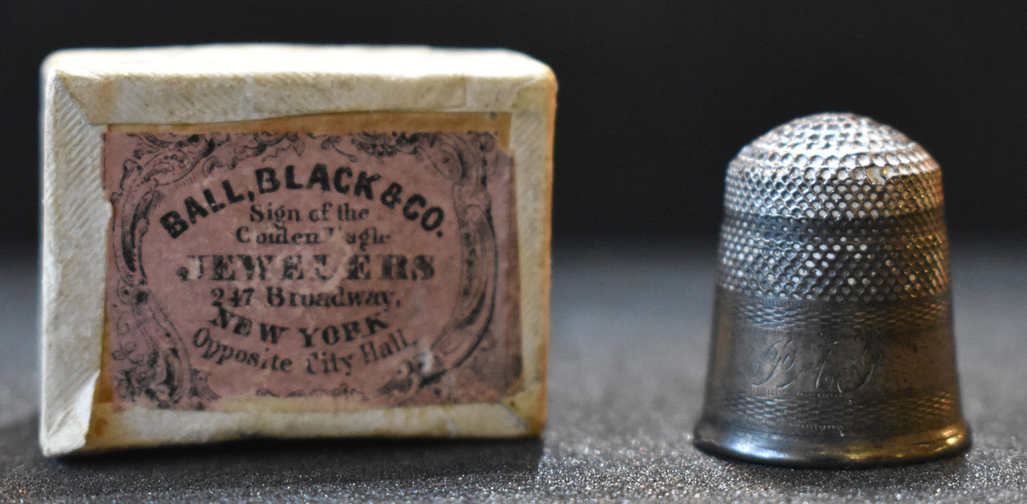
Thimble belonging to Phebe Ann Jacobs
George J. Mitchell Department of Special Collections & Archives, William Allen Family Papers, Bowdoin College Library.
Paris and Elizabeth Oree lived nearby on Cumberland Street, known today as McKeen Street. Like many Black men in the area, Paris was a sailor. Originally from Massachusetts, he first came to Brunswick during the 1830s, marrying Elizabeth Freeman in 1840. It was not uncommon in the mid-19th century for local African American women to marry mariners arriving in the port of Bath.
Margaret Freeman, a relative of Elizabeth’s, lived in the next household over, a property she purchased in 1838. Situated near the college campus, Freeman took in the laundry of Bowdoin students and, on at least one occasion during the late 1840s, she rented rooms to three African American men studying in the Medical College.
Sarah Mingo may have been the first Black woman to work at Bowdoin College as a cleaner. Unnamed others surely followed, their work only visible through a tuition bill entry for “Sweeping and Bed-making.”
Prominent residents of the village—such as the minister of the First Parish Church, Rev. George E. Adams, and his wife Helen—traveled four miles to reach the Black community in East Brunswick, where they hired young women as live-in help.
Ellen Jackson lived in the Adams household on Park Street during the 1860s. She could be seen on Mondays pinning their laundry to the line.
This research was compiled as part of the Pejepscot Portage Walk, which took place in Brunswick on October 6, 2024. For more information about this walk, click here.
For more research related to this area, click on the tags below. To download a hi-res version of the posters below for educational use, please contact where@atlanticblackbox.com.
This walk was a collaboration between the Pejepscot Portage Mapping Project and Atlantic Black Box.