First Parish
Contributed by Barbara Desmarais
Writer and local historian, author of Cemeteries of Brunswick blog
Pompey wasn’t the only person of color in the small Brunswick settlement during the 1700s. Church attendance was required of all, so he would have known the enslaved “servants” of other people of status.
The first Protestant minister arrived in the Maine wilderness in August 1717. Rev. Joseph Baxter and his wife were accompanied by their “Negro” slave, Tony. Baxter preached to three Wabanaki people at the fort at Brunswick, with Capt. Gyles interpreting. Baxter felt he was making headway in conversions, but by January most of the Natives had left for winter quarters. Baxter took his wife and “Negro” back to Massachusetts.
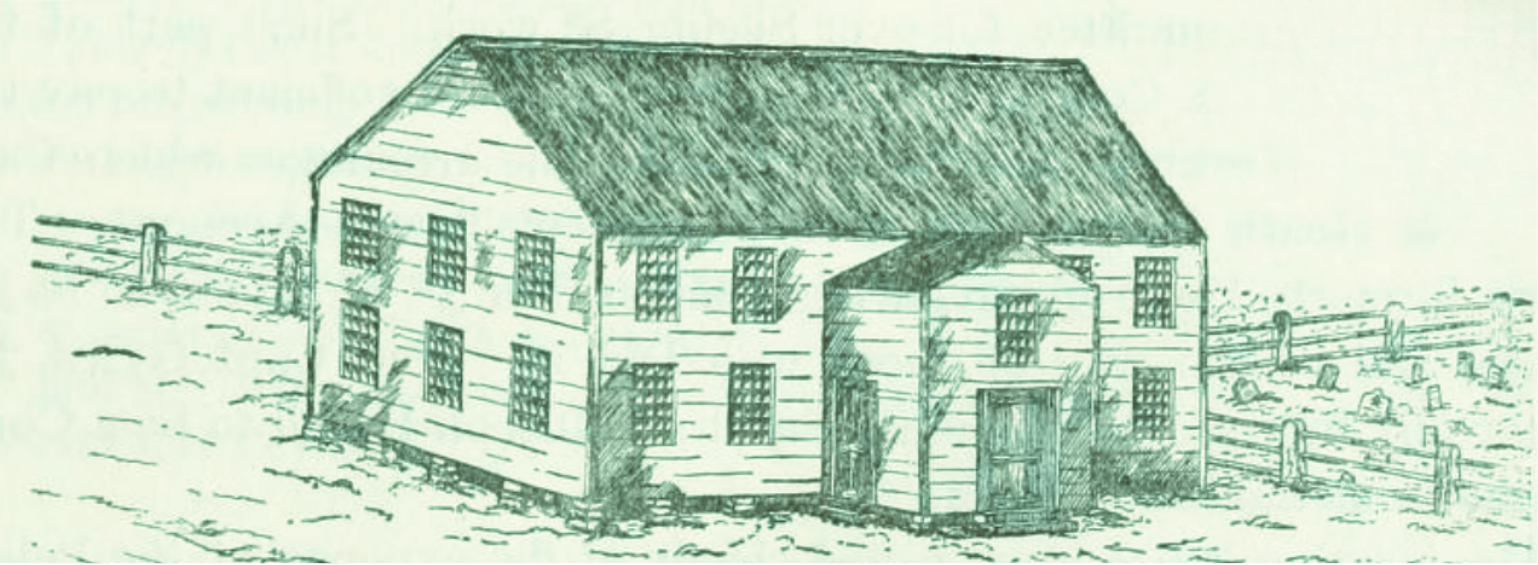
The Proprietors succeeded in bringing to Pejepscot several newly arrived Ulster Scot families from Bann County, Ireland. These included a Presbyterian minister who felt called to teach those he referred to as the “Eastern Salvages.” The settlers and soldiers soon began building the meeting-house on Maquoit Road, halfway between Fort George and the new Ulster Scot settlement at Maquoit. This building was on the same lot on upper Maine St. where the First Parish Cemetery is situated today.
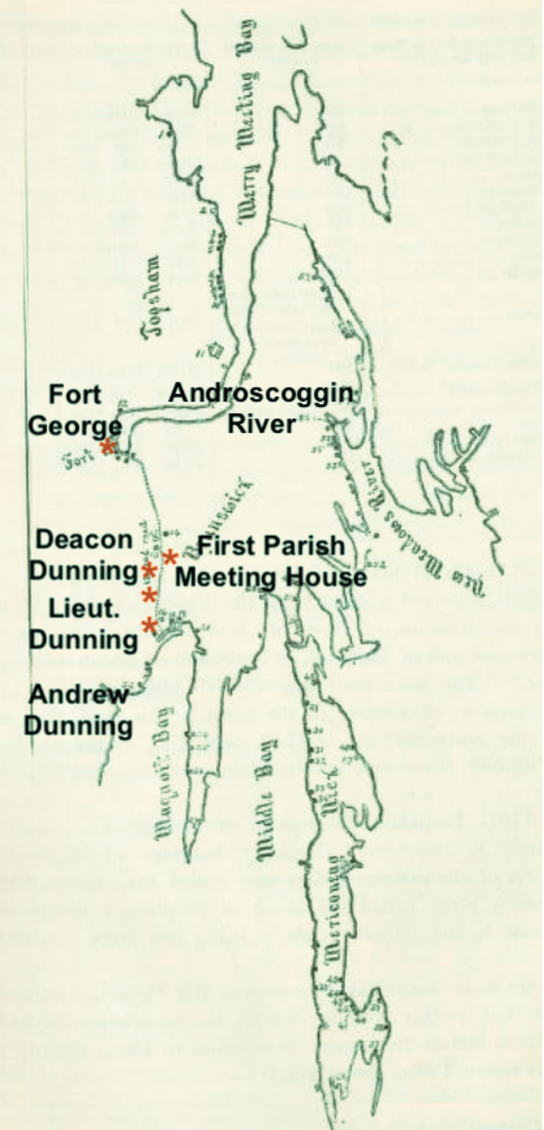
Blacksmith Andrew Dunning managed to become a wealthy man. He, his wife Susan, their son James, and their grandson William, displayed that wealth by holding enslaved “servants.” So, too, did Judge John Minot, son of a Pejepscot Proprietor. Minot, in fact, made a gift of infant “Negroes” to his son-in-law, the Rev. Wiswell.
When Andrew died, Susan became the owner of both the coins he had set aside and their “servant.” When Susan’s wooden home caught fire, she tried to rescue the money. When the wooden floor gave way beneath her, she plunged into the cellar, to her death. Her enslaved “servant,” however, survived only to become the property of Lieut. James Dunning.
Though all were required to attend Sunday meeting, the “Negro servants” were not allowed to sit in the same pews as their enslavers. Tradition holds that an exception was made for Deacon William Dunning, who held a very young “Negro” boy who was too young to sit with the other enslaved “servants.” He was allowed to sit on the floor in the aisle next to Dunning’s pew.
Not much changed when the grand First Parish Church was built on the corner of Maine Street and Bath Road, overlooking Bowdoin College. People of color were required to sit in the balcony, on the opposite side of the hall from the Bowdoin College students.
This research was compiled as part of the Pejepscot Portage Walk, which took place in Brunswick on October 6, 2024. For more information about this walk, clickhere.
For more research related to this area, click on the tags below. To download a hi-res version of the posters below for educational use, please contact where@atlanticblackbox.com.
This walk was a collaboration between the Pejepscot Portage Mapping Project and Atlantic Black Box.