Phillis
Recovering the Story of a Woman Enslaved in the Waldo Emerson Household
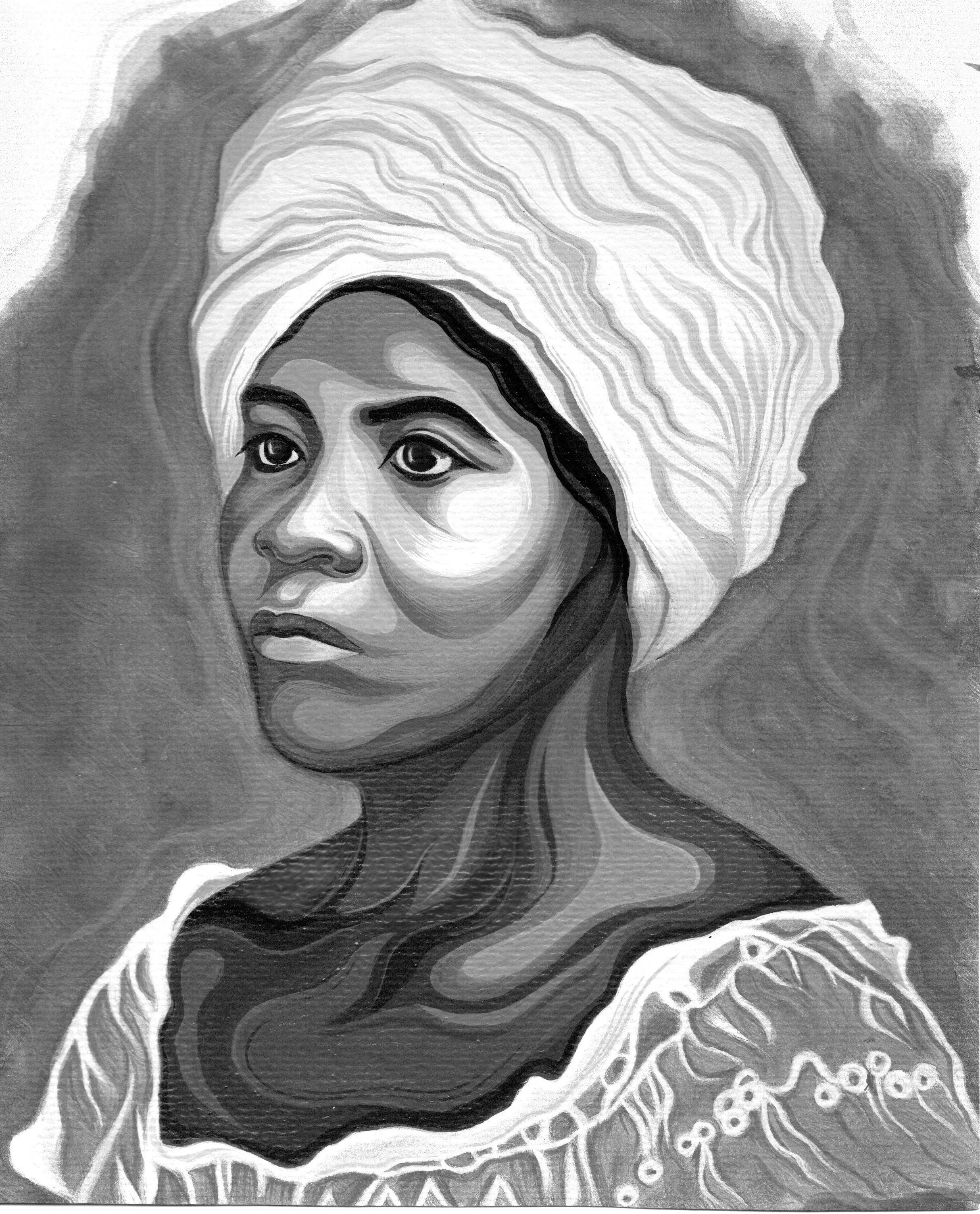
“Phillis” by Corinna Dibble
Phillis is one of the few enslaved women documented in Kennebunk’s history. Her name appears only once, in the probate record of Waldo Emerson, leaving a faint but powerful trace of her life.
We know she was enslaved by the Emerson family, likely to assist Olive Emerson with household work and child care, and that she may have remained with Olive after Waldo’s death in 1774. It’s possible she later lived in the household of their daughter Sarah and son-in-law Theodore Lyman. If so, Phillis’s life would have been shaped by a succession of owners until Massachusetts law began allowing for emancipation in 1784.
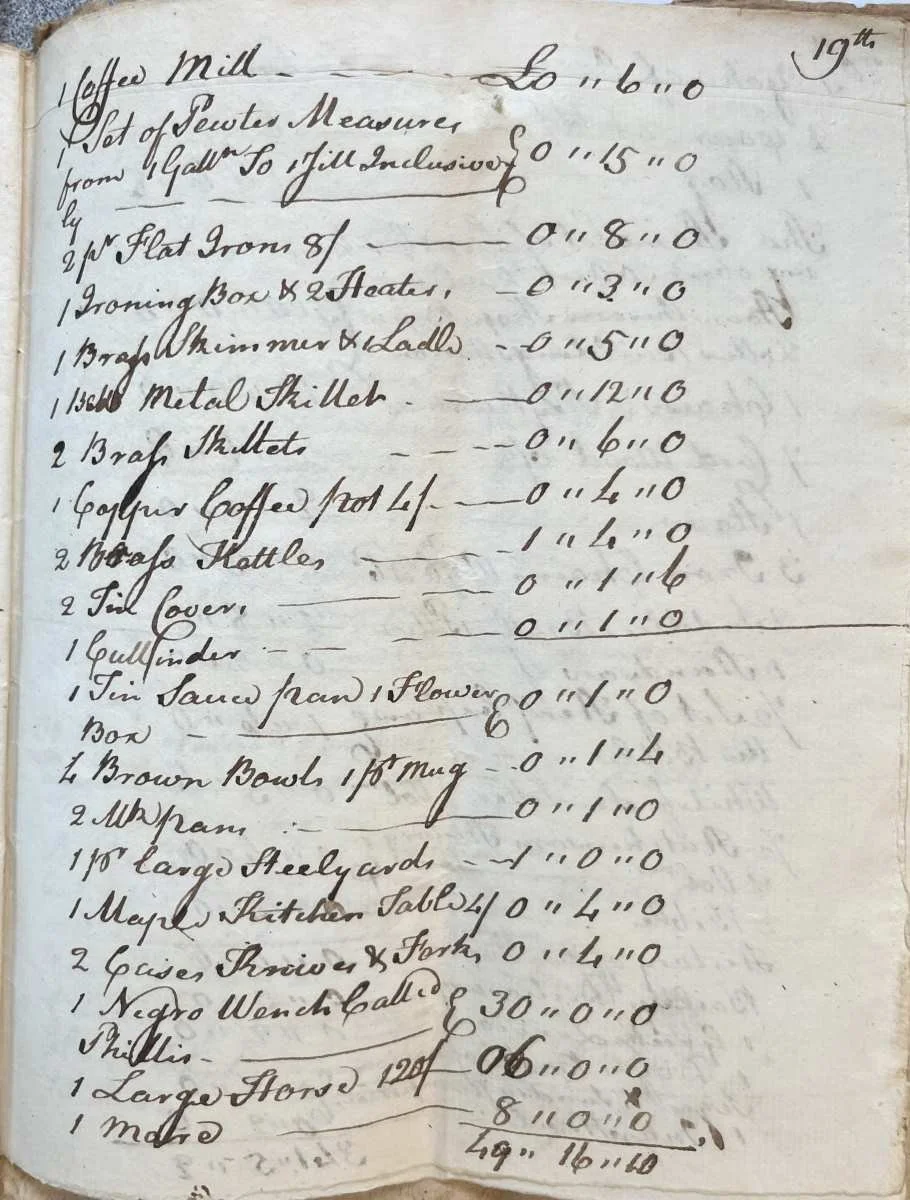
"1 Negro Wench Called Phillis £30.0.0, 1 Large Horse £6.0.0, 1 Mare £8.0.0." from page 19 of Waldo Emerson’s estate inventory
And yet, Phillis’s mention leaves us with more questions than answers. We don’t know where or when she was born, how old she was when she was enslaved or purchased, or whether she had a family of her own.
We don’t know if she was baptized, attended church, or where she sat during services.
We don’t know whether she lived to see freedom, or what freedom, if it came, meant for her.
Phillis’s single record opens a window onto many untold stories, of individuals whose lives, though barely documented, were deeply woven into our history.
Reflection Questions:
What can Phillis’s brief mention in Waldo Emerson’s estate tell us about her life, and what remains unknowable about the experiences of enslaved people in colonial Kennebunk?
Why is information about the region’s enslaved people so limited? Why weren’t more of their stories recorded?
This research was compiled as part of the Just History Walk: Lives Between Two Rivers, which took place in Kennebunk on November 8, 2025. For more information about this walk, click here. For more research related to this area, click on the tags below. To download a hi-res version of the posters below for educational use, please contact where@atlanticblackbox.com.
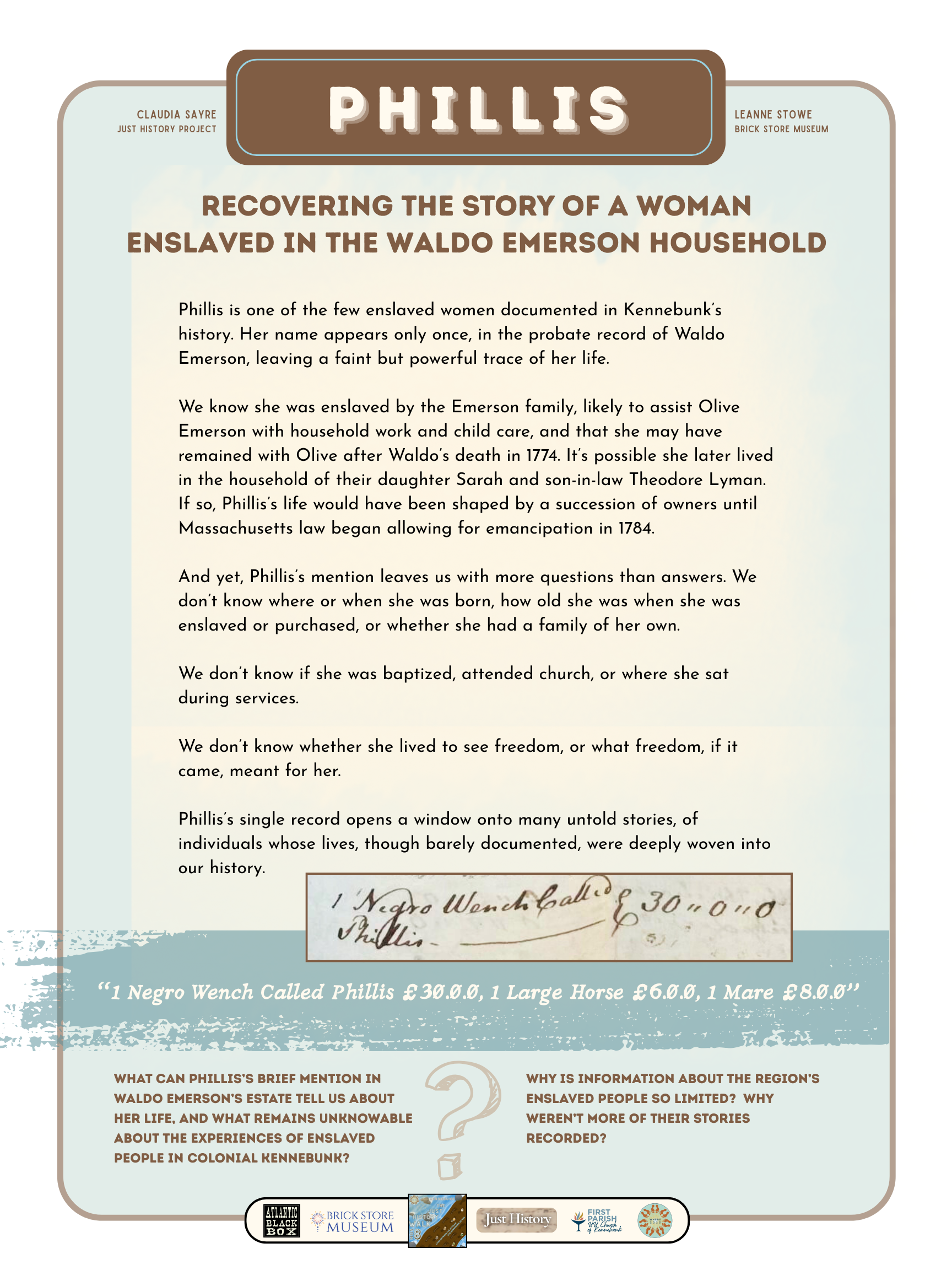
Poster by Meadow Dibble
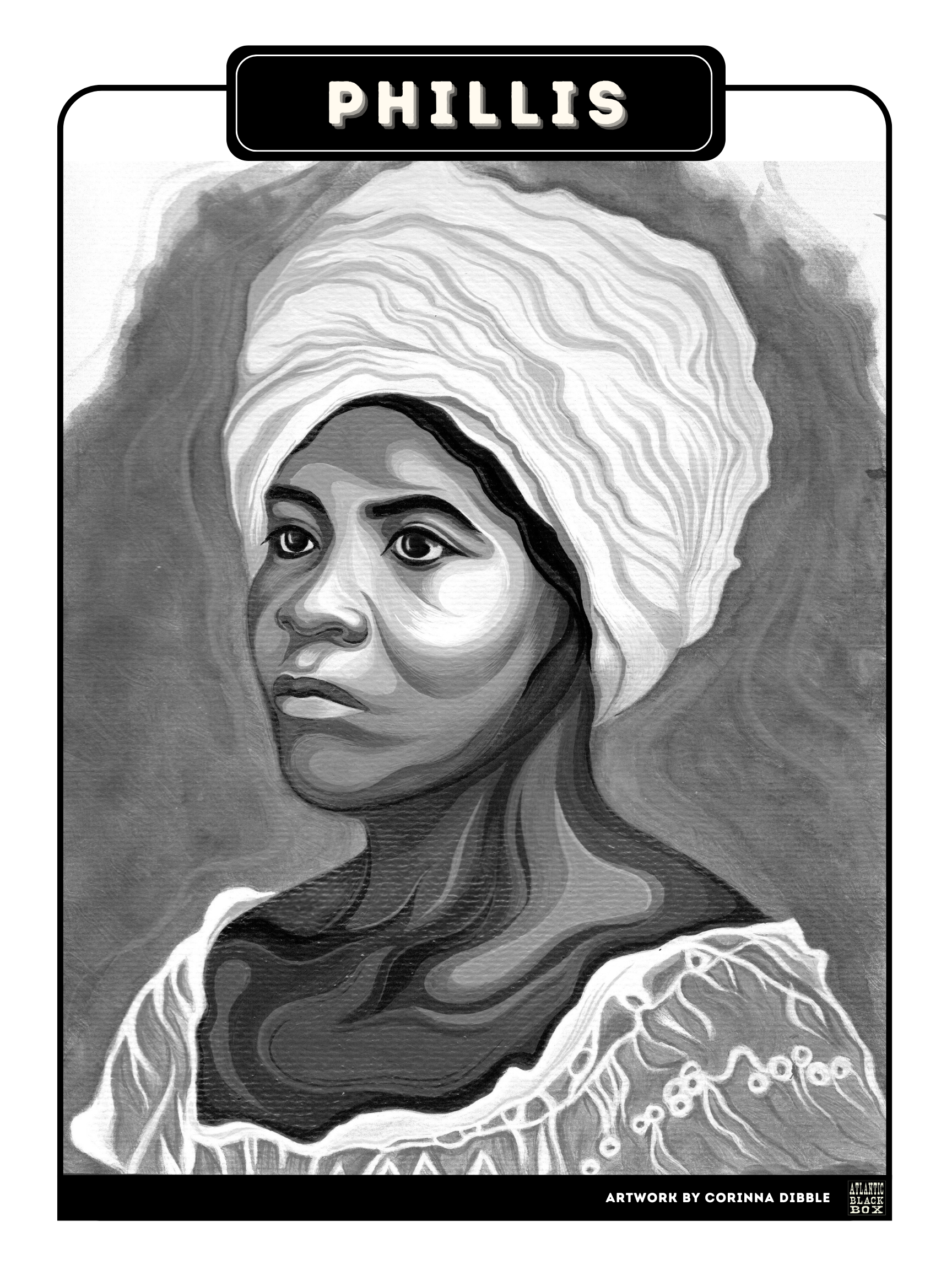
“Phillis” by Corinna Dibble