
The Just History Walk
Lives Between the Mousam and Kennebunk Rivers
Saturday, November 8, 2025
*with related programming Sunday, November 9*
⭒ Kennebunk ⭒
Kennebunk Archives
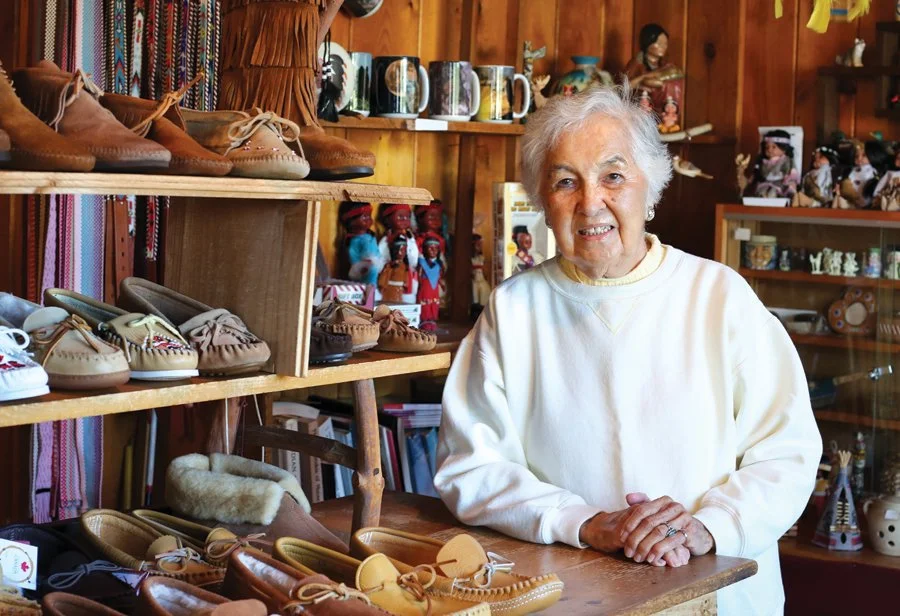
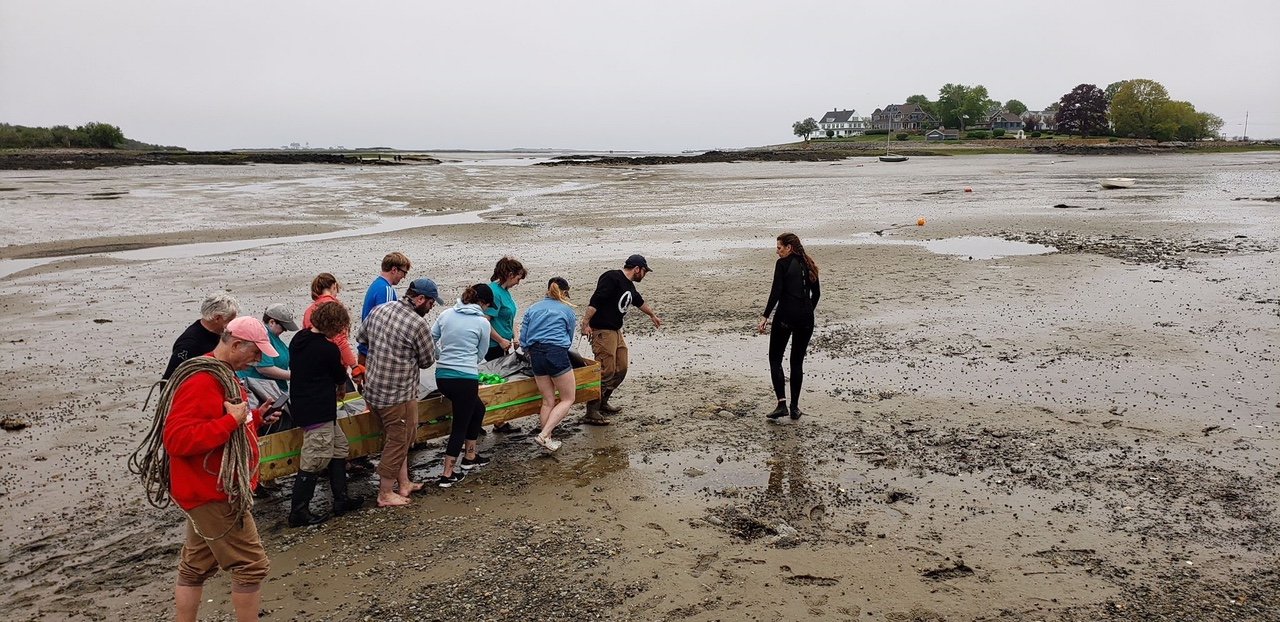
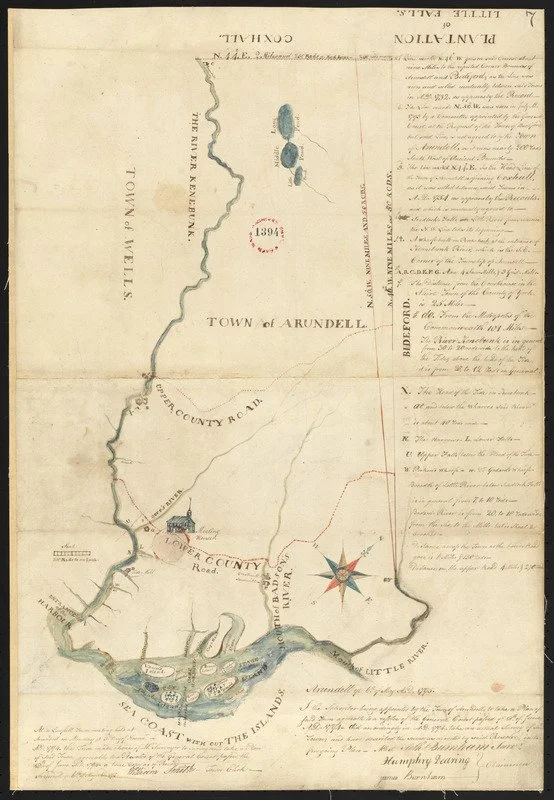
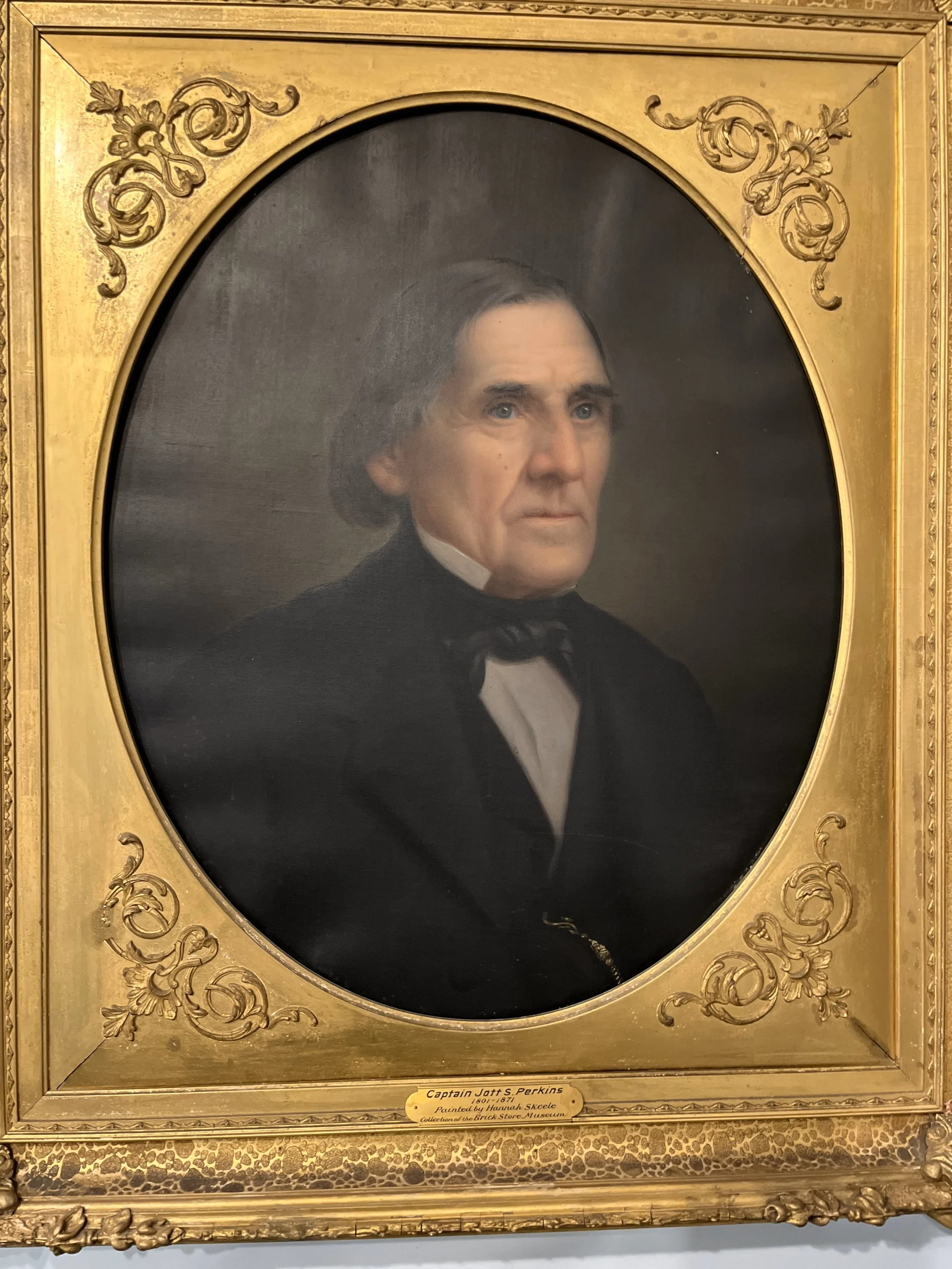
Below you’ll find just a few of the many resources developed for the Kennebunk Just History Walk. All published content for this site can be found here.
This archive is an evolving resource; more content will be continually added. Reach out to us at where@atlanticblackbox.com with your questions, feedback, and ideas.
Join us in Kennebunk for a two-day exploration of local history and resilience—beginning with The Just History Walk on Saturday and continuing with Antonio Rocha’s performance, Once Upon a Hill in Maine, on Sunday. Both events are free and open to the public.
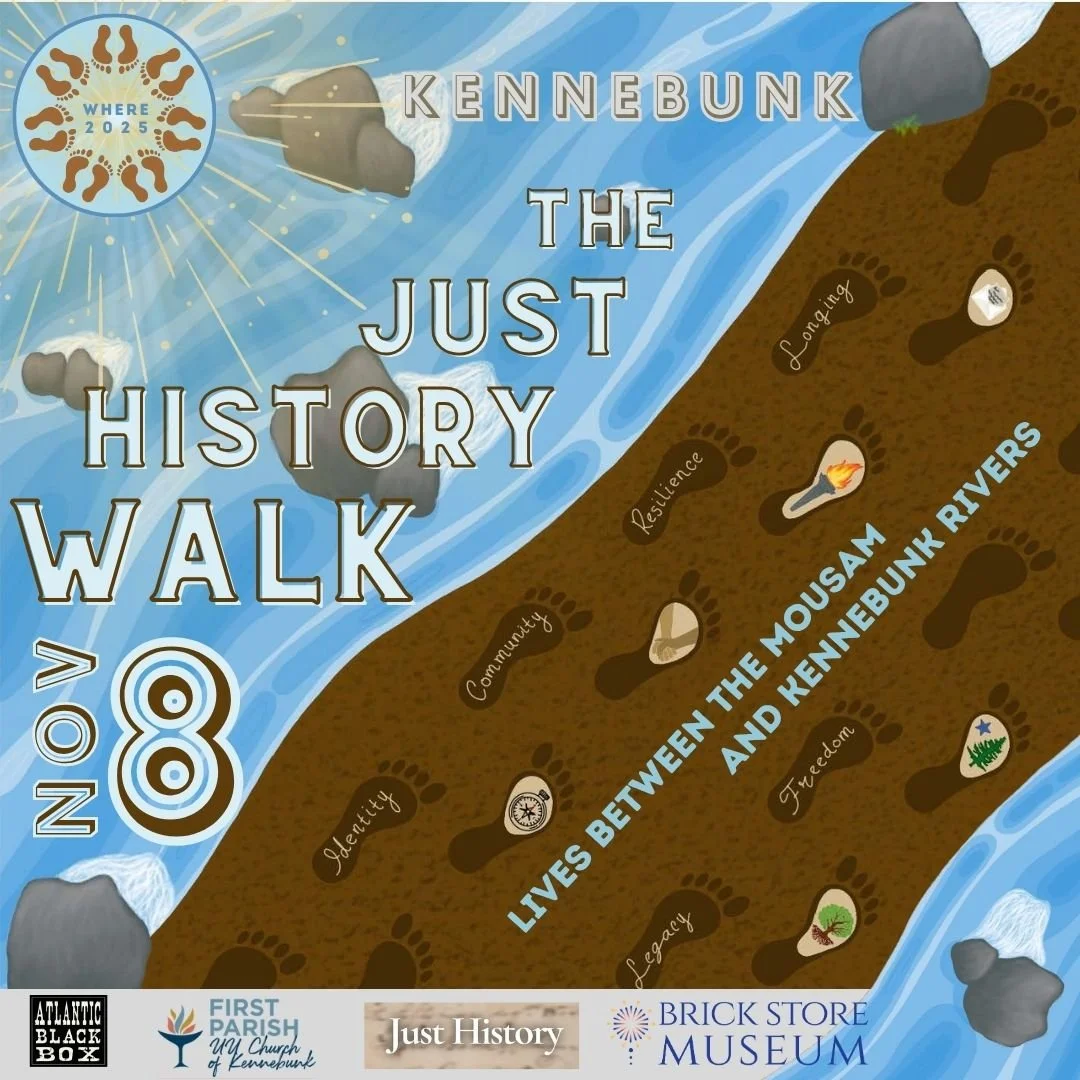
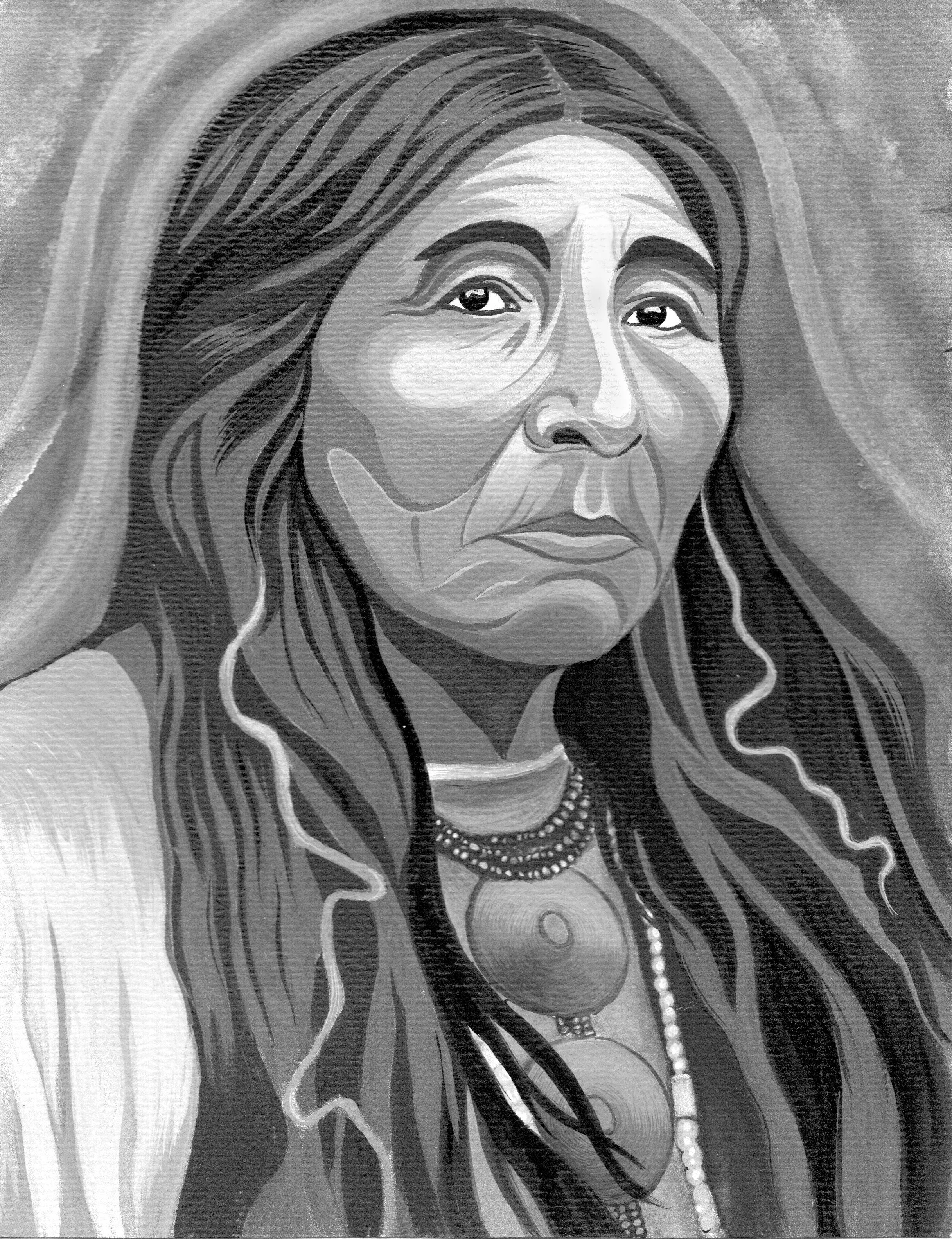
Artwork by Jasmine Thomas
The Just History Walk
Saturday, November 8, 2025 | 12:30 - 6 pm
Beginning at Rogers Pond Park, 49 Water St, Kennebunk
Ending at First Parish Unitarian Universalist Church, 114 Main St, Kennebunk
The lower Kennebunk and Mousam River watershed region has provided people with homes and sustenance for more than ten thousand years. We know something about them from over 400 years of written history, and through oral traditions and artifacts that date back much farther. But the historical narratives, signs, and portraits that we most commonly encounter represent only a small glimpse of the tapestry woven here in this place over the centuries. While the lives of sea captains and soldiers, farmers and factory owners, bankers and builders are made visible throughout town, those of many others remain hidden from view.
The Just History Walk is not about the men traditionally credited with building the wealth reflected in the homes and businesses along Main Street and Summer Street. Rather, it’s about bringing stories of people who also shaped this community but whose contributions have been erased to the foreground, including:
Wabanaki people who inhabited this land for millennia
People of African heritage who were kidnapped and transported here
Enslaved people throughout the “New World” whose labor was the basis for much of the town’s wealth
In walking together, we’ll meet:
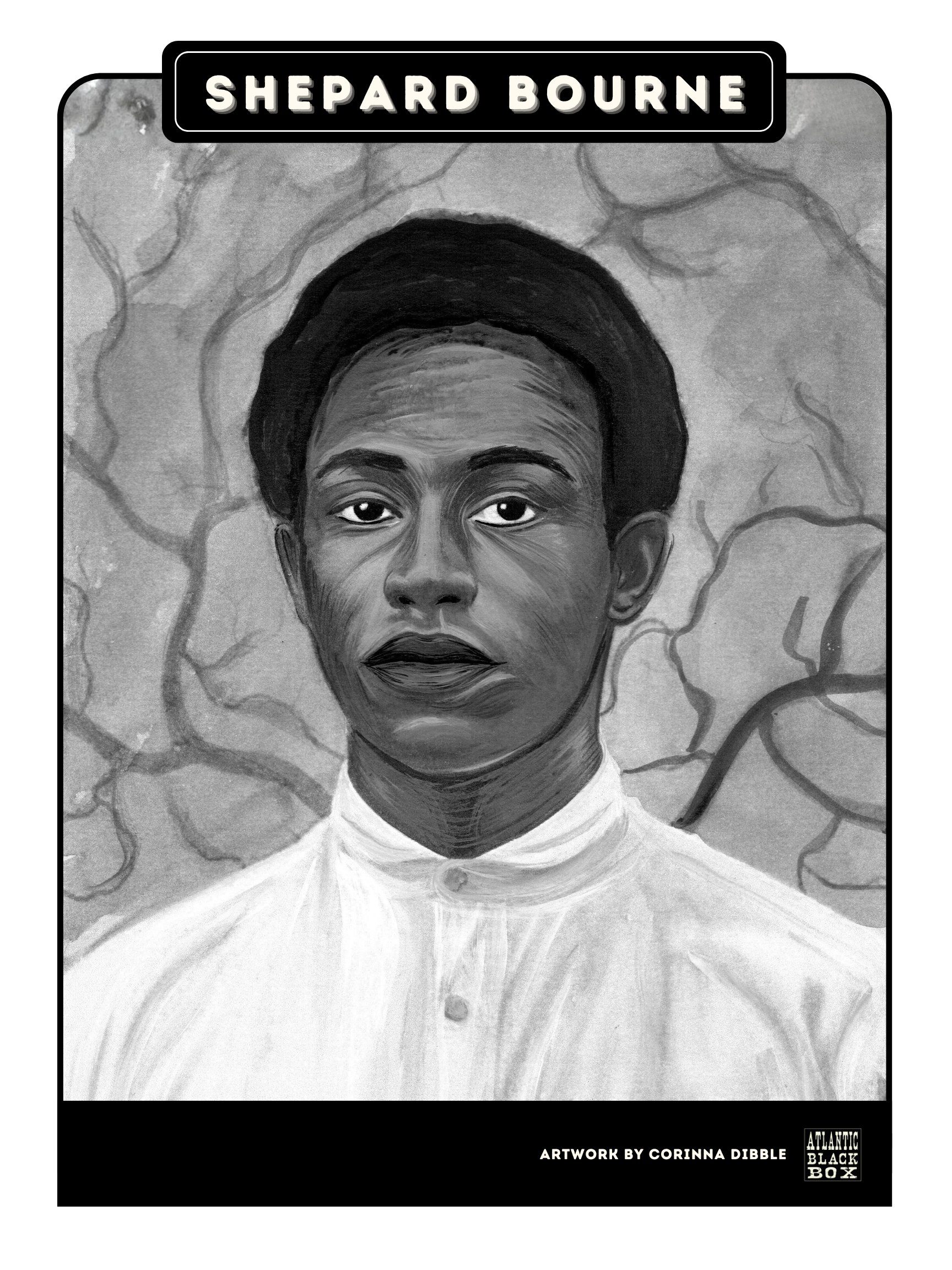
Ramanascho ✭ Shepard Bourn ✭ Richard Hill ✭ Phillis ✭ Tom Bassett ✭ Lucy Nicolar ✭ Primus Goodale ✭ Salem Bourne ✭ Scipio Black ✭ Joseph Ranco ✭ and others
Along the route, selected stories shared by presenters—together with performances, artwork, crafts, and artifacts—will offer opportunities for people of all ages and backgrounds to reflect on both what we now know about the diverse community that lived here and what remains unknown. What do these gaps and silences tell us about how history has been told?
At the conclusion, we will gather to collectively weave what we have gleaned and build connections over a meal that celebrates the ancient Indigenous roots of this community. Together, we will confront the suffering created when land and people are treated as property, and celebrate the resilience that persists when we honor our ties to land, waterways, wildlife, and each other.
SATURDAY 11/8
WHERE Walk
12:30 pm Welcome & opening remarks at Rogers Pond, 49 Water St, Kennebunk
⭒ Rogers Pond
⭒ Rotary Park
⭒ Brick Store Museum
⭒ Town Hall
⭒ Summer Street
⭒ Waldo Emerson House
⭒ Spofford's Home
⭒ First Parish Unitarian Church
5 pm community meal for all walk participants
6 pm Event ends at First Parish Unitarian Universalist Church, 114 Main St, Kennebunk
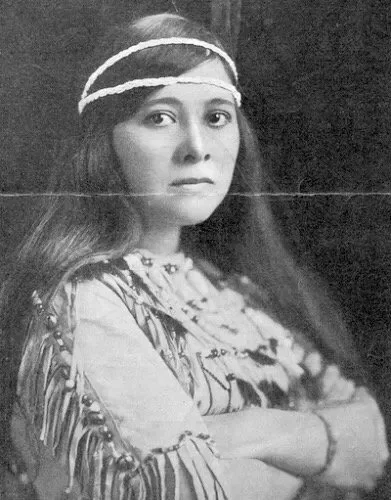
Lucy Nicolar
Rewiggling our History
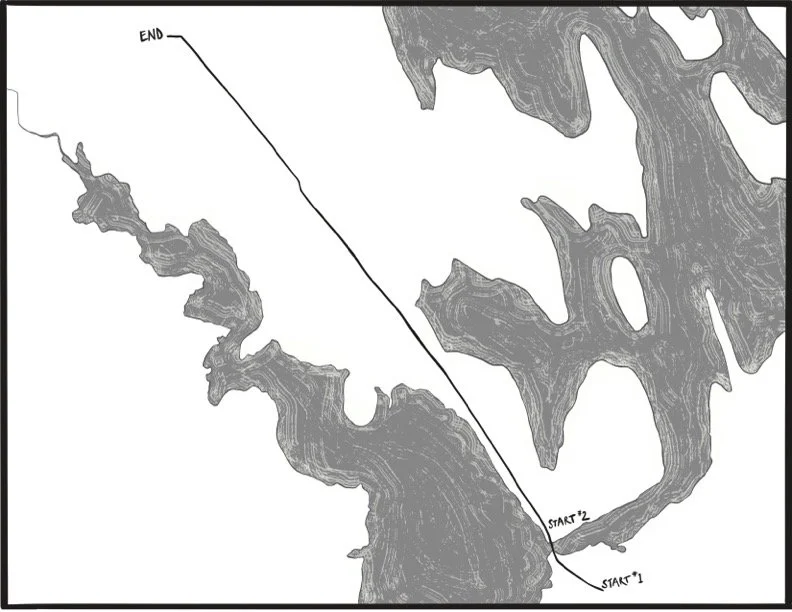
Today, ecologists in Scotland and even here in Maine are working to “rewiggle” rivers that were once artificially straightened to make them easier to control and use. Straightening rivers, we’ve learned, destroys their vitality: salmon and other species depend on the complexity of winding waterways to thrive.
Our histories, too, have been straightened—cut and channeled into neat, efficient narratives that erase the twists and turns, the complexity, and the people that make them whole. By actively rewiggling our history, we begin to restore its natural flow, allowing a more diverse and resilient community to flourish.
As we walk together, we’ll surface stories that help us reconsider the Kennebunks’ layered past, touching on:
Indigenous history, pre- and post-contact
Early Wabanaki deeds and land transactions
Revolutionary War service by local residents of color
The role of West Indies commodities in the local economy
Segregated church services and racial exclusion in worship
The Ridge community and its enduring legacy
Shipbuilding at the Kennebunk River yards and its Atlantic world connections
By rewiggling our history together, we’ll open space for truth-telling, repair, and renewed connection—to one another, to this land, and to the waters that continue to shape our shared story.
Walk Logistics
-
The walk is roughly two miles long and covers a variety of terrain. A trolley shuttle will be available throughout the walk to support anyone who needs a ride.
The First Parish Unitarian Universalist Church (where we’ll gather together at the end to convene and share a meal) is wheelchair accessible.
Have questions about mobility needs or accommodations during the walk? Email where@atlanticblackbox.com or leave a voicemail/text 207-200-7235 and we’ll get back to you.
-
We will have the opportunity to share a meal together at the end of the day, around 5 p.m.—three sisters soup (including a vegetarian option) and cornbread, at the First Parish Unitarian Universalist Church.
Snacks and water will be available throughout the walk to tide people over.
-
We recommend carpooling. If you need a ride or want to offer a ride, click here.
Parking suggestions:
Rogers Pond parking lot (49 Water St.)
CNC building parking lot (40 Water St.)
Kennebunk Sewer District parking lot (44 Water St.)
Along Water St.
After the meal, a shuttle will be available to take people back to their cars.
-
Restrooms are available along the walk at:
Rogers Pond Park (porta potty)
Brick Store Museum
First Parish Unitarian Universalist Church
Waterhouse Center
Sayre House (porta potty)
-
Trolley shuttles will be available throughout the walk to support anyone who needs a ride as well as at the end of the walk to take people to the meal location (First Parish Unitarian Universalist Church) and their cars if needed.
Have questions about mobility needs or accommodations during the walk? Email where@atlanticblackbox.com or leave a voicemail/text 207-200-7235 and we’ll get back to you.
Featuring
-
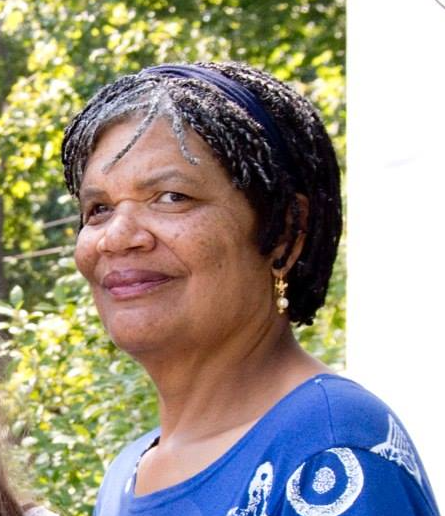
Linda Ashe-Ford
Linda is a storyteller who brings the history and folktales of people of color to life. She is an Ashely Bryant Fellow with the Maine Publishers and Writers Alliance. Linda believes that through story we can begin to deepen our understanding of each other.
-

John Burrows
A Kennebunk native and resident, John Burrows has worked on countless river restoration projects, and is the VP of US Operations for the Atlantic Salmon Federation.
-
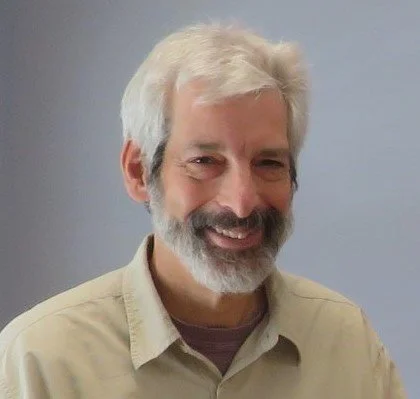
Bill Grabin
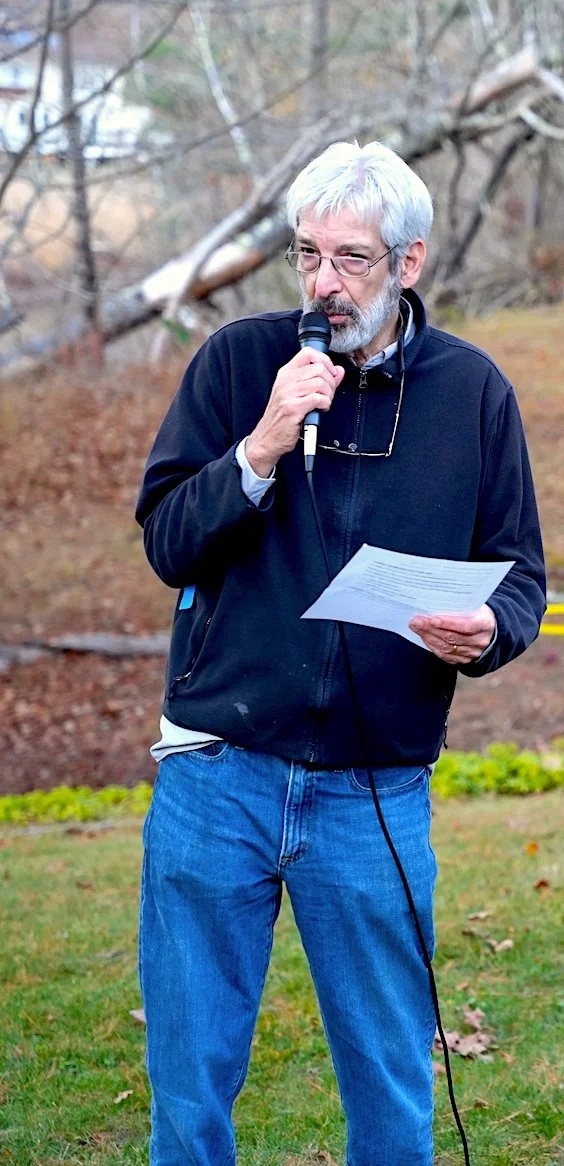
Bill Grabin, of Kennebunk, has long been active with a number of local conservation and historical organizations. He developed the Just History database that is now part of the Brick Store Museum website.
-
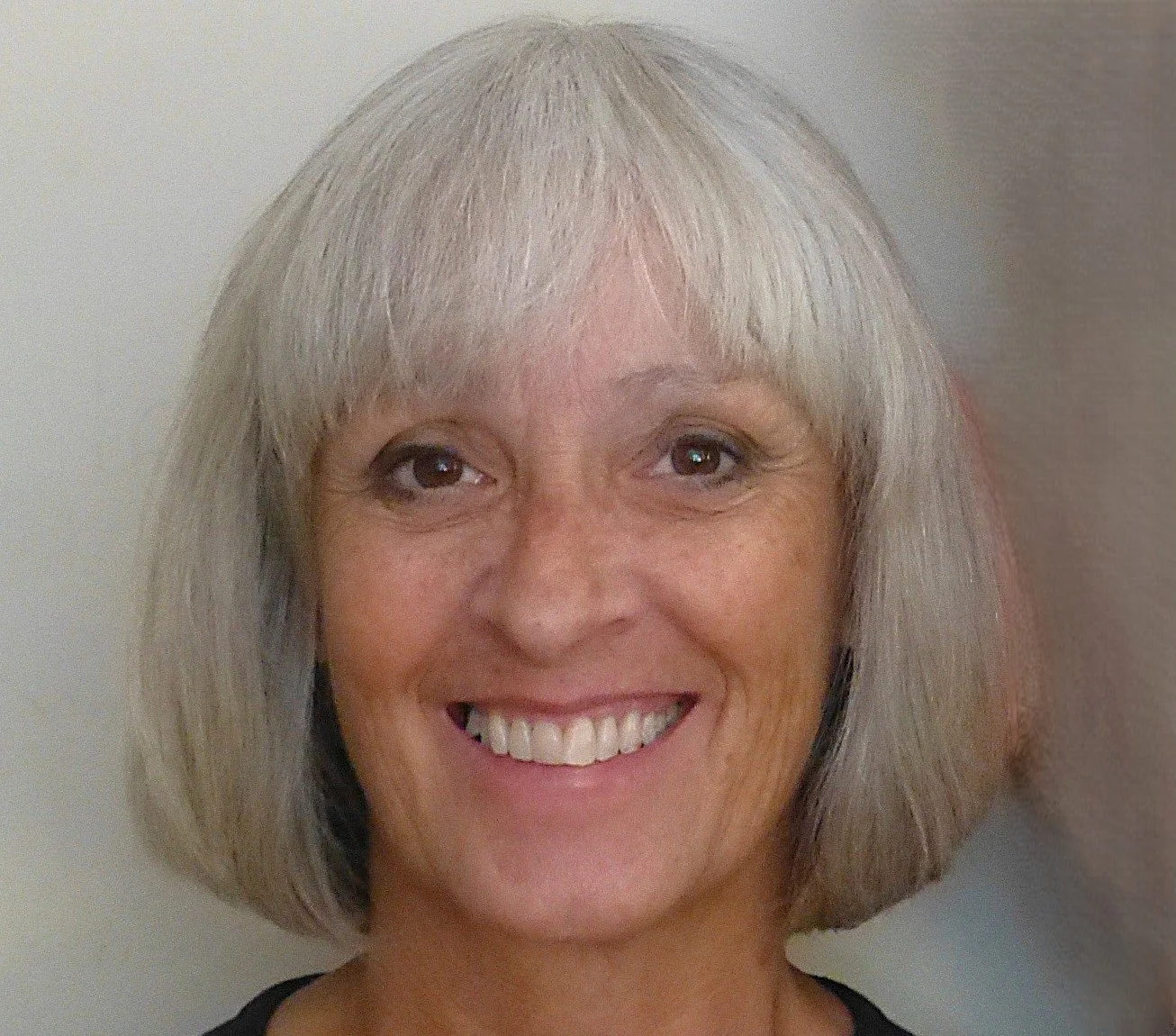
Monica Grabin
Monica Grabin, of Kennebunk, is well-known as a musician and presenter of historical programs for adults and children throughout Maine, using period songs to enlighten American history. She is currently working on the Just History Project, tracing Kennebunk’s 19th century West Indies trade.
-
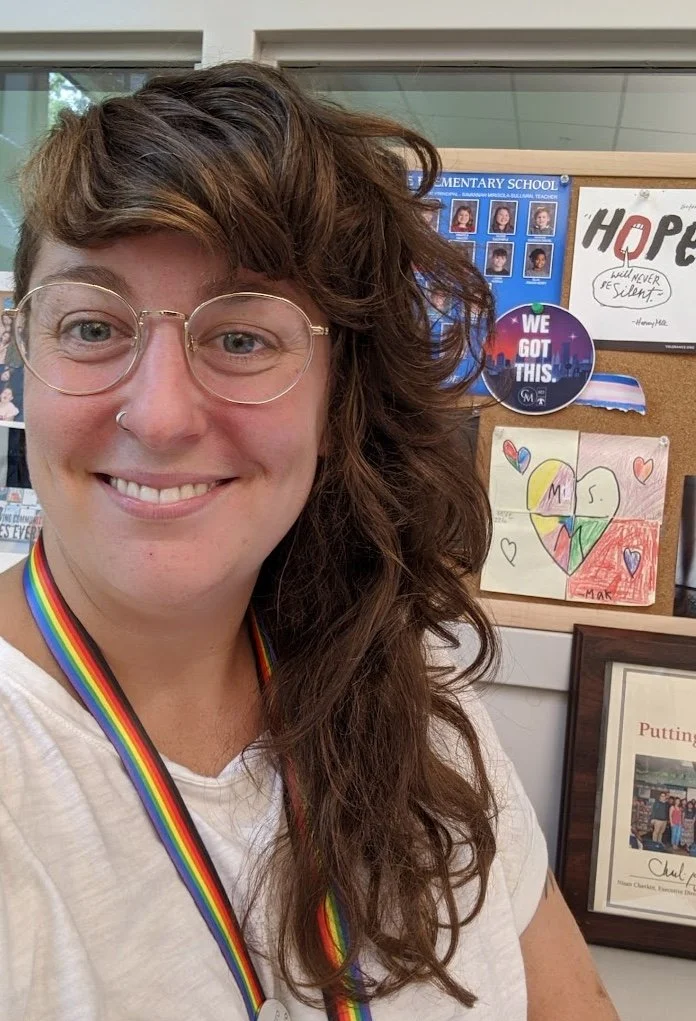
Savannah Mirisola-Sullivan
Savannah grew up in Kennebunk and lives in Portland, continuing her lifetime love affair with the ocean. A long-time public educator, she works to ensure that all young people see themselves reflected in the histories they learn and the places they live.
-

Kathy Ostrander Roberts
-
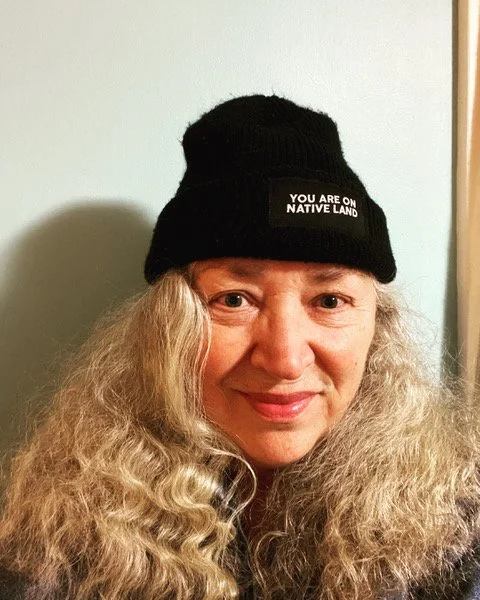
Mihku Paul
Wolastoqey elder, writer, and visual artist Mihku Paul serves on the WHERE Advisory Council. Based in Portland, she has long advanced cultural and ecological awareness through her teaching, activism, and internationally published poetry.
-
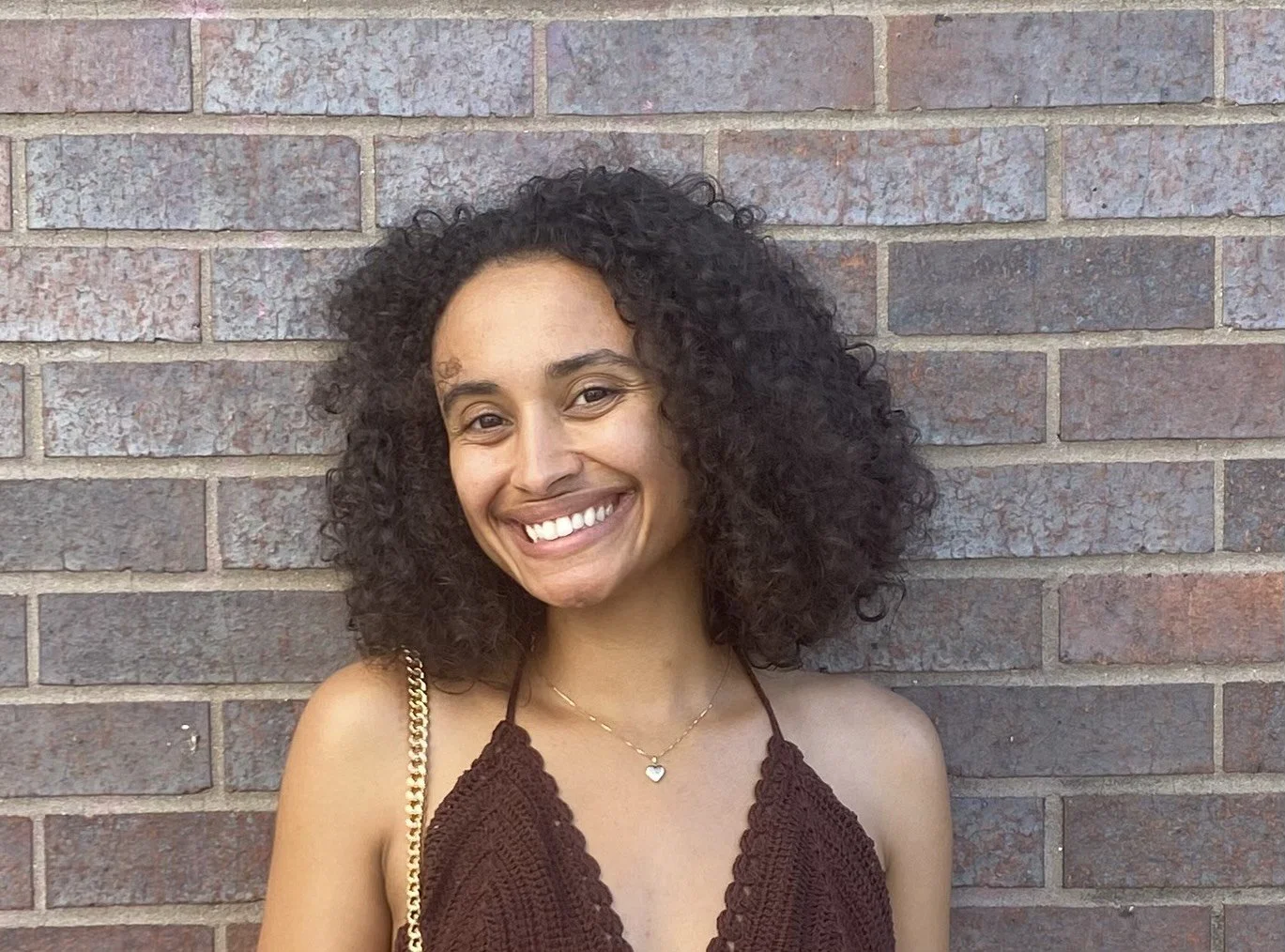
Kaila Thomas
Kaila Thomas grew up in Kennebunk and takes any opportunity to entrench themself into identity-centered work. They are currently working at Harvard Business School and studying at Harvard Graduate School of Education.
-
Jennifer Rachelle
-
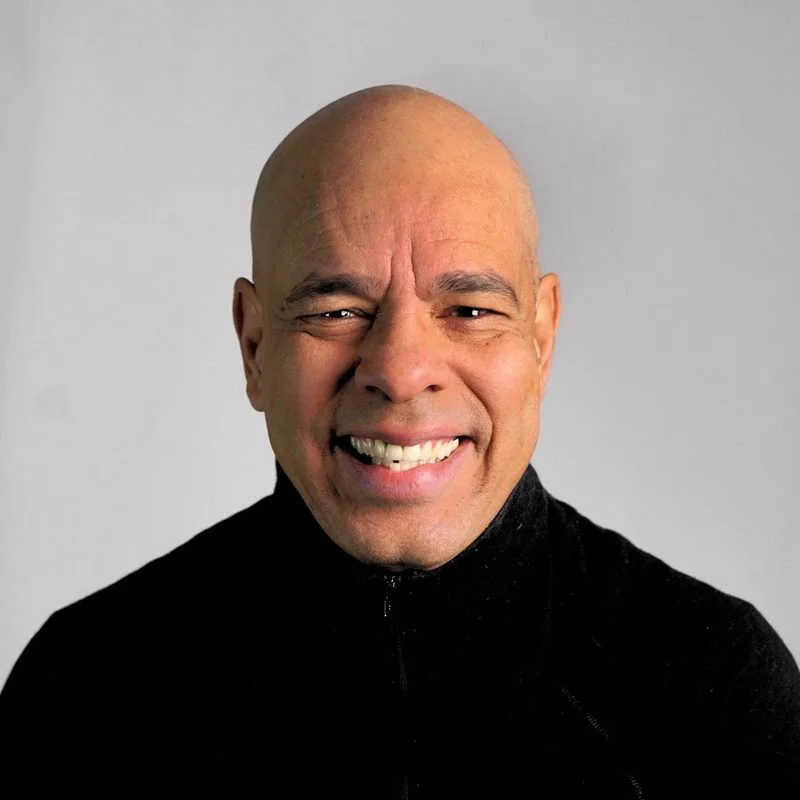
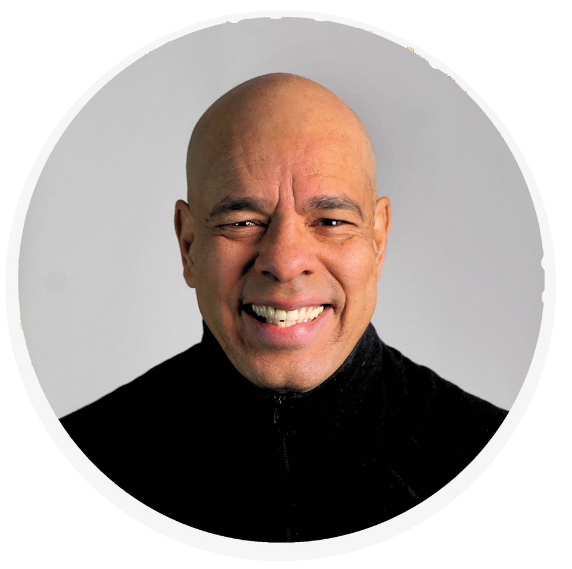
Antonio Rocha
Brazilian-American storyteller and mime artist Antonio Rocha blends movement, voice, and sound into mesmerizing performances that have toured six continents. A two-time TEDx speaker and Circle of Excellence Award recipient, he was honored with the 2024 Maine Arts Commission Fellowship for the Performing Arts.
-
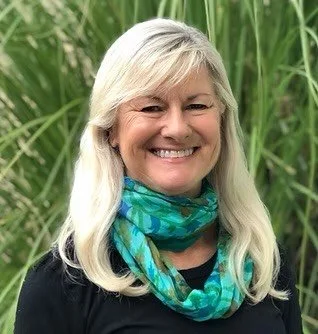
Laura Rumpf
-
Eve Sawyer
Eve is a freelance cellist, pianist, and health nut who teaches both cello and piano privately. She provides all the music each Sunday for a historic church in Buxton, and has recorded two albums with singer-songwriter Doug Lewis in Maine.
-
Ali White
-
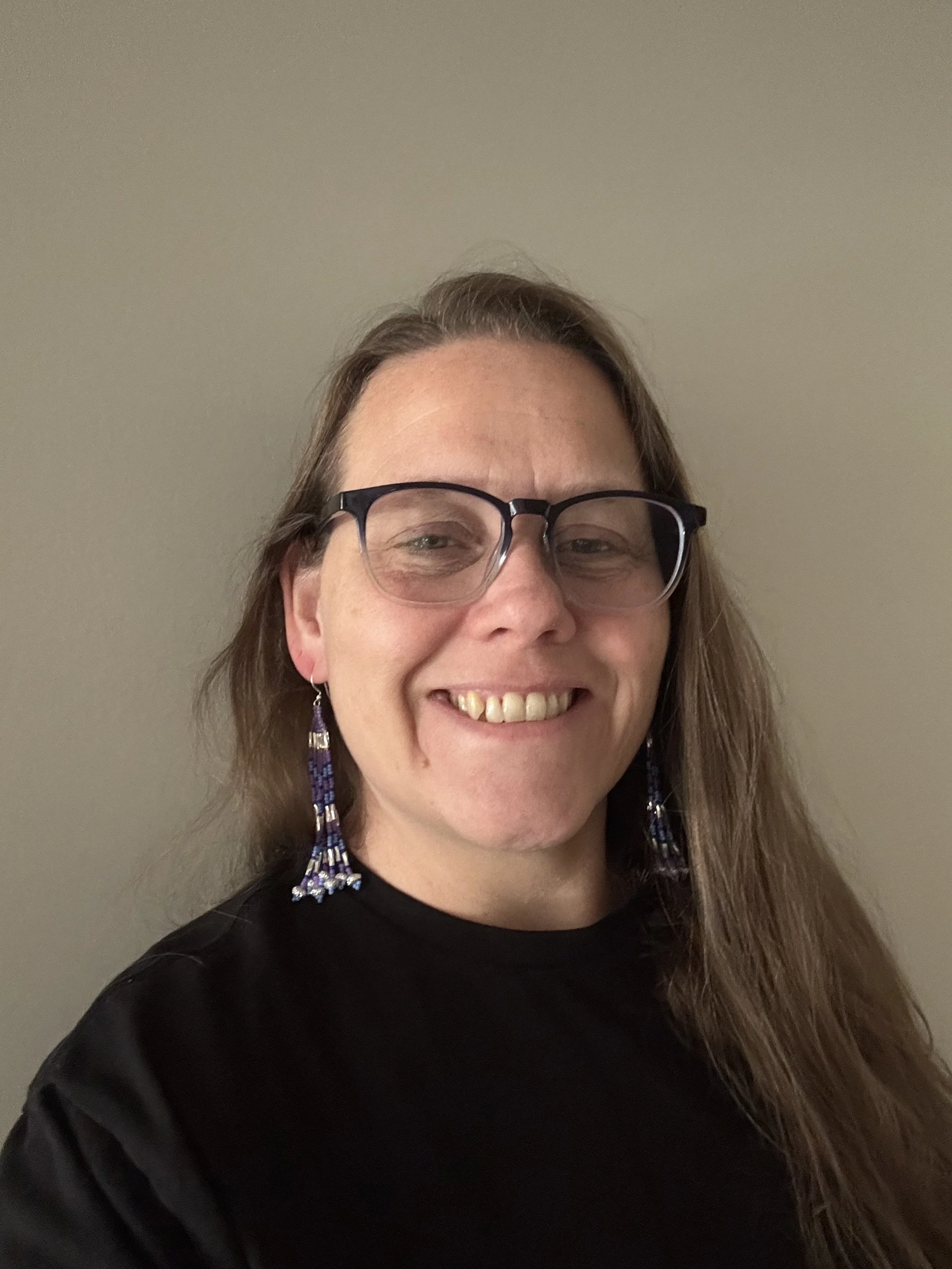
Tahloni Yearwood
Tahloni Yearwood is Wolastoqiyik (Maliseet) First Nation Cacouna. She has been a Kennebunk resident since 2017.
Sunday, November 9
3:00-4:30 pm
Once Upon a Hill in Maine
The Pedro Tovookan Parris Story
Created and performed by Antonio Rocha
Sunday, November 9
3-4:30 p.m.
First Parish Unitarian Universalist Church, 114 Main St., Kennebunk
Award-winning, internationally acclaimed storyteller Antonio Rocha brings his newest work, Once Upon a Hill in Maine: The Pedro Tovookan Parris Story, to Kennebunk’s First Parish Unitarian Universalist Church on Sunday, November 9, in conjunction with The Just History Walk. Presented by Atlantic Black Box in partnership with the Just History Project, the Brick Store Museum, and First Parish UU, this performance is free and open to the public. Registration is required.
Pedro Tovookan Parris was born around 1833 on the eastern coast of Africa, in what is now Tanzania or Mozambique. At about ten years old, he was enslaved and transported to Rio de Janeiro, Brazil, aboard the Porpoise—a U.S. brig built in Brunswick, Maine, and captained by Cyrus Libby of Scarborough. The voyage, which violated federal laws prohibiting the trans-Atlantic slave trade, became the center of a landmark legal case. After arriving in Brazil, Libby was arrested, and young Pedro was taken to Boston, where he bravely testified against his enslaver in 1845. He later found a home in the family of Virgil D. Parris in Paris Hill, Maine, where he thrived as a student, artist, and active member of his community.
From eastern Africa to western Maine—from bondage to the full exercise of his intellectual, artistic, and civic freedom—Pedro’s story is one of remarkable resilience and creativity. In Once Upon a Hill in Maine, Antonio Rocha brings this history to life through powerful storytelling, song, and mime, embodying the courage and imagination that shaped Pedro’s extraordinary journey. The performance will be followed by a moderated conversation between Antonio and the audience.
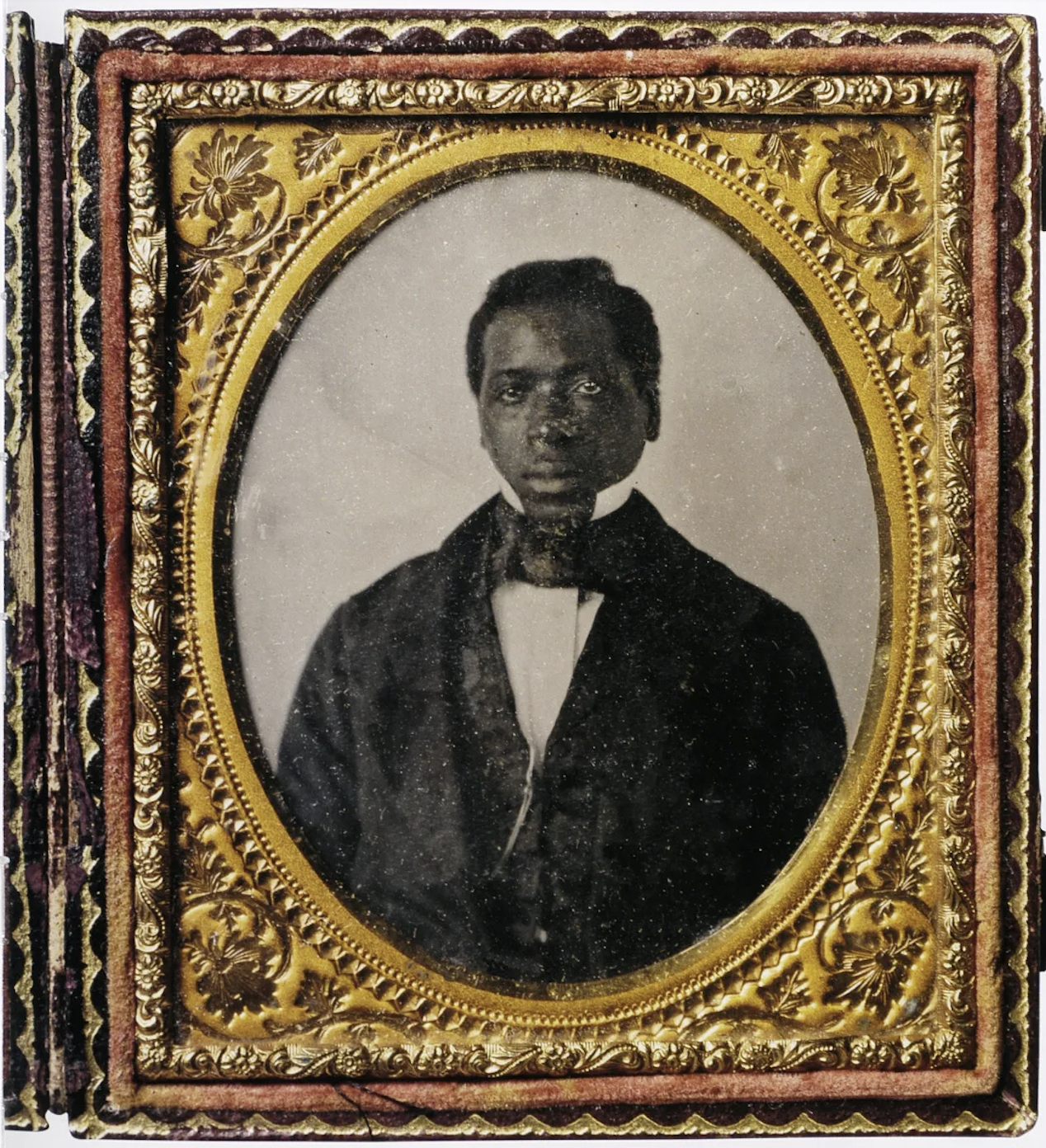
Studio portrait of Pedro Tovookan Parris,
circa 1855
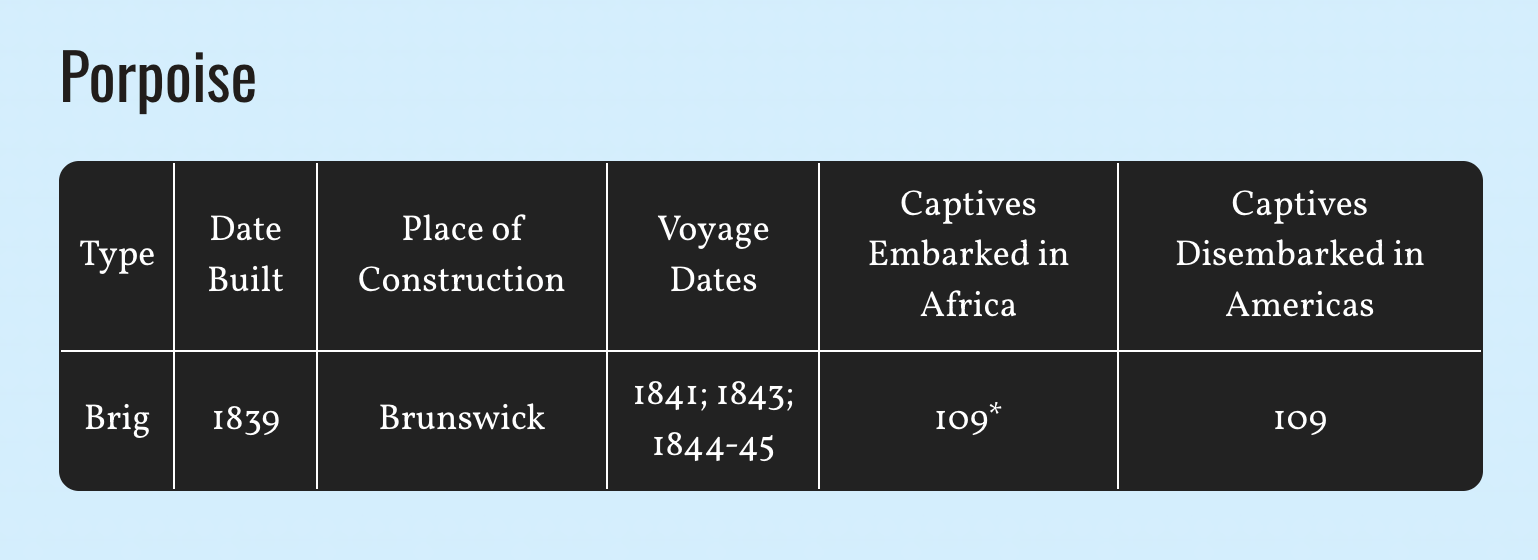
The Porpoise was a brig built in 1839 in Brunswick, Maine. It was registered in the state when it engaged in at least four transatlantic and intra-american slaving voyages, first in 1841, then in 1843, and again in 1844–45. The vessel’s owner, George F. Richardson, was a Mainer, as was Captain Cyrus Libby. On these various voyages, captives were embarked in Baltimore, São Tomé, Angola, and Mozambique.
These events are a collaboration between The Just History Project, The Brick Store Museum, and the Walks for Historical & Ecological Recovery (WHERE), a series convened by Atlantic Black Box. Other sponsors include First Parish Unitarian Universalist Church of Kennebunk, Intown Trolley, Kennebunk High School, and Octopus Books. This initiative is funded in part by the Mellon Foundation, Morton-Kelly Charitable Trust, Maine Humanities Council, Maine Community Foundation, Sewall Foundation, and by generous donors.
Do you have questions, thoughts, or feedback about this walk or WHERE at large? Email us at where@atlanticblackbox.com or leave a voicemail at 207-200-7235 and we’ll get back to you.