Eliphalet and Jott Perkins
The West Indies Trade: Wealth Built on Human Suffering
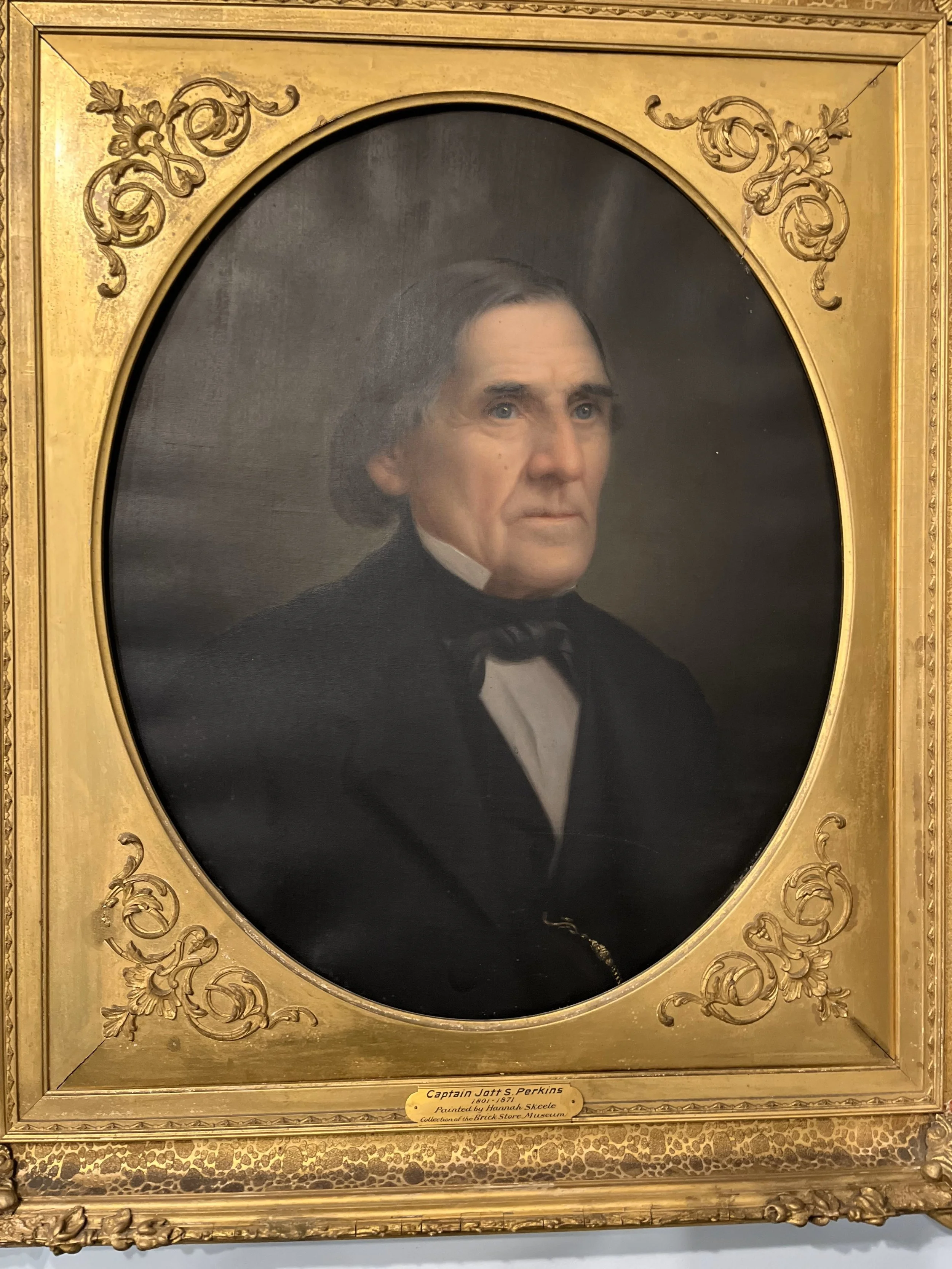
Capt Jott Stone Perkins - courtesy of the Brick Store Museum
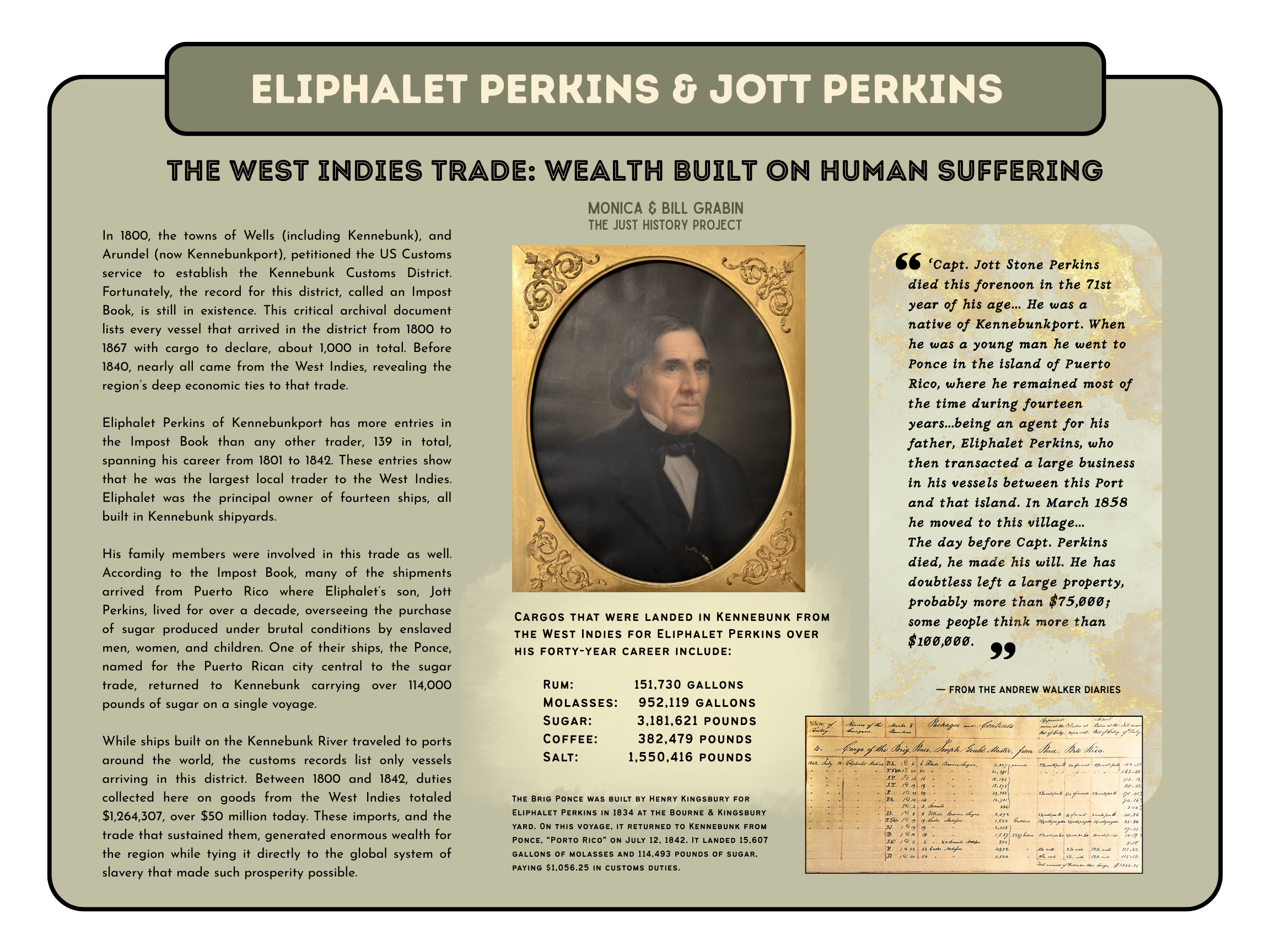
In 1800, the towns of Wells (including Kennebunk), and Arundel (now Kennebunkport), petitioned the US Customs service to establish the Kennebunk Customs District. Fortunately, the record for this district, called an Impost Book, is still in existence. This critical archival document lists every vessel that arrived in the district from 1800 to 1867 with cargo to declare, about 1,000 in total. Before 1840, nearly all came from the West Indies, revealing the region’s deep economic ties to that trade.
“Capt. Jott Stone Perkins died this forenoon in the 71st year of his age. ... He was a native of Kennebunkport. When he was a young man he went to Ponce in the island of Puerto Rico, where he remained most of the time during fourteen years...being an agent for his father, Eliphalet Perkins, who then transacted a large business in his vessels between this Port and that island. In March 1858 he moved to this village...The day before Capt. Perkins died, he made his will. He has doubtless left a large property, probably more than $75,000; some people think more than $100,000.”
Eliphalet Perkins of Kennebunkport has more entries in the Impost Book than any other trader, 139 in total, spanning his career from 1801 to 1842. These entries show that he was the largest local trader to the West Indies. Eliphalet was the principal owner of fourteen ships, all built in Kennebunk shipyards.
His family members were involved in this trade as well. According to the Impost Book, many of the shipments arrived from Puerto Rico where Eliphalet’s son, Jott Perkins, lived for over a decade, overseeing the purchase of sugar produced under brutal conditions by enslaved men, women, and children. One of their ships, the Ponce, named for the Puerto Rican city central to the sugar trade, returned to Kennebunk carrying over 114,000 pounds of sugar on a single voyage.
While ships built on the Kennebunk River traveled to ports around the world, the customs records list only vessels arriving in this district. Between 1800 and 1842, duties collected here on goods from the West Indies totaled $1,264,307, over $50 million today. These imports, and the trade that sustained them, generated enormous wealth for the region while tying it directly to the global system of slavery that made such prosperity possible.
Cargos that were landed in Kennebunk from the West Indies for Eliphalet Perkins over his forty-year career include:
Rum: 151,730 gallons
Molasses: 952,119 gallons
Sugar: 3,181,621 pounds
Coffee: 382,479 pounds
Salt: 1,550,416 pounds
The Brig Ponce was built by Henry Kingsbury for Eliphalet Perkins in 1834 at the Bourne & Kingsbury yard. On this voyage, it returned to Kennebunk from Ponce, “Porto Rico” on July 12, 1842. It landed 15,607 gallons of molasses and 114,493 pounds of sugar, paying $1,056.25 in customs duties.
Cargo of the Brig Ponce
Reflection Questions:
Where do you see connections between this history and the way goods are produced and consumed today?
This research was compiled as part of the Just History Walk: Lives Between Two Rivers, which took place in Kennebunk on November 8, 2025. For more information about this walk, click here. For more research related to this area, click on the tags below. To download a hi-res version of the posters below for educational use, please contact where@atlanticblackbox.com.
Poster design by Meadow Dibble