Shepard Bourne
A Black Sailor Impressed by the British Navy
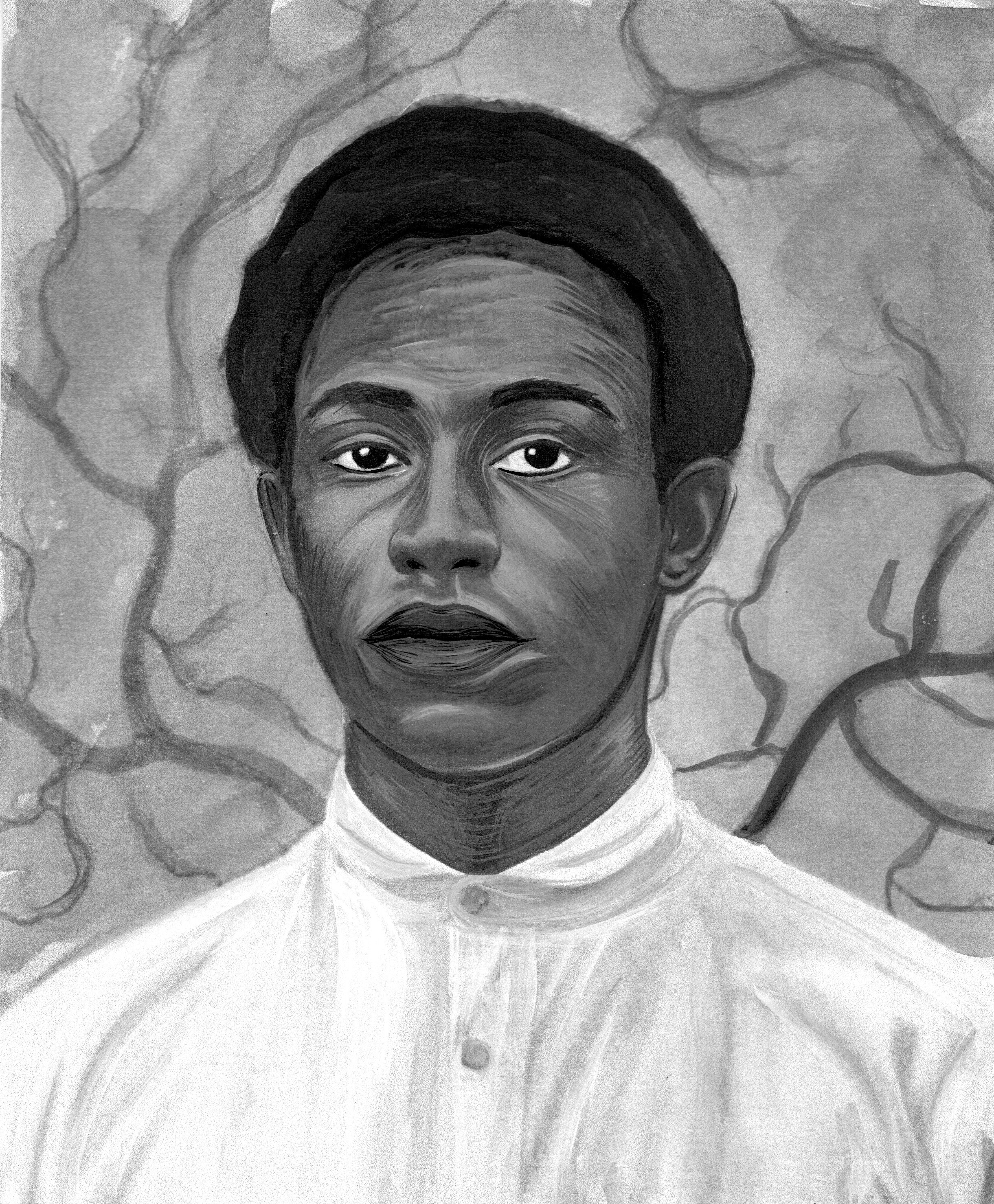
“Shepard” by Corinna Dibble
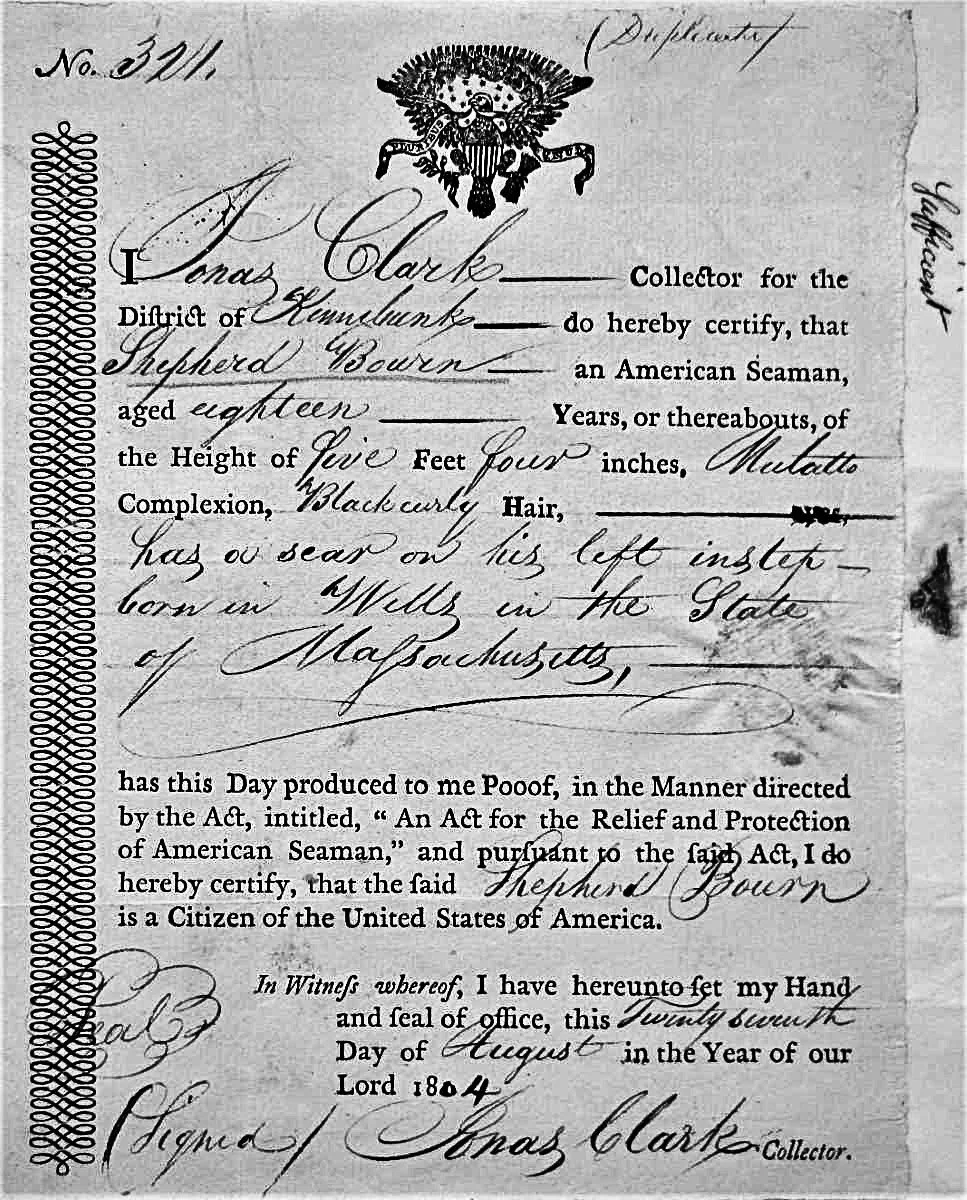
Shepard Bourne’s certificate of U.S. citizenship, 1804
Shepard Bourn was born in Kennebunk in 1787 to free but formerly enslaved parents, Salem Bourne and Peggy. Shepard worked as a seaman, one of the most common occupations accessible to free Blacks in New England in the early 1800s. In 1804, Shepard obtained a protection certificate to prove his U.S. citizenship, status as “free,” and protect him from being forcibly conscripted by the British navy through “impressment”—the forcible seizing of sailors into military service, a common recruitment practice until 1814.
Unfortunately, this certificate didn’t protect Shepard—in late January 1812, Shepard wrote his mother, informing her he’d been impressed by the British navy six months’ earlier in Quebec. In this letter, he articulates a detailed plan for securing his release from the ship “San Juan lying at the Rock of Gibraltar” where he is imprisoned. First, he asks his mother to “plea to Judge Clark and get me a protection”, since he “had the misfortune to lose” his certificate. Next, he directs his mother “to go to Parson Fletcher and get a certificate of my marriage and get it signed by Judge Wells.” He then asks her to “make my case now to Mager Cousens” by sending a letter enclosing these documents “to the council in London” and promises that “if I should ever return I shall endeavor to satisfy them for their trouble.”
Shepard takes pains to assure his mother and family that “he is “in good health” and only reveals the stress he’s under in the context of urging his mother to “use her endeavors to get me a discharge as soon as possible, as I am very anxious to get home to my wife and family if not you.”
While documents show that Shepard’s mother successfully obtained copies of each of the documents he requested and sent copies of them under a cover letter directed to “Mager Cousens,” we don’t know whether Shepard was freed from imprisonment and returned home.
What we know of Shepard’s story thus far shows a free Black person from Kennebunk exercising agency following emancipation. The documents we’ve uncovered reveal that Shepard was familiar with the legal process that could enable his freedom, knew exactly which documents could be used to establish his identity as a free man, and that his family clearly had allies who were prepared to act on his behalf. Shepard’s knowledge and familiarity with the legal system enabled him to enact another form of resistance.


Reflection Questions
How might Shepard’s family have survived his long absence at sea during this economically fraught period in a town dependent on maritime commerce?
This research was compiled as part of the Just History Walk: Lives Between Two Rivers which took place in Kennebunk on November 8, 2025. For more information about this walk, click here. For more research related to this area, click on the tags below. To download a hi-res version of the posters below for educational use, please contact where@atlanticblackbox.com.
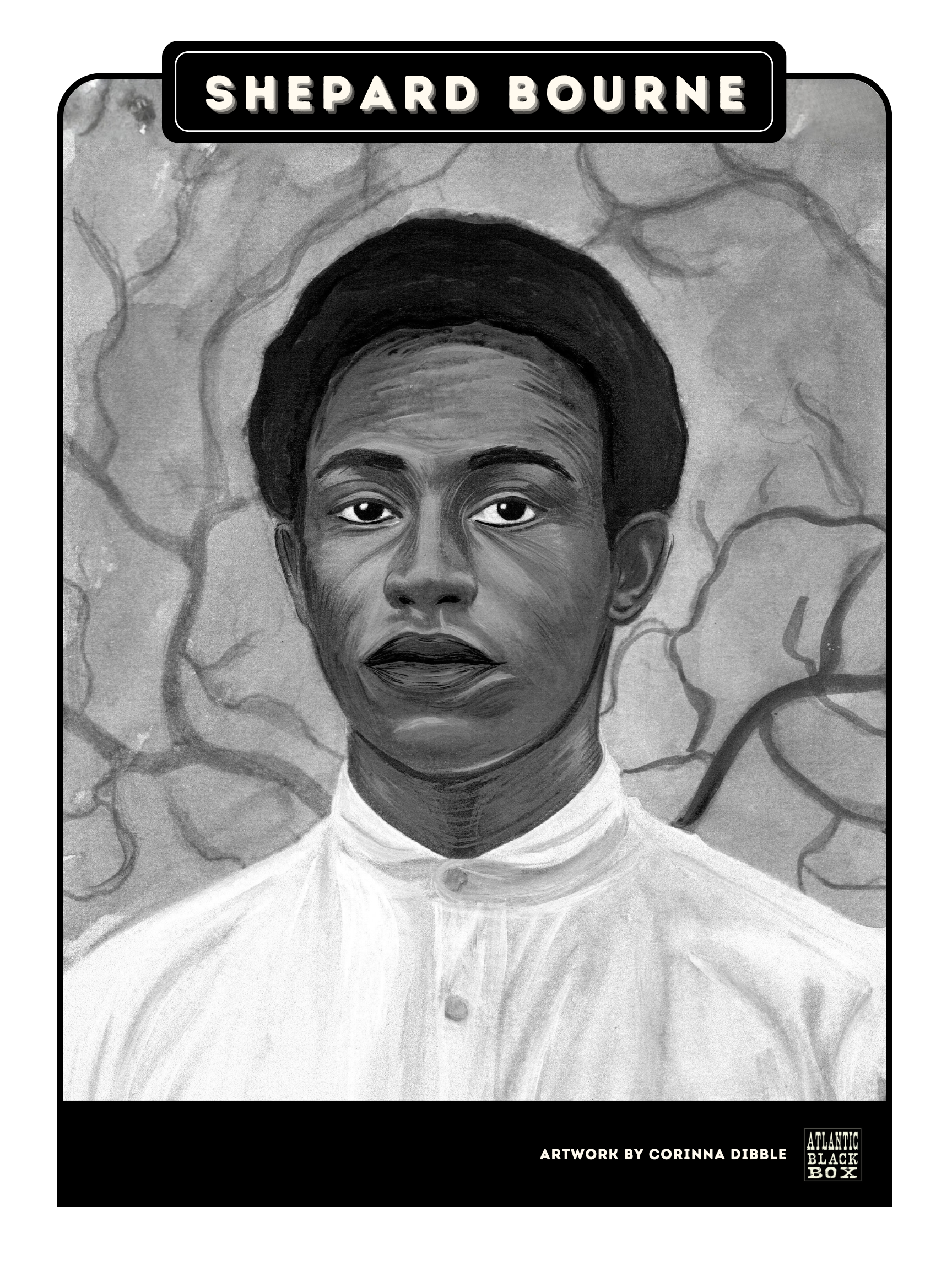
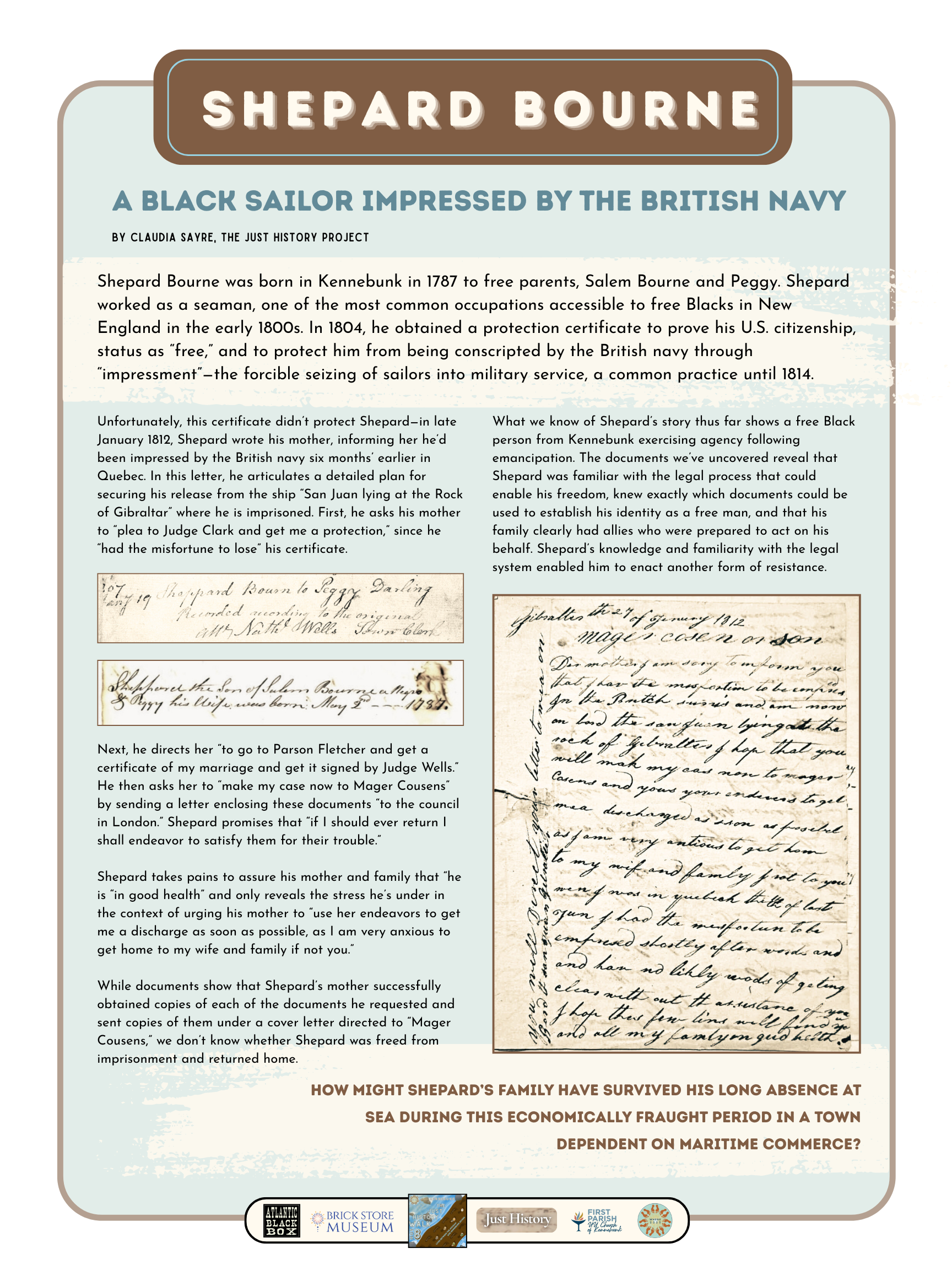
Poster by Meadow Dibble