The Land Claims
What happened at the gravel pile at Motahkomikuk precipitated the push for recognition of Wabanaki presence and sovereignty across ancestral homelands.
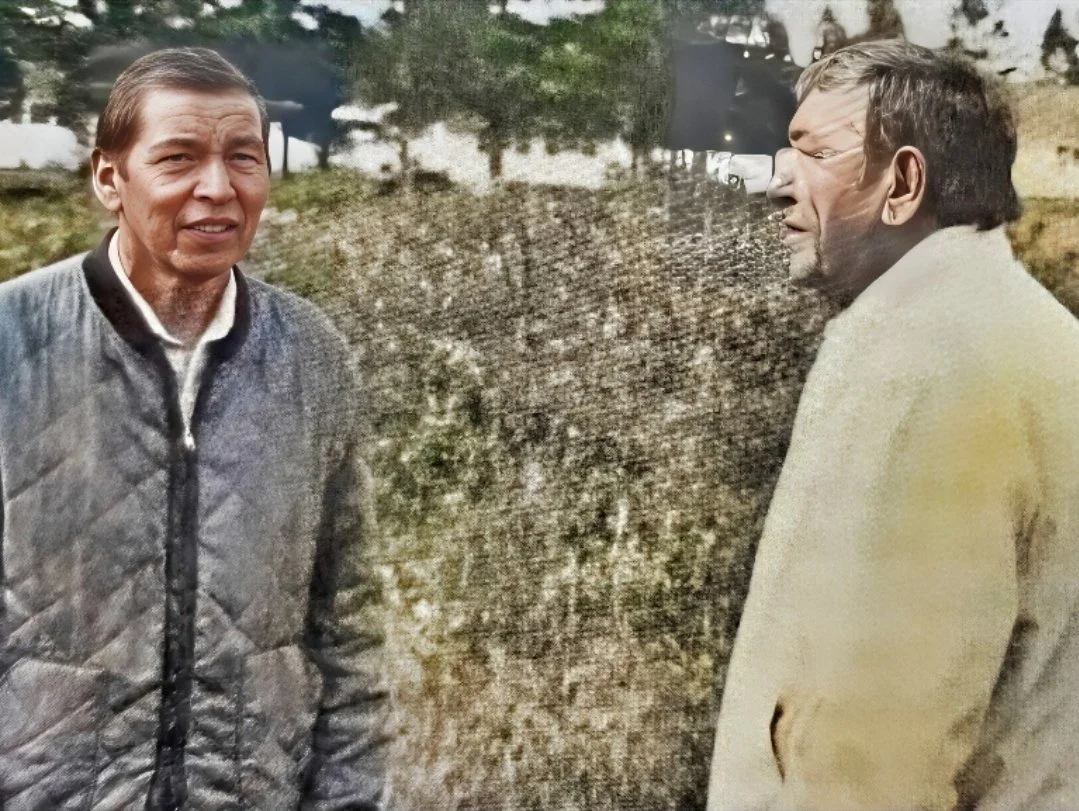
John & George Stevens at the gravel pile
In 1964, when William Plaisted encroached on reserved lands at Motahkomikuk, Passamaquoddy resistance kicked off a bigger story of return whose impacts would extend far beyond the sit-ins at the gravel pile.
Seeking legal intervention to block Plaisted’s taking, the Tribe hired non-native attorney Don Gellers. Gellers helped the Tribe sue the Commonwealth of Massachusetts for land theft, on the basis that the lands that had been alienated from the Passamaquoddy Tribe were reserved for them in the 1794 Treaty. However, immediately after filing the claim, Gellers was arrested for possession of marijuana and was disbarred, unable to continue practicing law. (In 2020, he was posthumously pardoned, a first in the State of Maine and an admission of the state’s interest in quelling Tribal land claims.)
Geller’s successor, Tom Tureen, reshaped the legal argument, looking further back into history. In 1790, U.S. Congress had signed the Nonintercourse Act, declaring that only the federal government—not state governments—could sign treaties with Tribes. That made the 1794 treaty between the Passamaquoddy and Massachusetts, as well as Penobscot treaties signed at the same time, illegal. Without federal involvement, these state treaties were null.
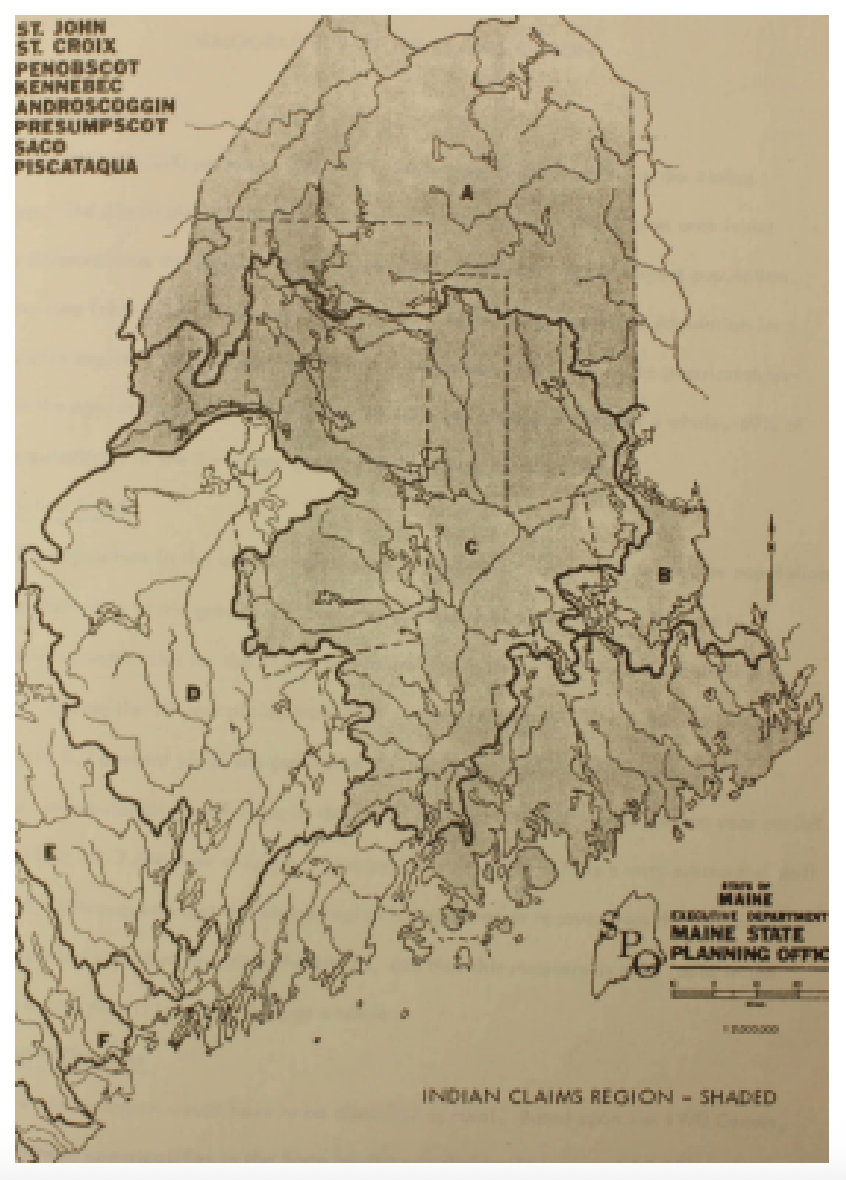
In other words, Passamaquoddy and Penobscot Nations had legitimate, legal claim to two-thirds of what had become the state of Maine.
This significant claim sparked a decade of turbulence, as the state and federal negotiators worked with the Tribes to try to resolve these claims. In 1976, the federal government finally and belatedly extended full recognition to the Passamaquoddy and Penobscot Nations. In 1980, the Maine Indian Claims Settlement Act offered a pathway forward as political pressures mounted in Maine and D.C. The settlement acknowledged the claims and provided Passamaquoddy, Penobscot, and Maliseet with funding to recover some taken lands. However, it also impeded Tribal sovereignty by defining Tribes as municipalities, versus fully sovereign nations. The settlement was the best option available to the Tribes at the time, but over the decades its drawbacks have become clear. Today, Wabanaki Tribes work together to address the flaws in the Settlement, especially the ways it impedes full recognition of Tribal sovereignty and self-determination.
After being arrested on charges of disorderly conduct, for blocking the advance of a bulldozer on tribal lands, Phylis Sabattus (then aged 20 ), Pauline N. Stevens (37), Rita M. Ranco, and Delia R. Mitchell (47) leave the courthouse at Calais.
“In 1980 with the Maine Indian Land Claims, the Tribe started to reacquire all the land on the reservation that was supposed to be protected from being sold. Land that the State sold for $1 an acre or gave away, we bought back for $10,000 an acre.”
The settlement promised to return 150,000 acres to the Tribe….kind of. In order to regain this land, the Tribe has to purchase it back with funds earmarked by the settlement. The lands that can be purchased have to be within a carefully defined area, laid out in the Settlement Act. And Tribes can only purchase from willing sellers. Who benefits from this arrangement?
Additional Resources
Learn more about the legal arguments underlying the land claims in Waiting for Gluskabe by Joseph G.E. Gousse, 2014
Learn more about the drafting and signing of the Settlement, including the pressures facing leaders to sign at the time and the ongoing turbulence around this act: Maria L. Girouard, The Original Meaning and Intent of the Maine Indian Land Claims: Penobscot Perspectives
Learn more about ongoing work to address the flaws in the 1980 settlement through the work of the Wabanaki Alliance.
Understand the state’s complicity in Gellers’ framing in his Post-humous pardon, 2020
This research was compiled as part of the Mihqitahatom: The “I Remember” Walk at Motahkomikuk/Indian Township, which took place on August 17, 2025. For more research related to this area, click on the tags below. To download a hi-res version of the posters below for educational use, please contact where@atlanticblackbox.com.
This walk was a collaboration between the Passamaquoddy Tribe at Motahkomikuk (Indian Township), First Light, and the Walks for Historical & Ecological Recovery (WHERE), a series convened by Atlantic Black Box, following the actions and determination of the community and leadership from elders.