Who Built Fort George?
Contributed by Barbara Desmarais
Writer and local historian, author of Cemeteries of Brunswick blog
During King William’s War (1689-1697), Wabanaki and French soldiers had forced the British to abandon some New England settlements, such as Pejepscot. Now a Boston-based investment group calling themselves the Pejepscot Proprietors were hoping to profit from the abandoned Pejepscot Plantation.
In 1715 four New England sloops sailed up the Kennebec River and into the Androscoggin until they reached the first set of waterfalls. In those days vessels as large as sixty tons were able to navigate the river. The ships carried everything necessary to build a fort: men, horses, building materials, tools, and food. They also carried Capt. John Gyles and fifteen soldiers.
This assignment had been tailor-made for Gyles. During the war he had been a prisoner of the Maliseets and now had the skills to act as interpreter between the British and the Indigenous people. He was also returning to the place the Gyles family had first settled forty-six years earlier, before they moved to Pemaquid. A century before settlers landing at Pejepscot had heard eagles screaming from the tops of the ancient oaks that draped the shoreline.
The new arrivals, though, saw embankments lined with blackened tree trunks, with young saplings poking through the ruins. They disembarked onto a land ravaged by war, its plains barren, dotted here and there with small stands of pine. Even the zigzag Fort Andros built some twenty-five years earlier was nothing but rubble, having been destroyed by the Wabanaki.
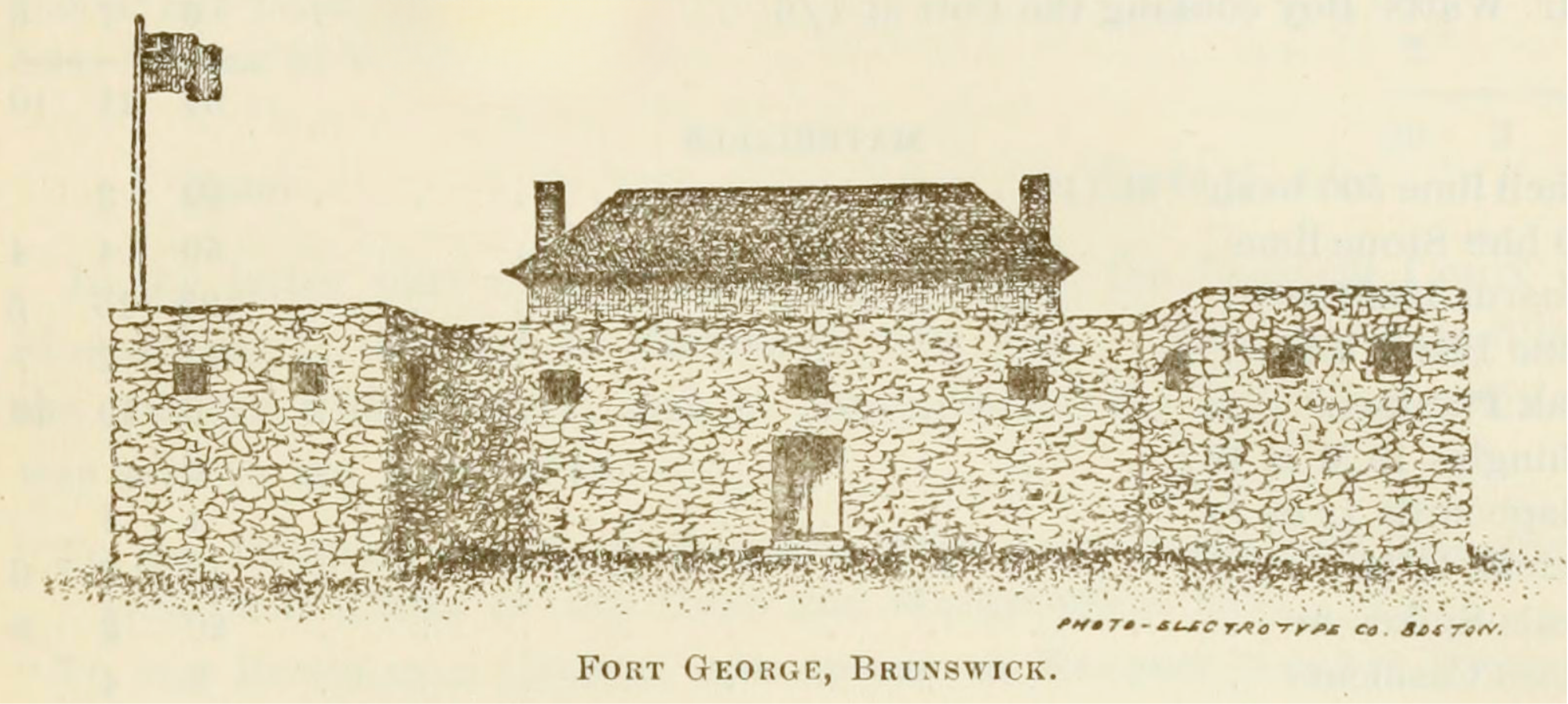
Above the falls, just west of the brick factory now known as Fort Andross, masons built three-foot-thick, ten-foot-high walls into a fifty-by-fifty-foot square.
Before the Revolutionary War, British colonials viewed any non-Christian “servants” they imported into the colonies as slaves.
Even as far north as Massachusetts, the terms “Negro” and “servant” were usually synonymous with “slave.” The “Negro” mason and “Negro” “servant” would not be the only enslaved persons at the fort, for another captain at Fort George would hold an enslaved “Negro servant” named Pompey.
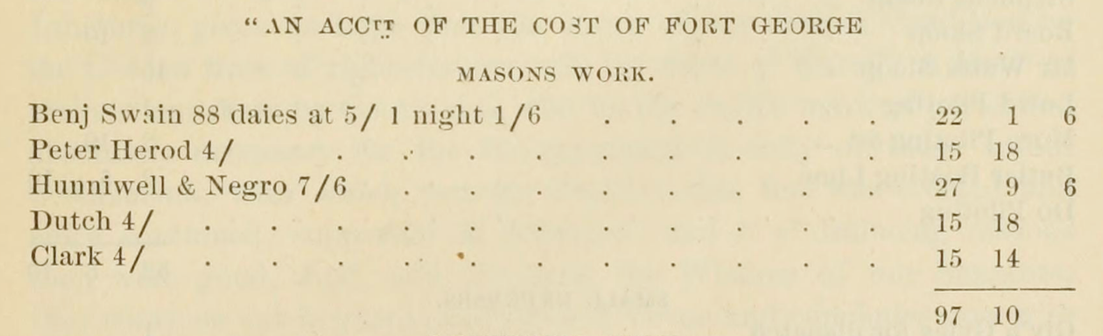
One of the masons building the outer walls of the new fort was an unnamed “Negro,” likely the enslaved servant of a man called Hunniwell. The unnamed man’s labor was integral to the success of the Fort George project, but apparently the Pejepscot Proprietors didn’t feel the need to recognize him with a name. The soldiers raised the British flag over Fort George on November 25, 1715.
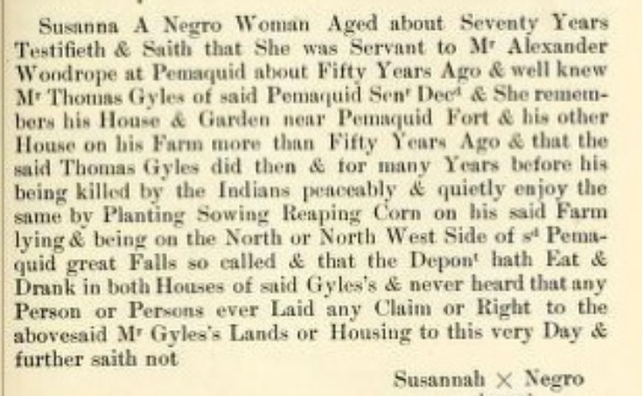
Capt. Gyles wasted no time trying to reclaim his father’s land on the Topsham side of the river, as well as the land at Pemaquid. He was greatly aided in that effort by another “Negro.”
This time it was a 70-year-old “Servant” named Susannah who testified that she remembered the captain’s father, Mr. Thomas Gyles, and the home and farm that he had at Pemaquid. The word “Negro” was entered after her mark.
After volunteering to survey Brunswick’s cemeteries, Barbara Desmarais (the author of this post) has spent the past 20 years digging up stories of the people buried in the area and sharing her findings on her blog “Cemeteries of Brunswick.”
This research was compiled as part of the Pejepscot Portage Walk, which took place in Brunswick on October 6, 2024. For more information about this walk, click here.
For more research related to this area, click on the tags below. To download a hi-res version of the posters below for educational use, please contact where@atlanticblackbox.com.
This walk was a collaboration between the Pejepscot Portage Mapping Project and Atlantic Black Box.