About Interco(a)stal
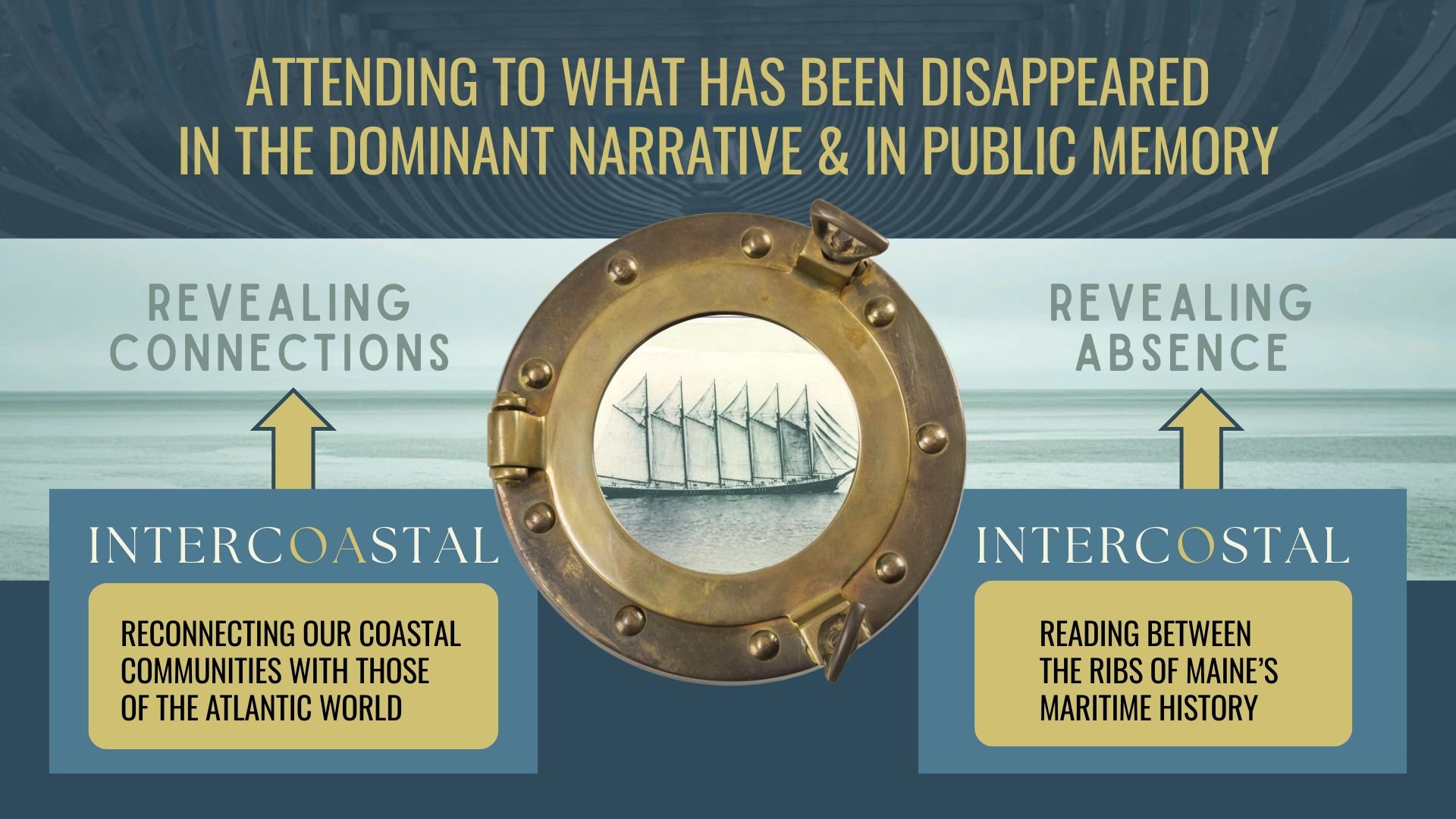
Interco(a)stal: Reading Between the Ribs of Maine's Maritime History is a yearlong, place-based project that uses monument reinterpretation as a framework for historical recovery, artistic exploration, and civic dialogue.
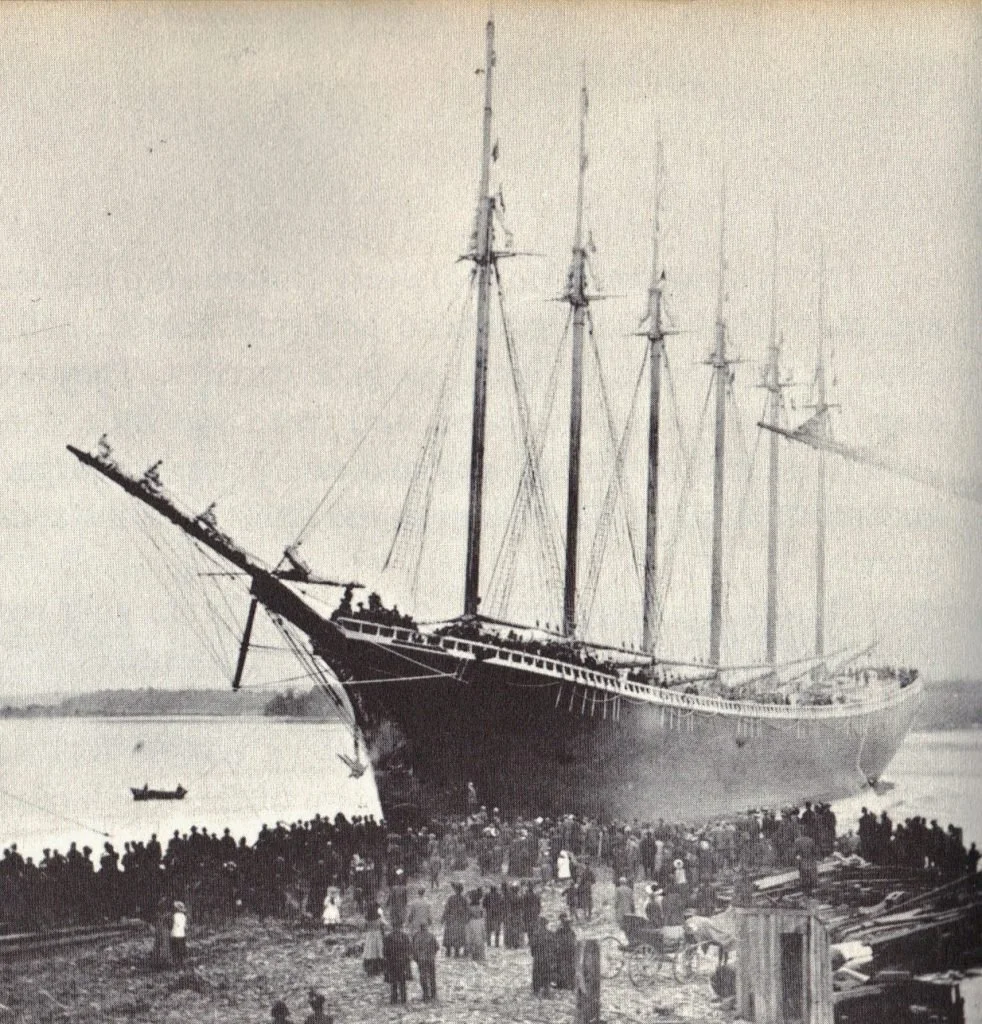
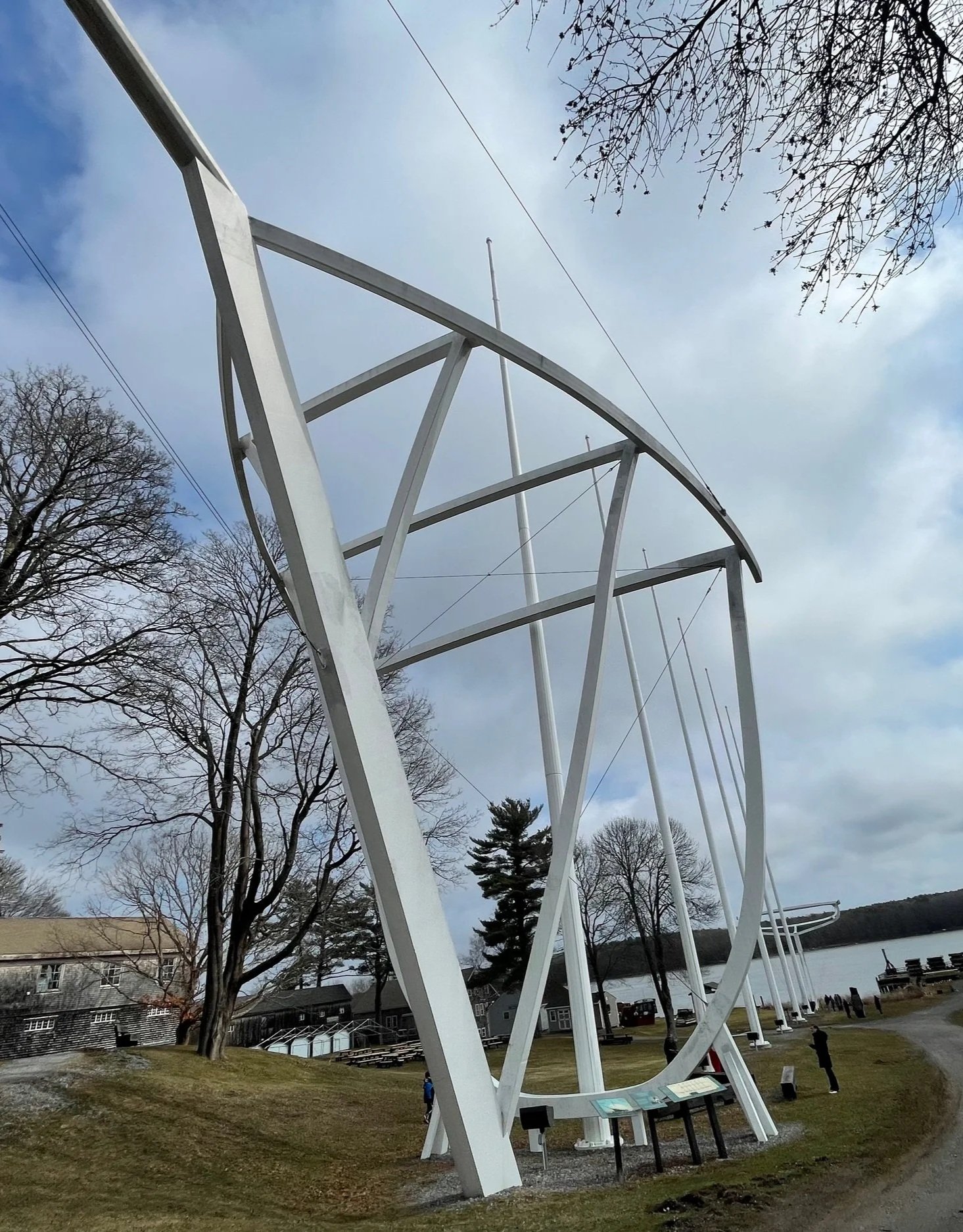
Led by Atlantic Black Box in collaboration with The Third Place, Maine Maritime Museum, Bomazeen Land Trust and a network of artists, researchers, culture bearers, archivists, and community partners, Interco(a)stal centers on the Wyoming Evocation—a monumental skeletal ship sculpture in Bath that commemorates the largest wooden vessel ever built.
Through archival research, artistic intervention, community engagement, and a process of narrative return—bringing stories, histories, and knowledge back into the communities, landscapes, and public spaces from which they emerged—participants are working together to uncover overlooked dimensions of Maine's maritime past and explore how they might change the way we understand this monument and the histories it represents.
Interco(a)stal will culminate in a public WHERE walk and site activation on October 17, 2026 in Bath, Maine. This daylong, multisensory, embodied encounter with the City of Ships will invite participants to engage Maine's maritime history through multiple lenses and ways of knowing while exploring what it means to "read between the ribs" of official narratives.
Reinterpreting a monument as a site of inquiry, reflection, and dialogue.
Recovering overlooked histories, particularly those connected to Black and Indigenous maritime worlds.
Reading critically between the ribs of archives, narratives, and public memory.
Returning stories to public life through artistic practice, community engagement, and place-based experience.
Building relationships across communities, disciplines, institutions, and ways of knowing.
Developing a participatory public memory methodology rooted in historical recovery, narrative return, and ethical collaboration.
Sharing what we learn so others can adapt, critique, and build upon the work.
What we’re doing
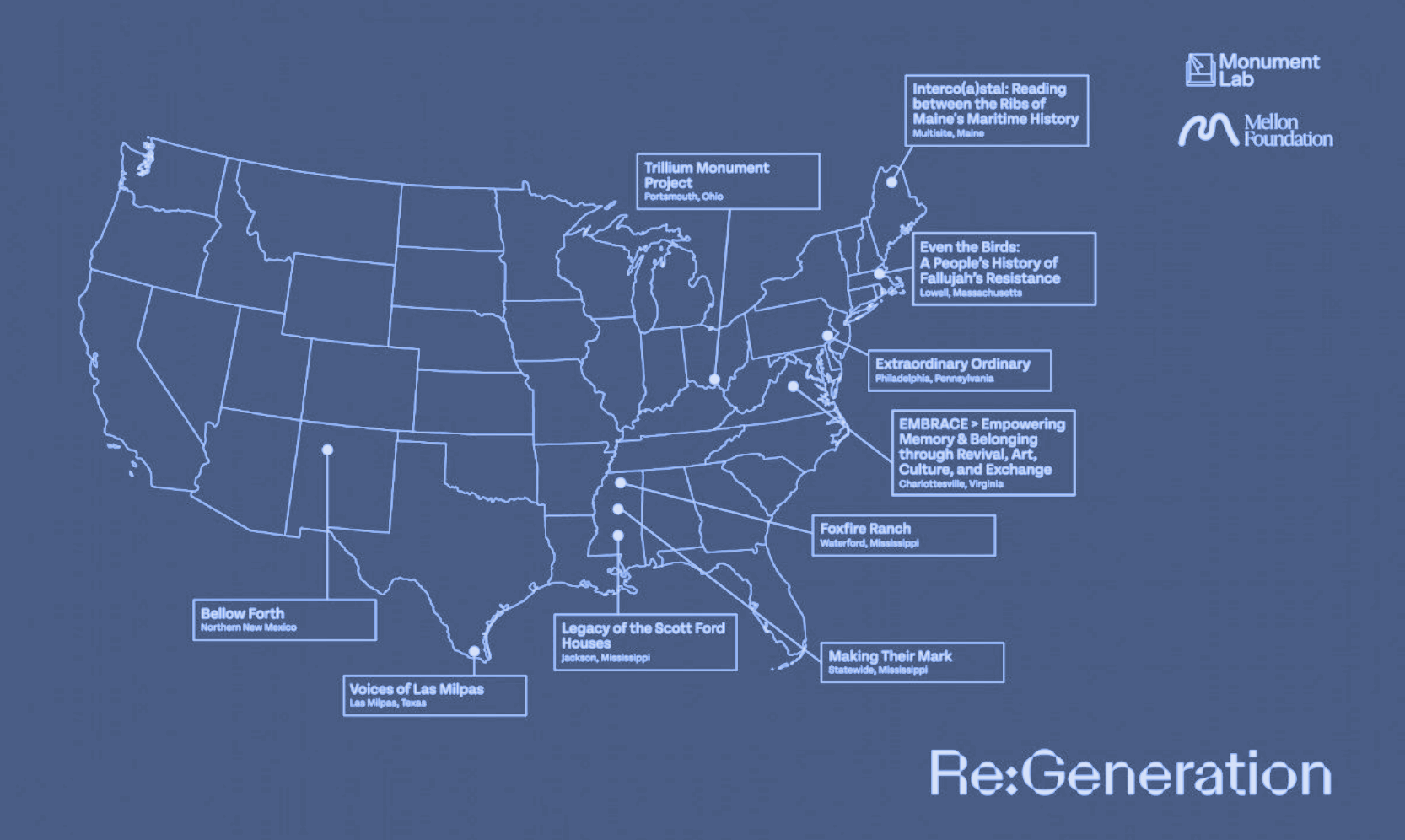
Interco(a)stal is one of ten projects selected for Monument Lab’s 2026 Re:Generation cohort, a national initiative supporting community-centered approaches to rethinking monuments and reshaping public memory.
Monument Lab works with artists, scholars, and communities to critically examine the stories that monuments tell and those they leave out. Their practice centers public engagement as a means of questioning dominant narratives, creating space for dialogue, and expanding who has a voice in shaping how history is remembered. Atlantic Black Box inscribes its work within the same creative and broadly participatory historical recovery movement.
By taking the Wyoming Evocation as a starting point, the Interco(a)stal project opens the monument to new questions, perspectives, and forms of engagement—transforming it from a static representation into a shared site of investigation and meaning-making.
Why WHERE here?
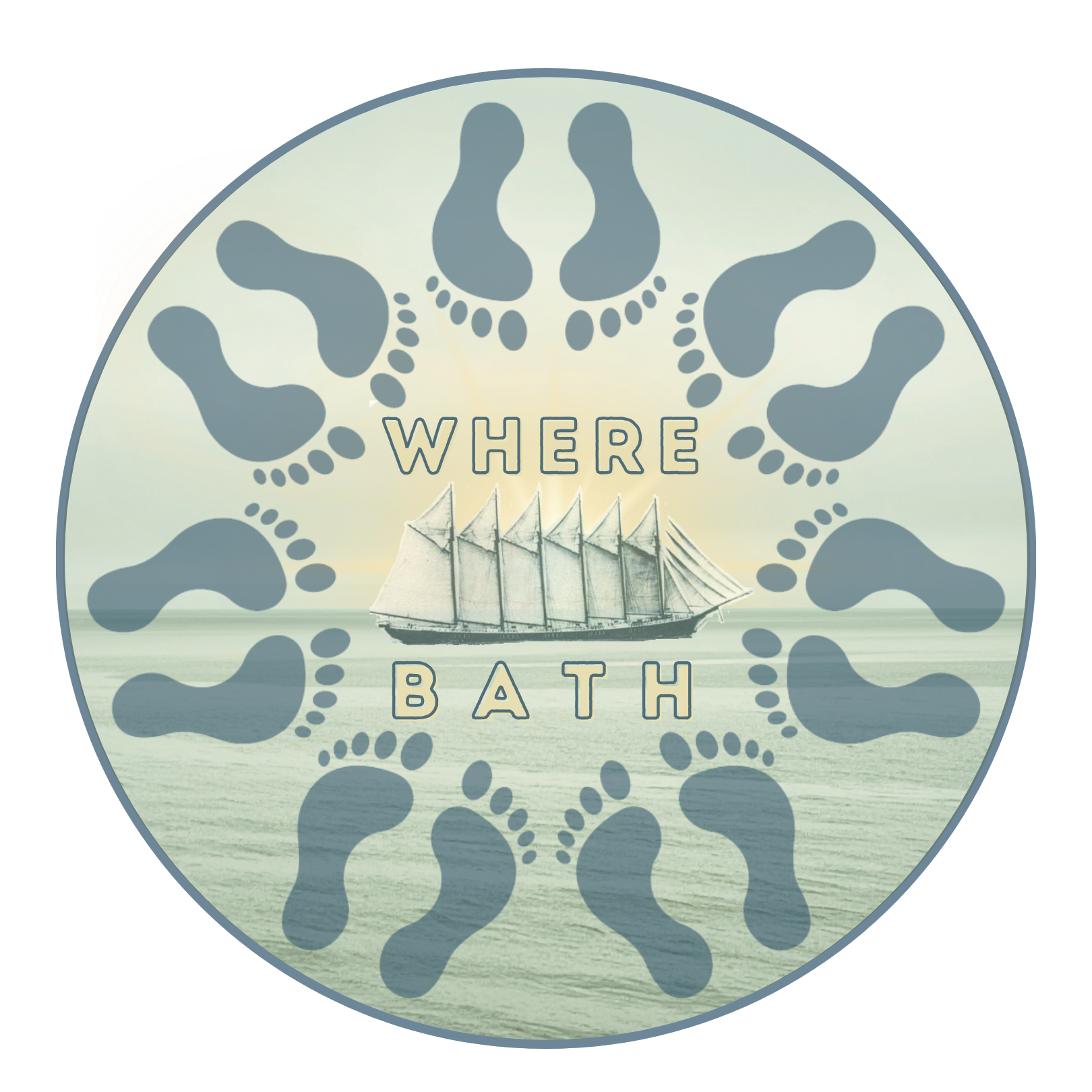
The deeply collaborative Interco(a)stal project unfolds in Bath, Maine—a place long known as the “City of Ships.” For over two centuries, the Kennebec River has been a site of extraordinary shipbuilding activity, from the construction of massive wooden schooners like the Wyoming to the ongoing work of Bath Iron Works, one of the nation’s most significant naval shipyards. Shipbuilding here is not only a historical legacy; it is a living tradition, deeply embedded in the economic, cultural, and emotional life of the community.
At the same time, this history does not begin with European settlement or the rise of the shipbuilding industry. For millennia, Wabanaki people have lived in relationship with this place—moving along the Kennebec and its tributaries as vital waterways, or “roads,” and building vessels shaped by deep knowledge of land, water, and seasonal rhythms. These practices reflect reciprocal relationships with the natural world that stand in contrast to later extractive maritime economies.
To speak of Bath as the “City of Ships” is to invoke a more recent chapter layered onto much longer histories of presence, movement, and making. Recognizing this deeper context invites us to reconsider what counts as maritime knowledge, whose traditions are visible, and how relationships to water have changed over time.
This legacy is visible across Bath’s commemorative landscape. Monuments, museum exhibits, and public narratives tend to emphasize ingenuity, craftsmanship, scale, and maritime achievement. They tell a story of innovation and pride—one that has shaped local identity and continues to be carried forward by generations of shipbuilders and their families.
And yet, as with many places shaped by extractive industries and global trade, these narratives are partial.
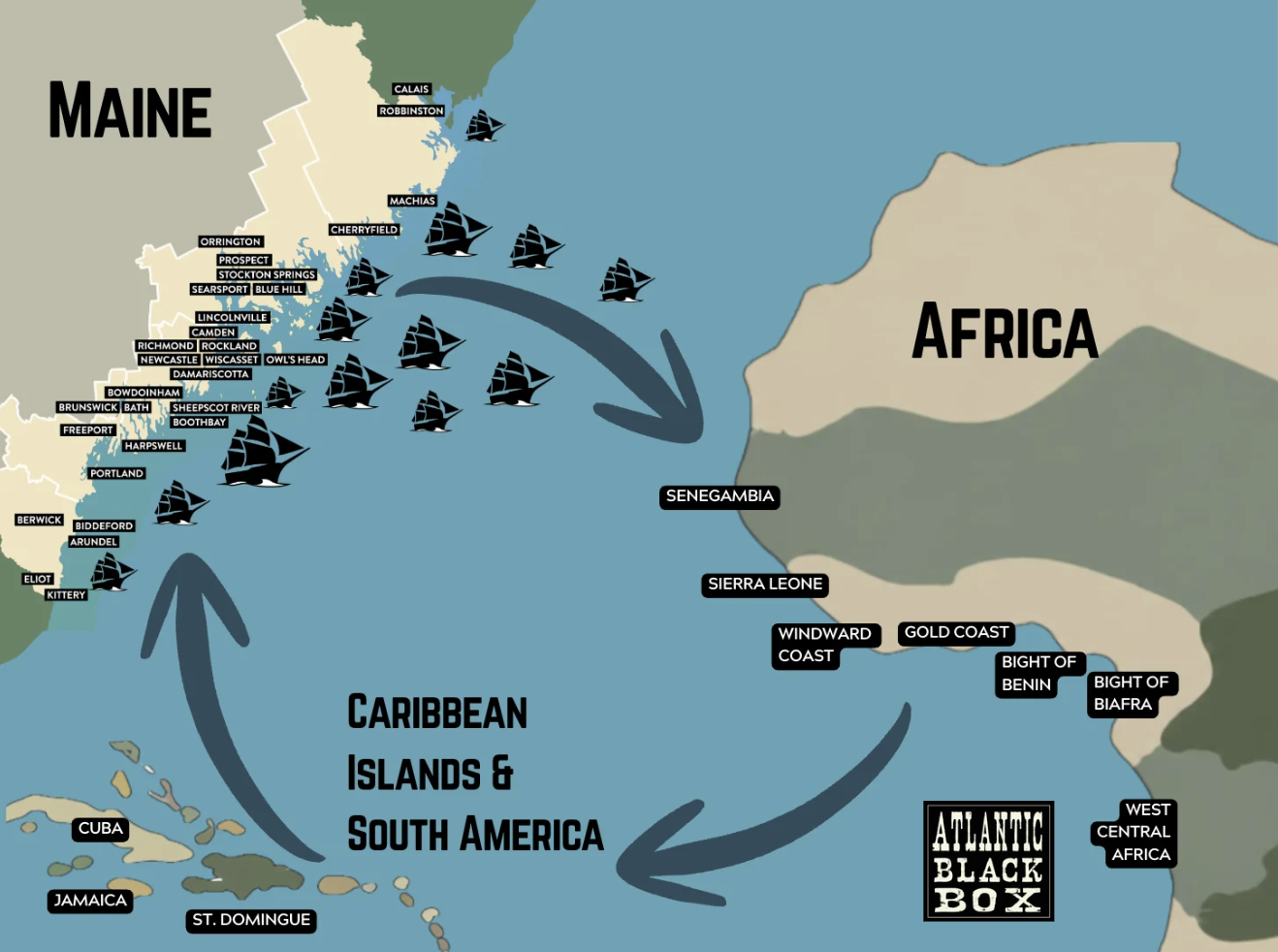
What often remains outside the frame are the broader systems in which these ships were embedded: the Atlantic networks of commerce and coercion, the entanglements with slavery and colonization, the ecological transformations of coastal and oceanic worlds, and the human lives—particularly Black and Indigenous lives—whose labor, displacement, and resistance made these histories possible yet have gone largely unacknowledged in dominant narratives.
In a place where maritime heritage is so central to collective identity, these omissions can be especially difficult to see or to question. The stories that have been told are not necessarily false, but they are harmfully incomplete. Over time, this partial telling becomes normalized, shaping not only what is remembered, but what feels rememberable.
WHERE offers a way to engage this complexity with care.
By gathering people in place and moving together through the landscape, WHERE creates space to encounter both what is visible and what has been obscured. It allows participants to remain in relationship with the pride and skill embedded in Bath’s shipbuilding traditions, while also asking more expansive questions about the histories those traditions are connected to.
In the context of Interco(a)stal, WHERE becomes the means by which the Wyoming Evocation is activated—not as a monument to be passively observed, but as a point of departure. Through walking, research, artistic intervention, and collective reflection, the site is opened into a field of inquiry: one that holds pride and critique, presence and absence, memory and possibility together.