A Brief History of Columbus Day
Inaugurating & Retiring a Contested Holiday
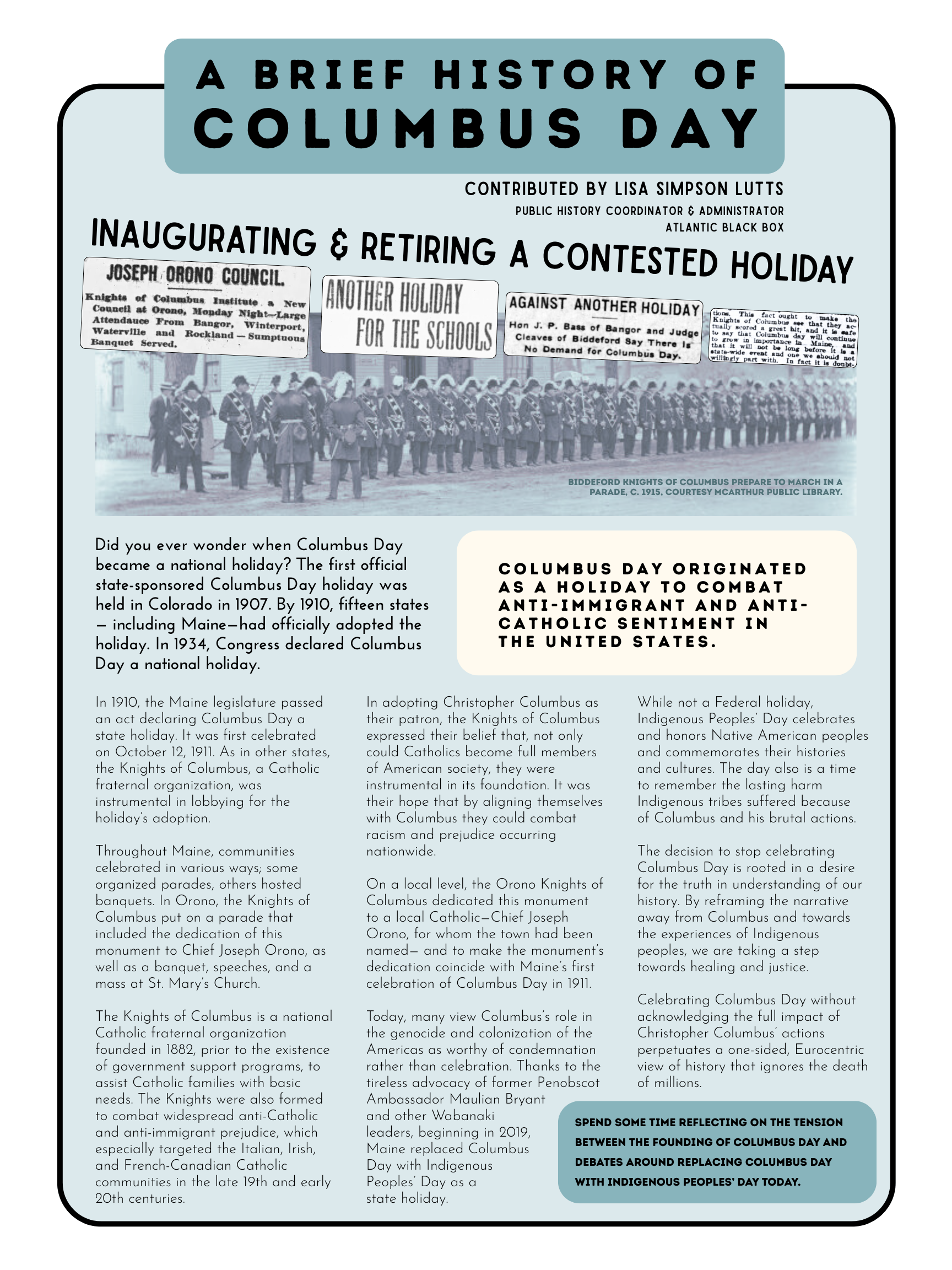
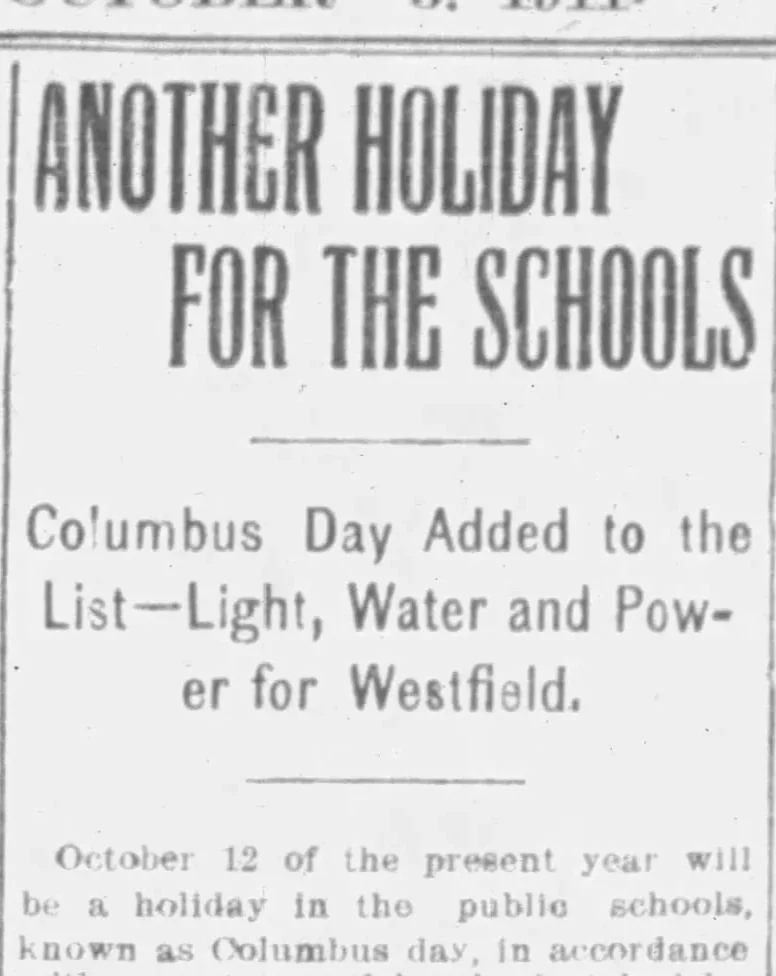
Did you ever wonder when Columbus Day became a national holiday? The first official state-sponsored Columbus Day holiday was held in Colorado in 1907. By 1910, fifteen states— including Maine—had officially adopted the holiday. In 1934, Congress declared Columbus Day a national holiday.
Biddeford Knights of Columbus prepare to march in a parade, c. 1915, courtesy McArthur Public Library.
In 1910, the Maine legislature passed an act declaring Columbus Day a state holiday. It was first celebrated on October 12, 1911. As in other states, the Knights of Columbus, a Catholic fraternal organization, was instrumental in lobbying for the holiday’s adoption.
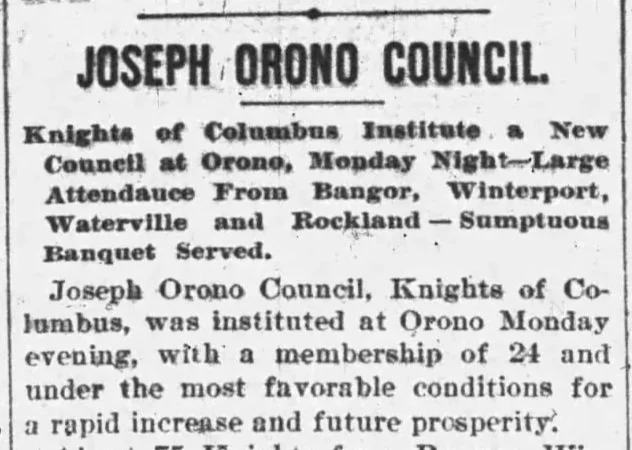
Throughout Maine, communities celebrated in various ways; some organized parades, others hosted banquets. In Orono, the Knights of Columbus put on a parade that included the dedication of this monument to Chief Joseph Orono, as well as a banquet, speeches, and a mass at St. Mary’s Church.
The Knights of Columbus is a national Catholic fraternal organization founded in 1882, prior to the existence of government support programs, to assist Catholic families with basic needs. The Knights were also formed to combat widespread anti-Catholic and anti-immigrant prejudice, which especially targeted the Italian, Irish, and French-Canadian Catholic communities in the late 19th and early 20th centuries.
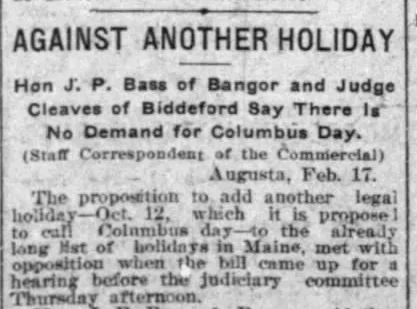
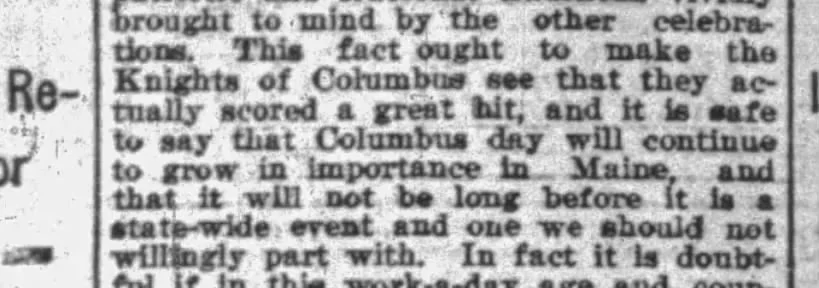
In adopting Christopher Columbus as their patron, the Knights of Columbus expressed their belief that, not only could Catholics become full members of American society, they were instrumental in its foundation. It was their hope that by aligning themselves with Columbus they could combat racism and prejudice occurring nationwide.
On a local level, the Orono Knights of Columbus dedicated this monument to a local Catholic—Chief Joseph Orono, for whom the town had been named— and to make the monument’s dedication coincide with Maine’s first celebration of Columbus Day in 1911.
Today, many view Columbus’s role in the genocide and colonization of the Americas as worthy of condemnation rather than celebration. Thanks to the tireless advocacy of former Penobscot Ambassador Maulian Bryant and other Wabanaki leaders, beginning in 2019, Maine replaced Columbus Day with Indigenous Peoples’ Day as a state holiday.
While not a Federal holiday, Indigenous Peoples’ Day celebrates and honors Native American peoples and commemorates their histories and cultures. The day also is a time to remember the lasting harm Indigenous tribes suffered because of Columbus and his brutal actions.
The decision to stop celebrating Columbus Day is rooted in a desire for the truth in understanding of our history. By reframing the narrative away from Columbus and towards the experiences of Indigenous peoples, we are taking a step towards healing and justice.
Celebrating Columbus Day without acknowledging the full impact of Christopher Columbus’ actions perpetuates a one-sided, Eurocentric view of history that ignores the death of millions.
This research was compiled as part of the Walk to Honor Wabanaki Veterans, which took place in Orono on June 21, 2025. For more information about this walk, click here.
For more research related to this area, click on the tags below. To download a hi-res version of the posters below for educational use, please contact where@atlanticblackbox.com.
This event is part of the Walk for Historical and Ecological Recovery (WHERE), a series convened by Atlantic Black Box devoted to grassroots truth-seeking and transformation. It was organized under the leadership of James Eric Francis, Sr. in collaboration with the Penobscot Nation Cultural & Historic Preservation Department, the Town of Orono, the City of Old Town, the UMaine Wabanaki Center, Bangor Public Library, Orono Public Library, RSU 26, The Wabanaki Alliance, The Abbe Museum, Wabanaki Public Health & Wellness, The Wilson Center, The Church of Universal Fellowship, Ça C’est Bon, and Orono Arts Fest.