D.A.R. Monument to Penobscot Soldiers of the American Revolution
from the Lewiston Sun Journal, 1912
Forty-one Wabanaki veterans served the American cause in the Revolutionary War. Several were guides, leading Benedict Arnold and his soldiers on the 31-day grueling march to Quebec through the Maine wilderness. The remainder served during the Penobscot Expedition, in which tribal members, along with soldiers and marines from Massachusetts, attempted but failed to capture British-held Fort George in what would later become Castine.
The decision by Chief Orono to side with the American rebels in the Revolution is often seen as an easy decision. Historically, the Penobscot sided against the English/Great Britain.
“Honor Indian Soldiers Who Fell in Revolution” Bangor Daily Commercial, June 8, 1912
Just 20 years prior to the signing of the Declaration of Independence, Massachusetts Bay Colony issued a scalp proclamation that was approved and stamped by King George II of England, declaring the “Penobscot Tribe of Indians to be Enemies, Rebels and Traitors to his Majesty King George the Second” and requiring “his Majesty’s Subjects of this province to embrace all Opportunities of pursuing, captivating, killing and destroying all and every of the aforesaid (Penobscot) Indians.”
Thus, the Penobscot were already ‘at war’ with Great Britain. After the Battle of Bunker Hill, Chief Orono and other tribal leaders journeyed to Watertown, Massachusetts to meet with General George Washington and pledge the tribe’s assistance to the rebel cause.
In 1910, the Maine State Daughters of the American Revolution (DAR), with leadership from the Bangor chapter, began developing plans for a monument that would be dedicated to “Maine Indians who served in the American Revolution.”
The granite monument was designed by the E. W. Marble Company of Skowhegan. Though the plaque is inscribed with the date of 1910, setbacks caused significant delays in getting the monument installed.
In June of 1912, representatives from the Maine DAR, along with members of the Penobscot Nation, attended the dedication ceremony. The event’s speakers included Tribal Governor Peter Nicola and past tribal Governor Joe Francis. The day’s events featured a ceremonial dance by Penobscot children with music by Johnny Neptune.
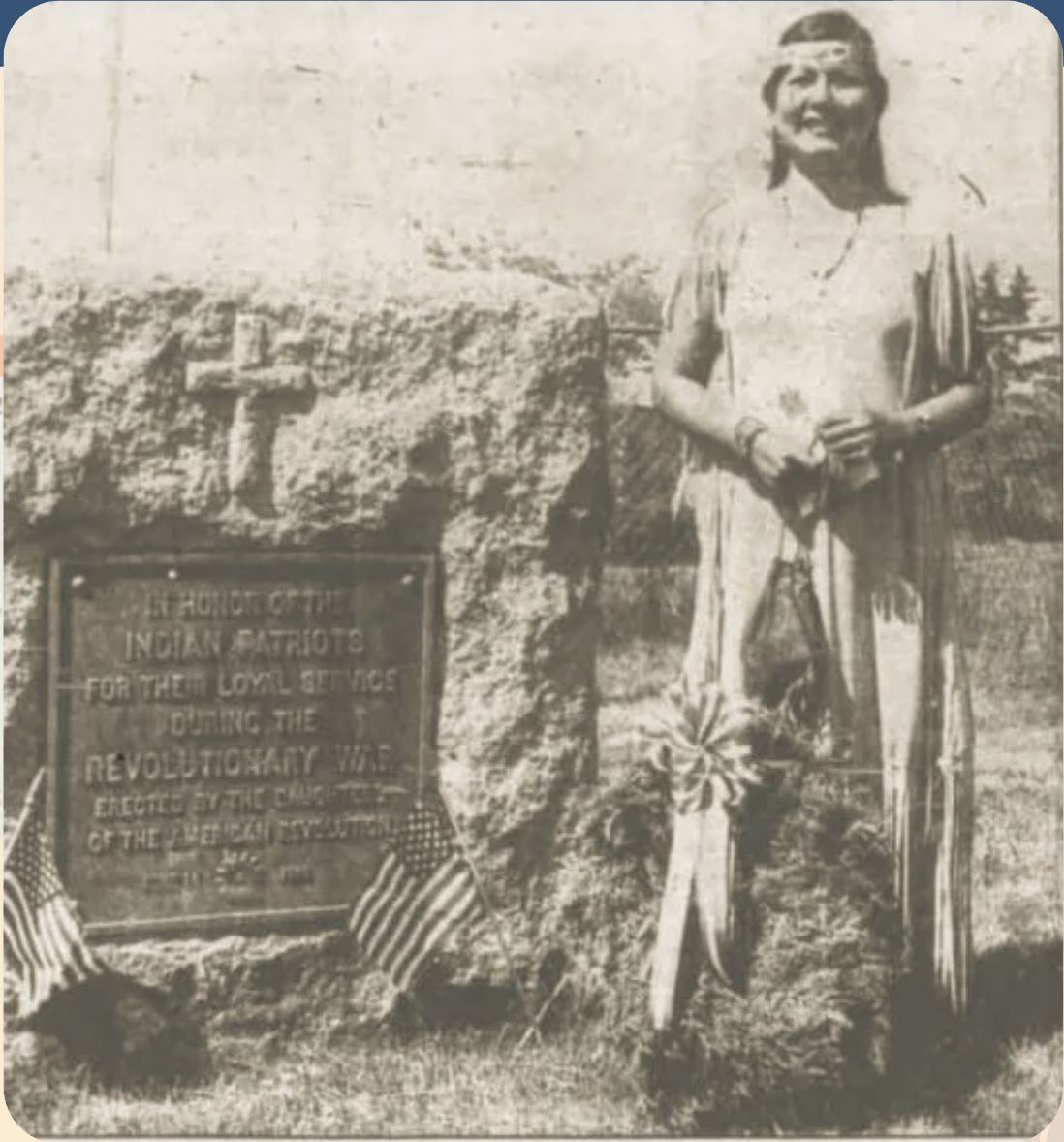
Neana Neptune Lent was the first member of the Penobscot tribe to join the Daughters of the American Revolution. She descends from Penobscot Chief John Neptune, who served under Lt. Andrew Gilman on the Penobscot Expedition.
Photo credit: The Bangor Daily News, June 16, 1986
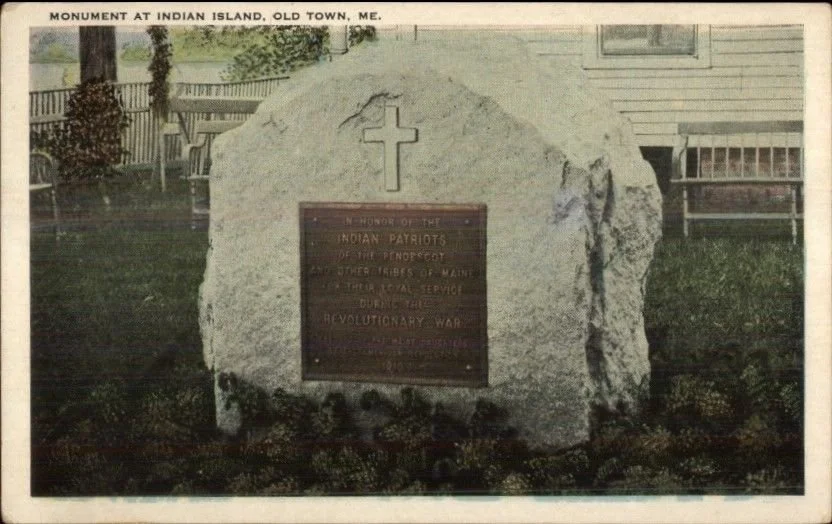
Postcard of the monument at Indian Island
“Our white brothers tell us they came to the Indians’ country to enjoy liberty and life. A great sagamore is coming to bind them in chains, to kill them. We must fight him. We will stand on the same ground with them, for should he bind them in bonds, next he will treat us as bears... Help his ill-treated sons. They will return good for good and the law of love runs through their children and ours when we are dead. Look down the stream of time.”
Reflection Questions
Monuments such as these honor veterans through visibility. How else might we honor and uplift veterans, both past and present?
This research was compiled as part of the Walk to Honor Wabanaki Veterans, which took place in Orono on June 21, 2025. For more information about this walk, click here.
For more research related to this area, click on the tags below. To download a hi-res version of the posters below for educational use, please contact where@atlanticblackbox.com.
This event was part of the Walk for Historical and Ecological Recovery (WHERE), a series convened by Atlantic Black Box devoted to grassroots truth-seeking and transformation. It was organized under the leadership of James Eric Francis, Sr. in collaboration with the Penobscot Nation Cultural & Historic Preservation Department, the Town of Orono, the City of Old Town, the UMaine Wabanaki Center, Bangor Public Library, Orono Public Library, RSU 26, The Wabanaki Alliance, The Abbe Museum, Wabanaki Public Health & Wellness, The Wilson Center, The Church of Universal Fellowship, Ça C’est Bon, and Orono Arts Fest.
Poster design by Meadow Dibble