Protectors Without Protection
Black WWII Soldiers Stationed Along Maine’s Railroad Lines Often Faced Acts of Racism
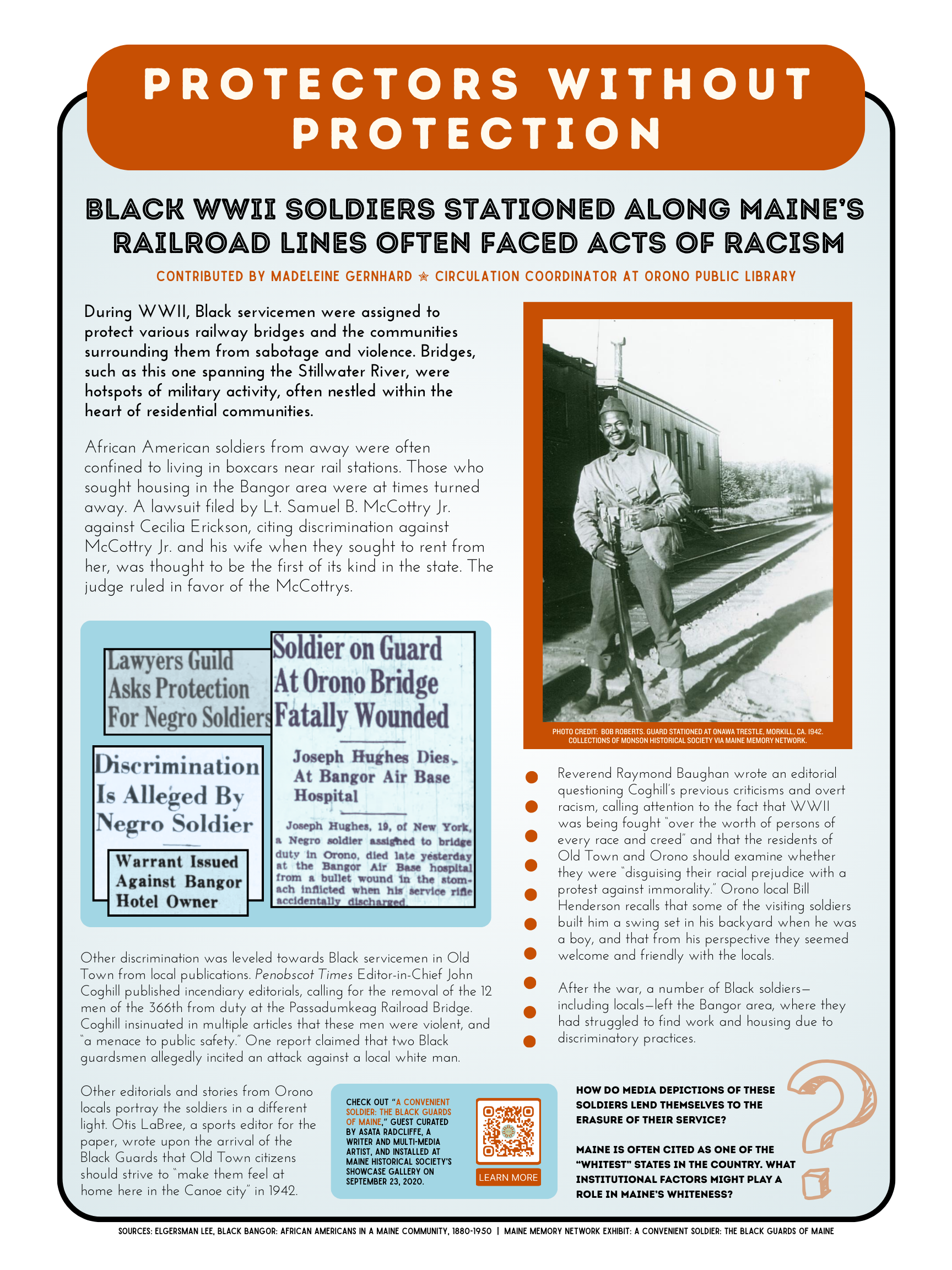
During WWII, Black servicemen were assigned to protect various railway bridges and the communities surrounding them from sabotage and violence. Bridges, such as this one spanning the Stillwater River, were hotspots of military activity, often nestled within the heart of residential communities.

Guard stationed at Onawa Trestle, Morkill, ca. 1942
Bob Roberts Photograph Collection
Monson Historical Society via Maine Memory Network
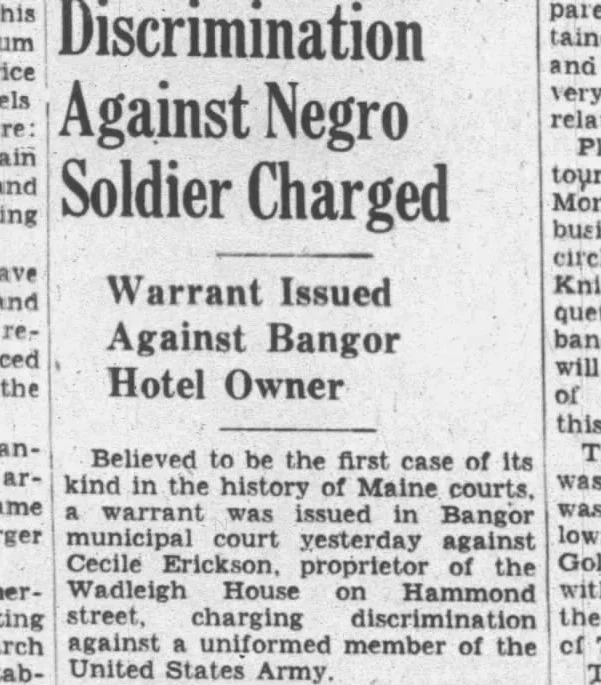
African American soldiers from away were often confined to living in boxcars near rail stations. Those who sought housing in the Bangor area were at times turned away. A lawsuit filed by Lt. Samuel B. McCottry Jr. against Cecilia Erickson, citing discrimination against McCottry Jr. and his wife when they sought to rent from her, was thought to be the first of its kind in the state. The judge ruled in favor of the McCottrys.
Other discrimination was leveled towards Black servicemen in Old Town from local publications. Penobscot Times Editor-in-Chief John Coghill published incendiary editorials, calling for the removal of the 12 men of the 366th from duty at the Passadumkeag Railroad Bridge. Coghill insinuated in multiple articles that these men were violent, and “a menace to public safety.” One report claimed that two Black guardsmen allegedly incited an attack against a local white man.
Other editorials and stories from Orono locals portray the soldiers in a different light. Otis LaBree, a sports editor for the paper, wrote upon the arrival of the Black Guards that Old Town citizens should strive to “make them feel at home here in the Canoe city” in 1942.
Reverend Raymond Baughan wrote an editorial questioning Coghill’s previous criticisms and overt racism, calling attention to the fact that WWII was being fought “over the worth of persons of every race and creed” and that the residents of Old Town and Orono should examine whether they were “disguising their racial prejudice with a protest against immorality.” Orono local Bill Henderson recalls that some of the visiting soldiers built him a swing set in his backyard when he was a boy, and that from his perspective they seemed welcome and friendly with the locals.
After the war, a number of Black soldiers—including locals—left the Bangor area, where they had struggled to find work and housing due to discriminatory practices.
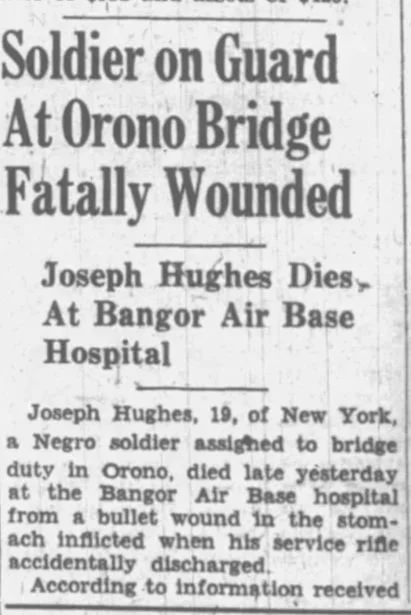
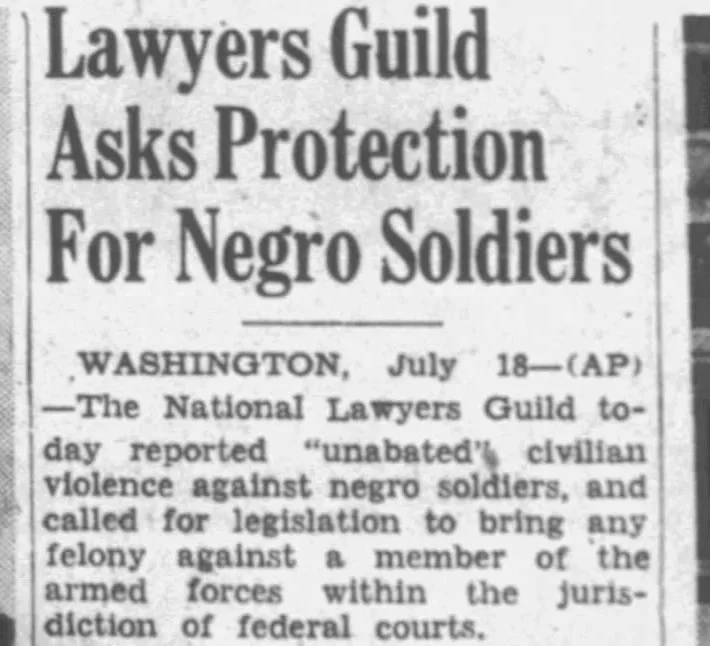
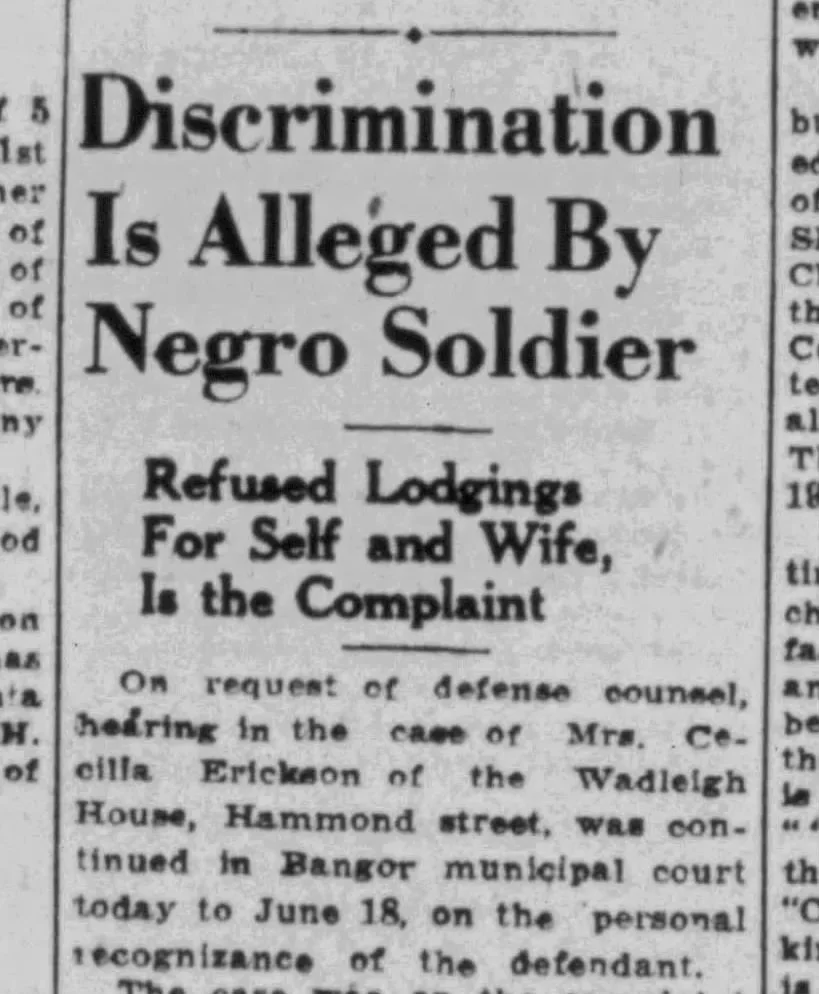
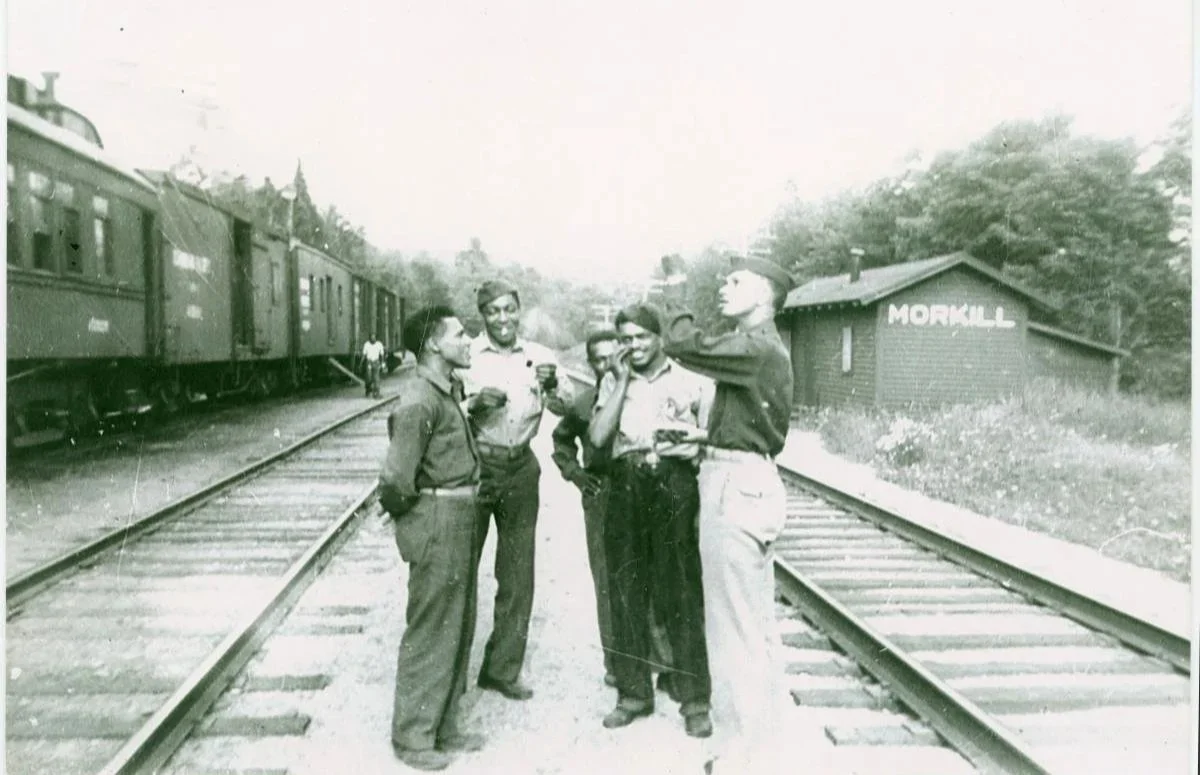
Onawa Trestle guards at Morkill, ca. 1942
Bob Roberts Photograph Collection
Monson Historical Society via Maine Memory Network
Reflection Questions
How do media depictions of these soldiers lend themselves to the erasure of their service?
Maine is often cited as one of the “whitest” states in the country. What institutional factors might play a role in Maine’s whiteness?
Additional Resources
A Convenient Soldier: The Black Guards of Maine (curated by writer and multi-media artist Asata Radcliffe)
This research was compiled as part of the Walk to Honor Wabanaki Veterans, which took place in Orono, Old Town, and Indian Island on June 21, 2025. For more information about this walk, click here.
For more research related to this area, click on the tags below. To download a hi-res version of the posters below for educational use, please contact where@atlanticblackbox.com.
This event was part of the Walk for Historical and Ecological Recovery (WHERE), a series convened by Atlantic Black Box devoted to grassroots truth-seeking and transformation. It was organized under the leadership of James Eric Francis, Sr. in collaboration with the Penobscot Nation Cultural & Historic Preservation Department, the Town of Orono, the City of Old Town, the UMaine Wabanaki Center, Bangor Public Library, Orono Public Library, RSU 26, The Wabanaki Alliance, The Abbe Museum, Wabanaki Public Health & Wellness, The Wilson Center, The Church of Universal Fellowship, Ça C’est Bon, and Orono Arts Fest.