Colonizing Land & Waters
Contributed by Dr. Kate McMahon (Executive Director, Castine Historical Society), Jules Thompson (Collections Manager, Castine Historical Society), with Savannah Mirisola-Sullivan (WHERE Education Coordinator)
Wabanaki nations have been stewarding Wαpánahkik, the Dawnland, since time immemorial. For the Penobscot, these lands and waters are kin, a relationship built on reciprocity. European worldviews, however, saw the land as something to be dominated in service of the market economy.
1780 view of the denuded Castine peninsula, with Fort George, prominently visible, as seen from the bay islands
Many of the ecological changes that happened here in Wαpánahkik came about as a result of these radically different worldviews. These differing belief systems were also used by Europeans to justify oppression, land theft, and resource extraction.
One of the biggest changes brought to the natural world by Europeans was the introduction of livestock like cattle, pigs, and sheep. As the settler population grew, increasing demand for meat from larger towns and cities created new markets, making grazing animals profitable, leading to clearing of forests for grazing pastures. Plowing, enabled by oxen, compacted the soil, and destroyed large swathes of native plants, replacing them with domestic crops. Non-native and invasive plants such as dandelions and stinging nettles were brought in on ships, changing the ecological web of flora and fauna and seasonal cycles with which Indigenous people had been living intimately in tune.
Concepts of land ownership also differed radically between Native and non-Native peoples. Wabanaki nations had a flexible definition of land use and access; the same land could be used by different groups for different reasons and at different times of year in relationship with seasonal migration patterns.
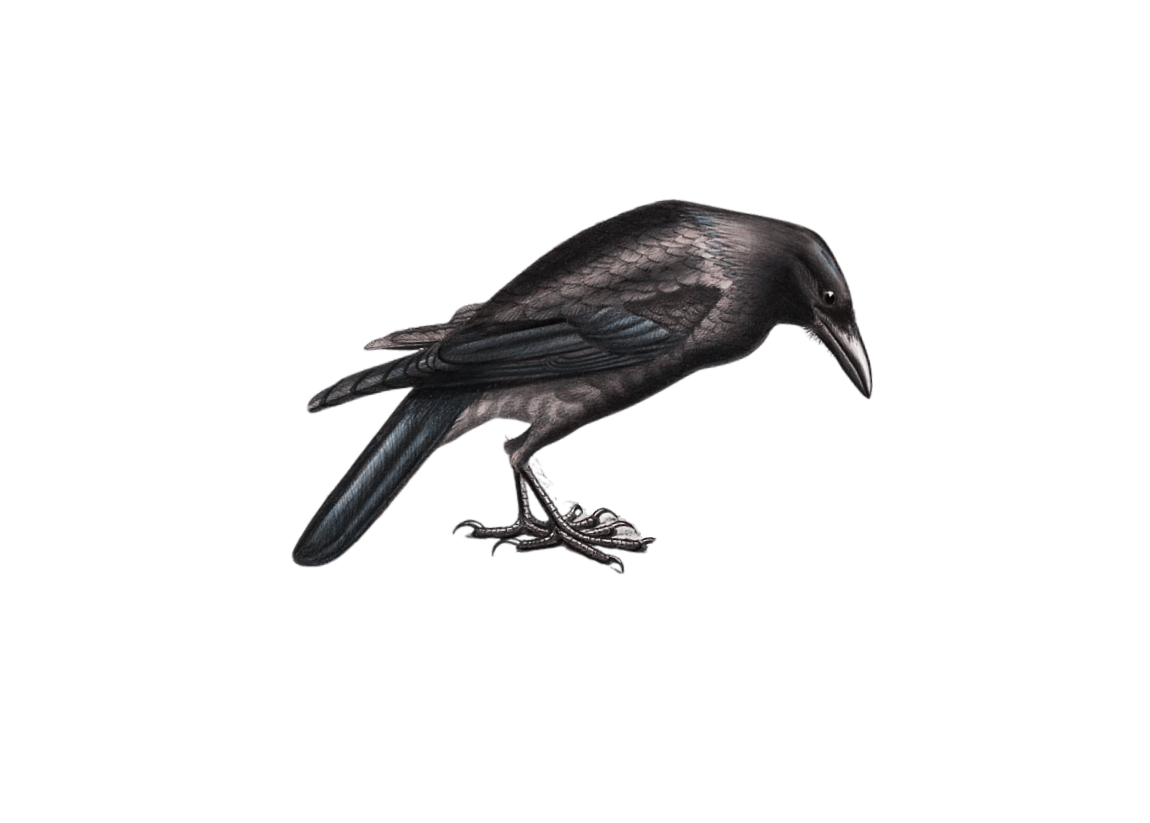
Voted that a bounty of twelve and a half cents be allowed and paid out of the Treasury for the head of each crow killed
— 1809 Castine crow bounty
Control of territory was a diplomatic negotiation rather than a matter of eternally-binding legal sale for private use, as it was for Europeans. English law, on the other hand, conflated ownership of land with modification of the land, and landowners were expected to produce agricultural surplus as a societal duty.
Wabanaki nations like the Penobscot hunted and foraged different resources according to when each was in abundance, and rarely used more than what they needed to survive in a given year. But the Transatlantic mercantile economy created a high demand for fish, fur, and timber—resources that had largely been depleted in Europe. This meant that many Europeans came to American lands and waters to exploit these resources in order to make money, leading to over-harvesting.
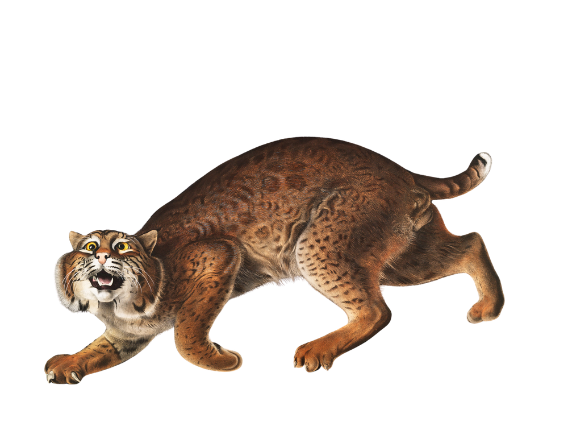
Voted that a premium of two dollars be allowed for each Wild Cat killed within the Town the year ensuing
— 1814 Castine wild cat bounty
The population of ragweed, a resistant native plant, exploded as a result of grazing. Pollen scientists are still able to date soil deposits to the colonial period by the huge increase in ragweed pollen.
In addition to habitat loss from large-scale agricultural clearing, this led to the rapid decline and near extinction of several species, including wolf, bear, elk, lynx, turkey, otters, foxes, mink, muskrat, and racoon. Demand for timber for shipbuilding, mercantile trade, local building, and heating led to widespread deforestation. Colonists harvested selectively based on the timber's use, which considerably altered forest biomes. We continue to see the effects of deforestation today with more erratic temperatures, drier soils, and less constant drainage patterns.
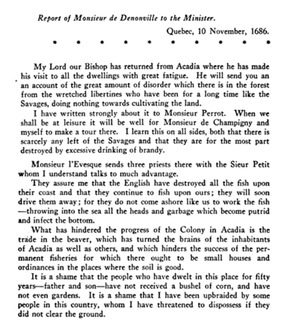
This letter is from the Governor of New France (from 1685 to 1689) Jacques-René de Brisay, Marquis de Denonville. It’s a good example of the bias against people (both Indigenous and settler-colonial) who did not “improve” the land by turning it to farming or pasture.
This research was compiled as part of the Mači-pikʷátohsək: A Wayfinding Walk which took place in Castine on October 5, 2025. For more information about this walk, click here. For more research related to this area, click on the tags below. To download a hi-res version of the posters below for educational use, please contact where@atlanticblackbox.com.
This event was a collaboration between Castine History Partners (CHP) and the Walks for Historical & Ecological Recovery (WHERE), a series convened by Atlantic Black Box.
Castine History Partners is a collaboration originally established to create virtual history tours for Castine. CHP supports a variety of learning opportunities around the history of Castine. The partners include Castine Community Partners, Castine Historical Society, Castine Touring Company, Maine Coast Heritage Trust, Maine Maritime Academy, Wilson Museum, and Witherle Memorial Library.