The Land & Waters Remember
The Return of the Alewives to mači-pikʷátohsək
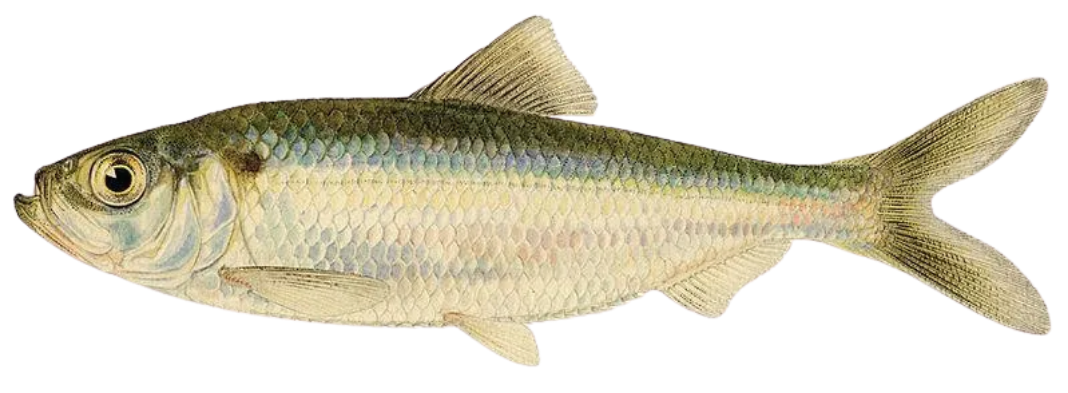
The current resurgence in the numbers of alewives returning each spring is a testament to nature’s resilience when humans collaborate to restore habitat, relations, and free passage.
“When Wabanaki people were actively displaced from these life-giving places, it was not long before river herring were affected by the development of early saw mills and dams and development that occurred to these rivers in the name of resource extraction.”
Alewives, like salmon, are sea-run fish that travel upstream to spawn. In 2021, after years of dedication from communities along the Bagaduce, fisherfolk, non-profit organizations including the Maine Coast Heritage Trust, and state and federal agencies, the Bagaduce River became the first complete watershed in Maine to be fully restored for fish passage.
Removing obstacles and adding fishways allowed the spring return of alewives to access the upper reaches of the watershed. By some accounts, fish runs have doubled since the restoration began. On the Penobscot River, fish counts for river herring have increased ten-fold since dam removals.
Alewives—“mátamehs” in Penobscot, or “siqonomeq” in Passamaquoddy—have been important to the ecology and peoples of the area for millennia. A keystone species, they are a vital food source for animals such as seabirds, seals, porpoise, cod, raccoons, otters, and black bears, as well as the crayfish, insects, and microorganisms that consume what predators leave behind. Alewives also transport nurtients between the sea and freshwater, regulating zooplankton and ecosystem health.
“We talk about how we are the river. It’s us. It flows in our veins. It defines who we are culturally, socially, economically, spiritually. And the river has allowed our tribe to thrive since time immemorial, as we say. My hope would be that in 50 years, there would be no dams. There would be no pollution and our tribal members would be enjoying this tremendous gift that the creator has placed here with us in this place. ”
Humans have long relied on alewives, as well. For thousands of years, Wabanaki people have consumed alewives, fresh-cooked or smoked, and used them to fertilize crops. European settlers followed suit, and also began catching alewives for bait. The decline of sea-run fish coincides with industrialization and mill-dams. In the 20th century, large-scale commercial fishing likely also contributed to the drastic decline—by some accounts upwards of 95%—in the river herring population along the Atlantic coast.
Reflection Questions:
What other species benefit as the alewife population rebounds?
How do we understand population health and decide how many fish to take? What differences might there be between Wabanaki and settler approaches to harvesting alewives and other fish?
What is your own relationship to the river?
Additional Resources:
This River is Our Relative, by Sunlight Media Collective
A Watershed Moment (film by Maine Center for Coastal Fisheries)
This research was compiled as part of the Mači-pikʷátohsək: A Wayfinding Walk which took place in Castine on October 5, 2025. For more information about this walk, click here. For more research related to this area, click on the tags below. To download a hi-res version of the posters below for educational use, please contact where@atlanticblackbox.com.
This event was a collaboration between Castine History Partners (CHP) and the Walks for Historical & Ecological Recovery (WHERE), a series convened by Atlantic Black Box.
Castine History Partners is a collaboration originally established to create virtual history tours for Castine. CHP supports a variety of learning opportunities around the history of Castine. The partners include Castine Community Partners, Castine Historical Society, Castine Touring Company, Maine Coast Heritage Trust, Maine Maritime Academy, Wilson Museum, and Witherle Memorial Library.