Kennebunk River Encampments
Reclaiming Ancestral Rhythms
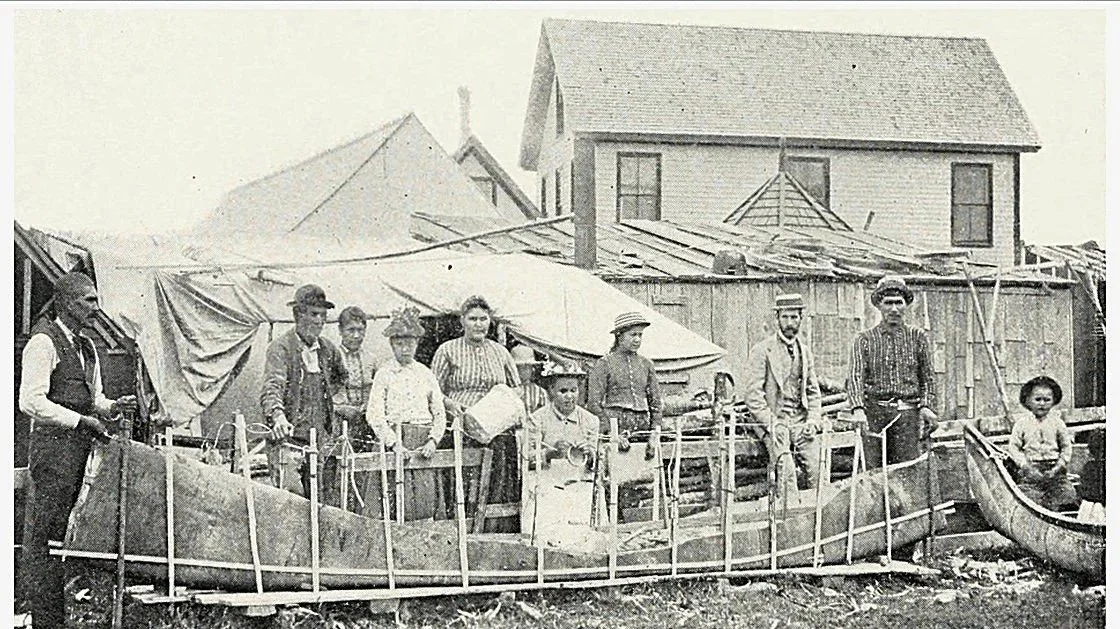
This photograph first published in Annie Peabody Brooks’ 1901 book of Kennebunkport history and legends, “Ropes Ends”.
“John S. Peabody is pulling down the last wooden tent-like building that remains of the large colony of Indians that once occupied the land on both sides of Ocean Avenue … The coming of the motorboat and the automobile put an end to the safety and interest in canoeing for many, and gift shops with foreign wares took the place of simple and native handcraft.”
For hundreds of years after contact, settler-colonial wars and violence pushed Indigenous peoples further north, cutting off access to seasonal encampments. It wasn’t until the 1800s, when these wars ended, that Penobscot and Passamaquody peoples from Indian Island were able to return and reclaim their ancestral summer encampments along the Kennebunk River.
The Ranco family camped near Picnic Rocks below Kennebunk Landing beginning in 1878, while the Mitchells camped on Emery Point the following year. Later, both families camped at the mouth of the Kennebunk River along with the Neptunes, the Shays, and the Nicolars, returning each summer for nearly fifty years. Initially living in tents, families were able to build more permanent wooden structures as tourists sought out their crafts, canoes, and guiding services.

“Indian Village at K’Port No More—Last of Tribe Buildings Razed This Week” from the Kennebunk Star, 1936
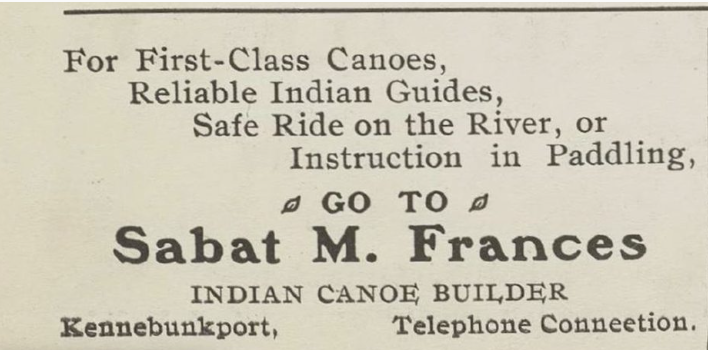
Louis Francis and Joseph Nicolar, both Penobscot, built birchbark canoes as their ancestors had done for thousands of years. They built and sold canoes along the river in Kennebunkport at Government Wharf, establishing it as a canoe-making hub in the early 1900s. Joseph held many patents for his canoe designs, and built the first ever canvas canoe. They built and sold canoes until 1927, when interest from white visitors and residents had waned with the advent of the motorboat.
White residents in town referred to the encampments on Ocean Avenue as “Indian Village.” As Kennebunkport established itself as a destination for wealthy white tourists and summer homeowners, John Peabody, who claimed ownership over the land where the camps were, tore down these homes in 1936.
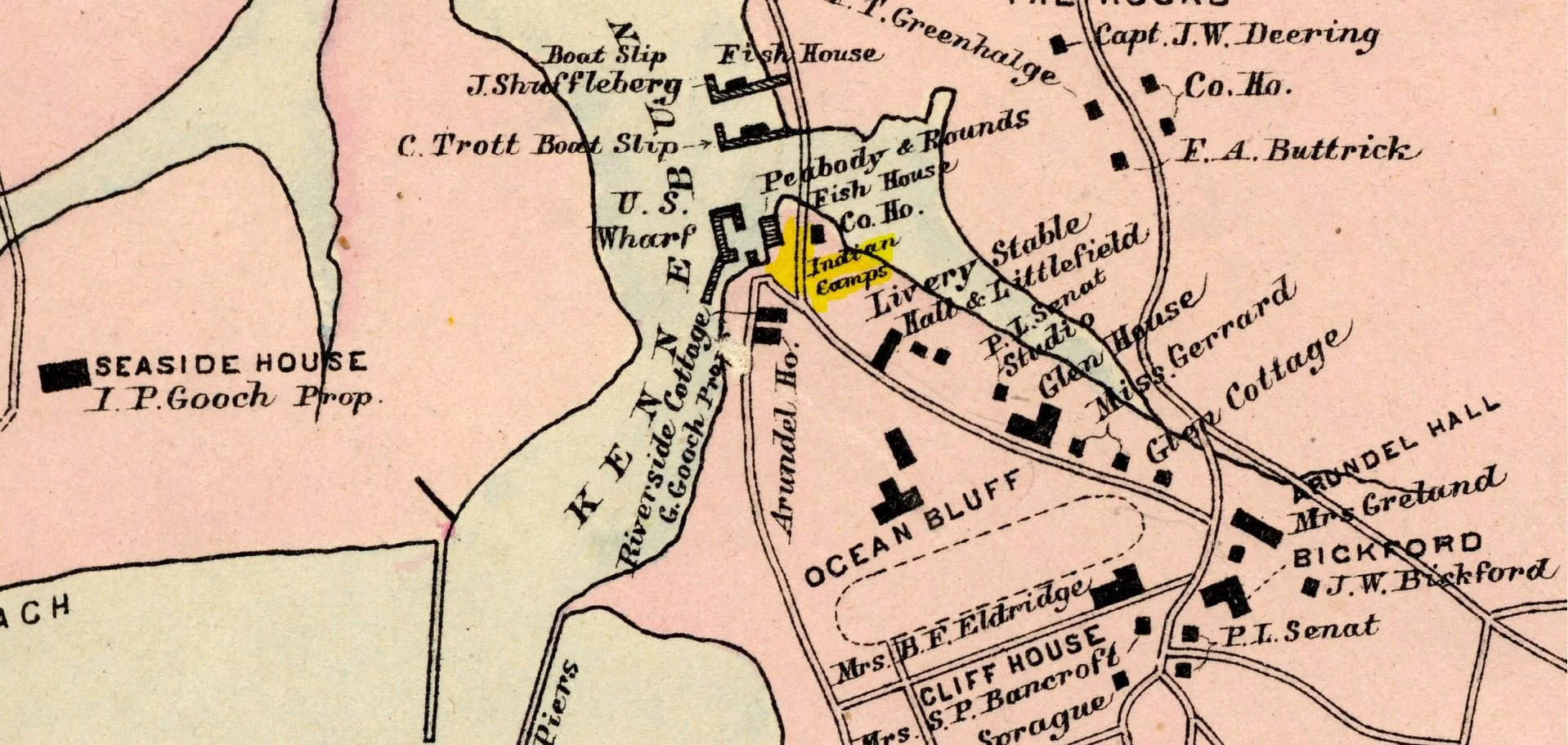
Map showing Indian camps on Kennebunk River
This research was compiled as part of the Just History Walk: Lives Between Two Rivers, which took place in Kennebunk on November 8, 2025. For more information about this walk, click here. For more research related to this area, click on the tags below. To download a hi-res version of the posters below for educational use, please contact where@atlanticblackbox.com.