The 1649 Chabinocke–Wadleigh Deed
Clashing Worldviews
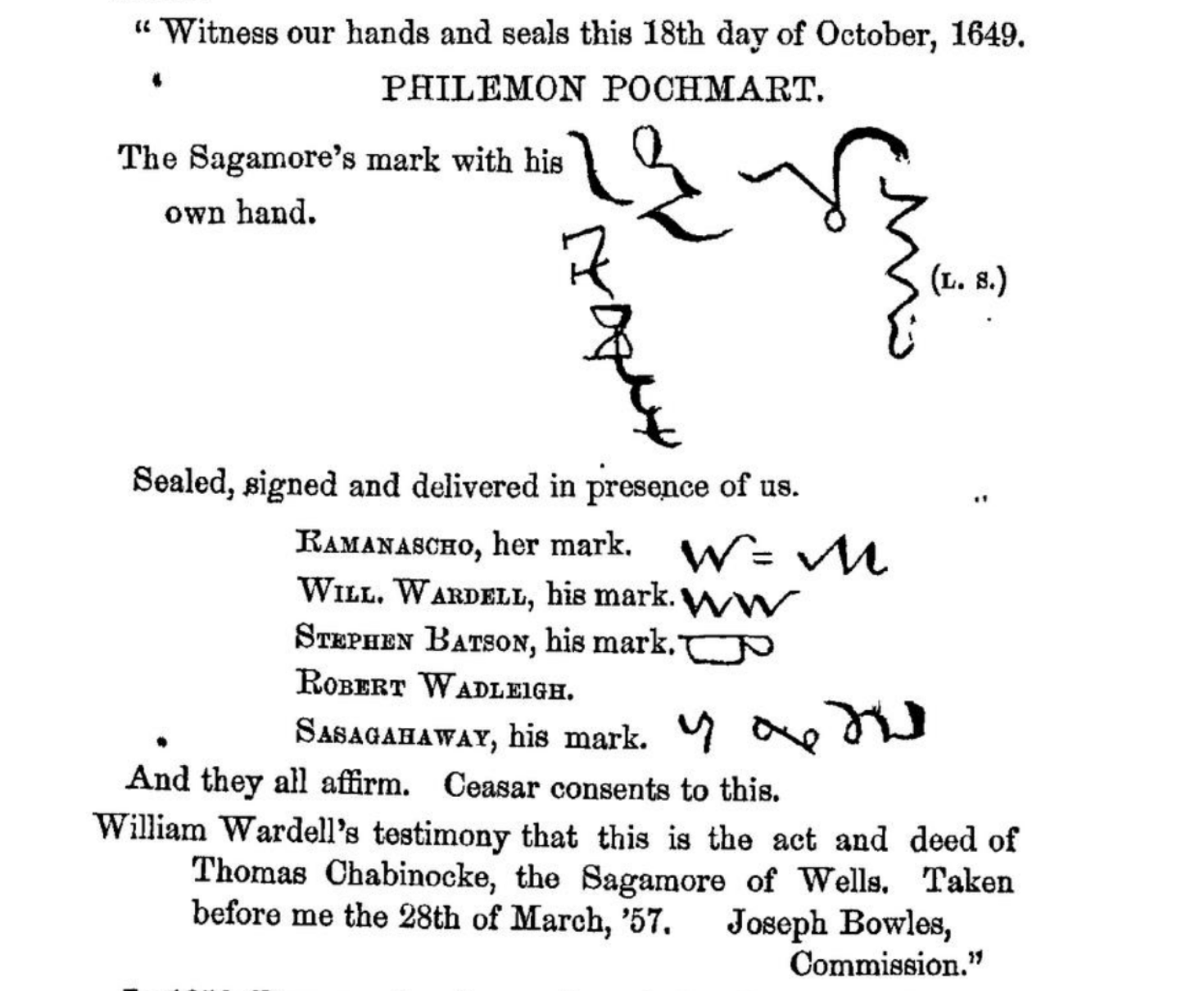
Thomas Chabinocke - 1649 deed to John Wadleigh
In 1649, a deed was signed between Sagamore Thomas Chabinocke of the Almouchiquois people and English settler John Wadleigh for the territory stretching from the Ogunquit River to the Kennebunk River. The agreement—witnessed by Chabinocke’s mother Ramanascho—stipulated that Wadleigh would take possession of the land upon Chabinocke’s death, providing a small annual payment of corn to the sagamore’s mother.
Later chroniclers such as Edward Bourne, George Folsom, and Spencer described this transaction as conveying to Wadleigh and his heirs “all the Sagamore’s right, title, and interest” in the region known as Nampscoscoke, encompassing much of what became the town of Wells.
What this deed meant, however, depended entirely on one’s worldview. For Chabinocke and Ramanascho, the exchange likely affirmed a relationship of mutual use and respect, consistent with Wabanaki understandings of land as a living entity that could be shared and stewarded, but not owned.
For Wadleigh and other English settlers, the same document represented an exclusive and permanent transfer of property—a concept foreign to Indigenous traditions.
This fundamental difference in how land was understood and valued underpinned later conflicts and dispossession across the Kennebunk region.
As Wolastoqey elder, writer, and visual artist Mihku Paul notes, such deeds reveal both cultural exchange and deep misunderstanding. Portage routes that had connected Wabanaki communities for generations were later blocked or privatized, as settlers enforced boundaries that Indigenous people had never imagined could exist.
The 1649 Chabinocke–Wadleigh deed illustrates how European legal instruments and notions of property ownership became tools of displacement, transforming shared homelands into commodities and redefining human relationships to the land itself.
This research was compiled as part of the Just History Walk: Lives Between Two Rivers, which took place in Kennebunk on November 8, 2025. For more information about this walk, click here. For more research related to this area, click on the tags below. To download a hi-res version of the poster below for educational use, please contact where@atlanticblackbox.com.
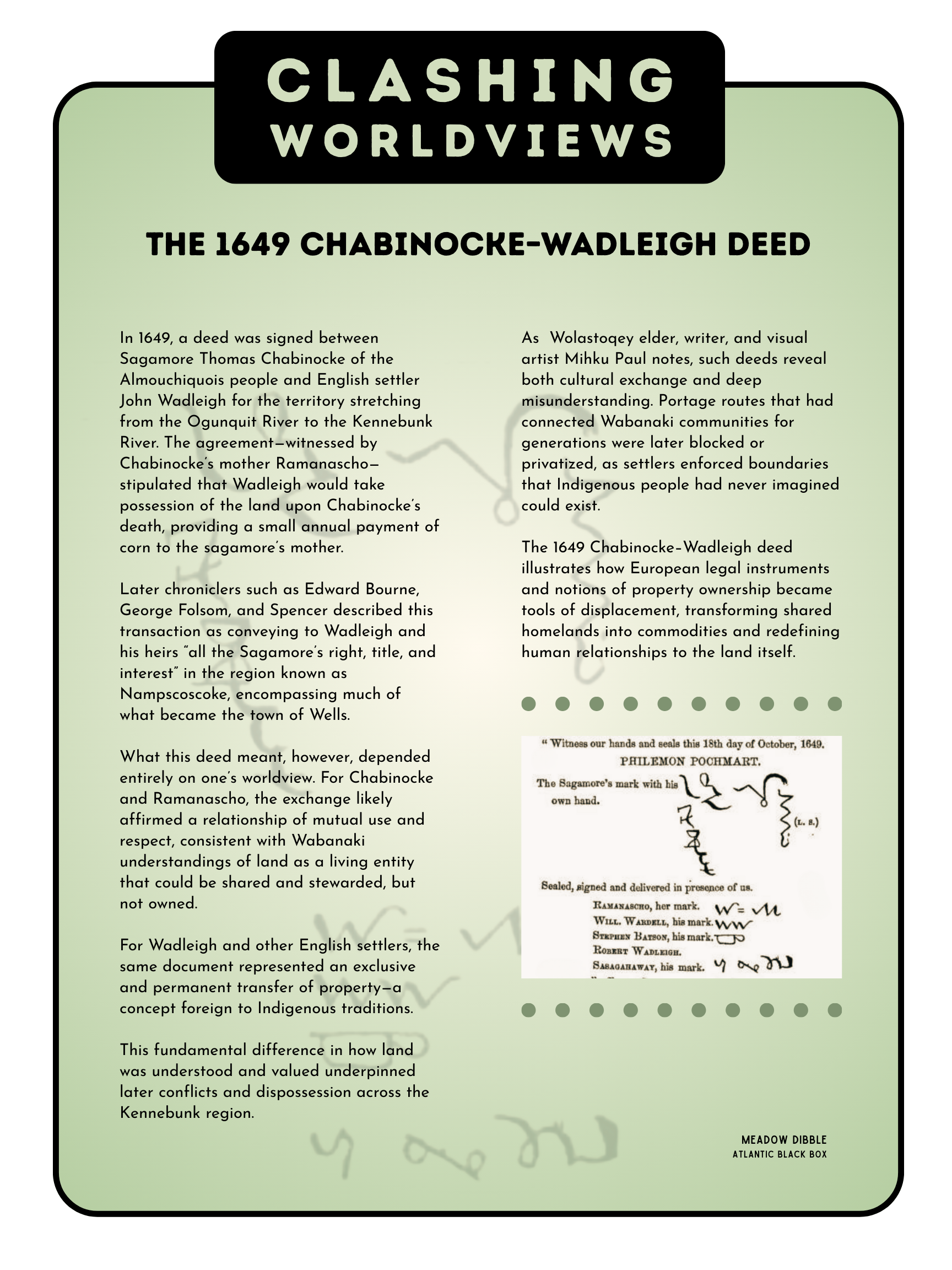
Poster design by Meadow Dibble