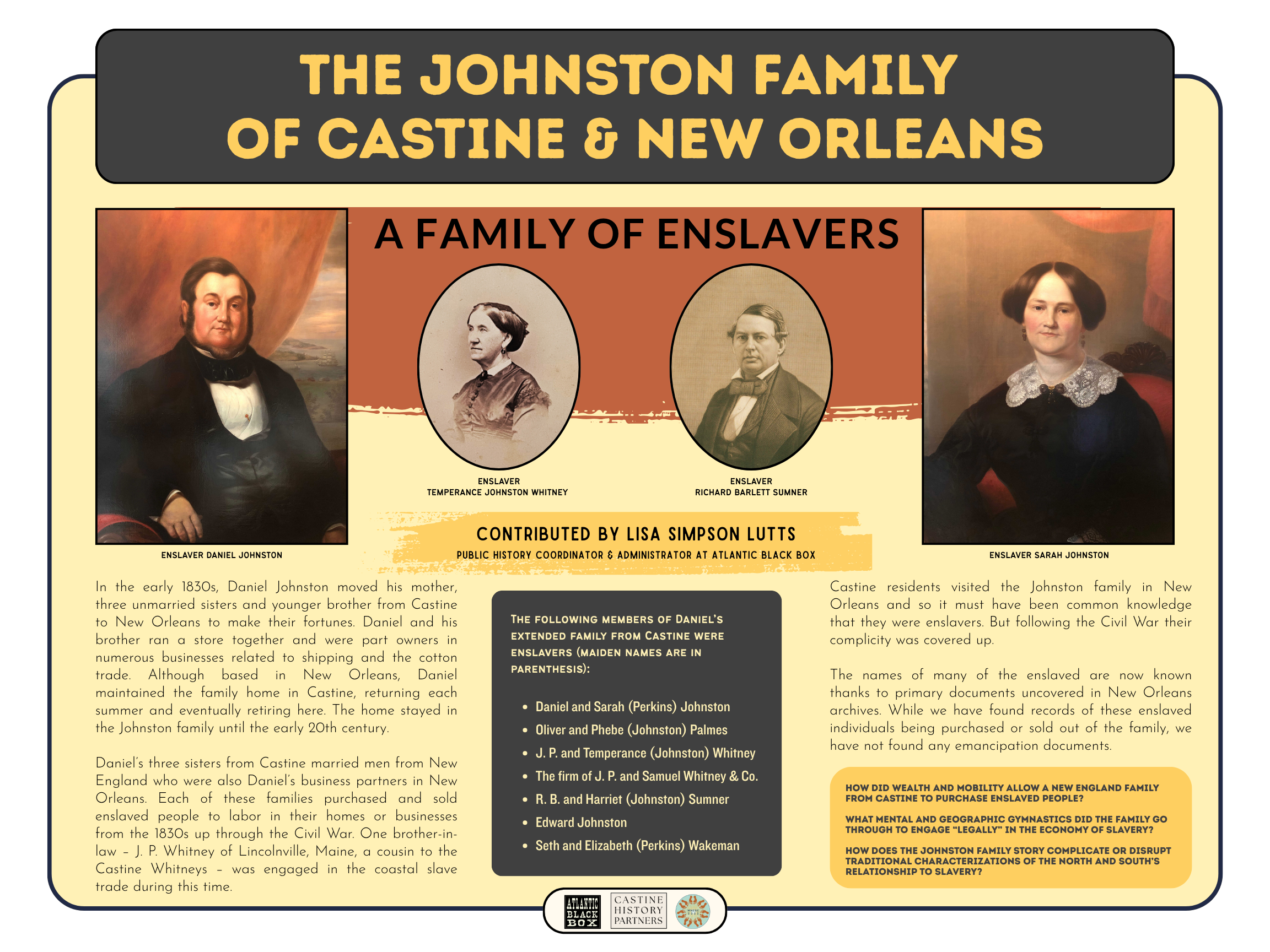
The Johnston Family of Castine & New Orleans
A Family of Enslavers
In the early 1830s, Daniel Johnston moved his mother, three unmarried sisters and younger brother from Castine to New Orleans to make their fortunes.
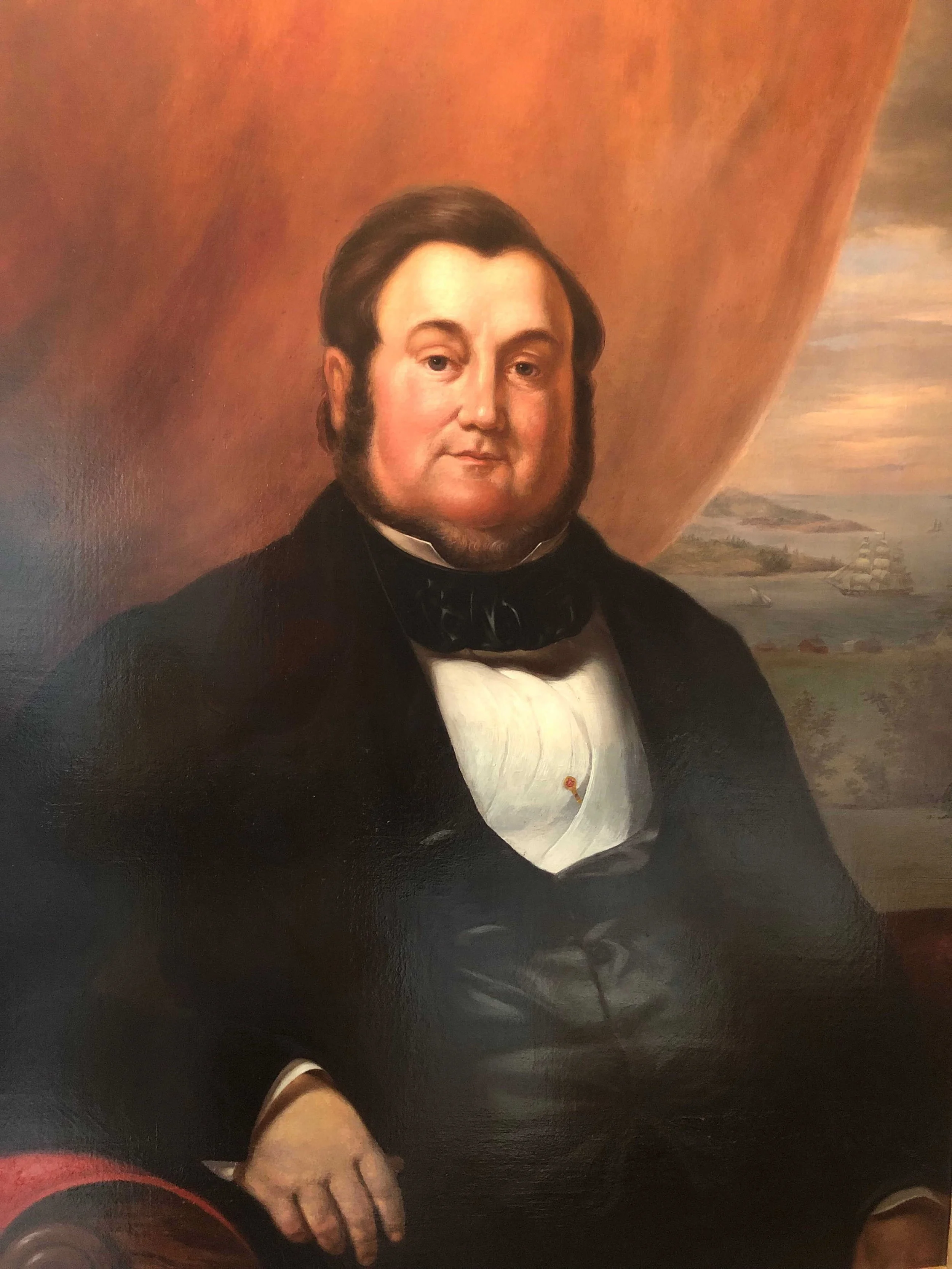
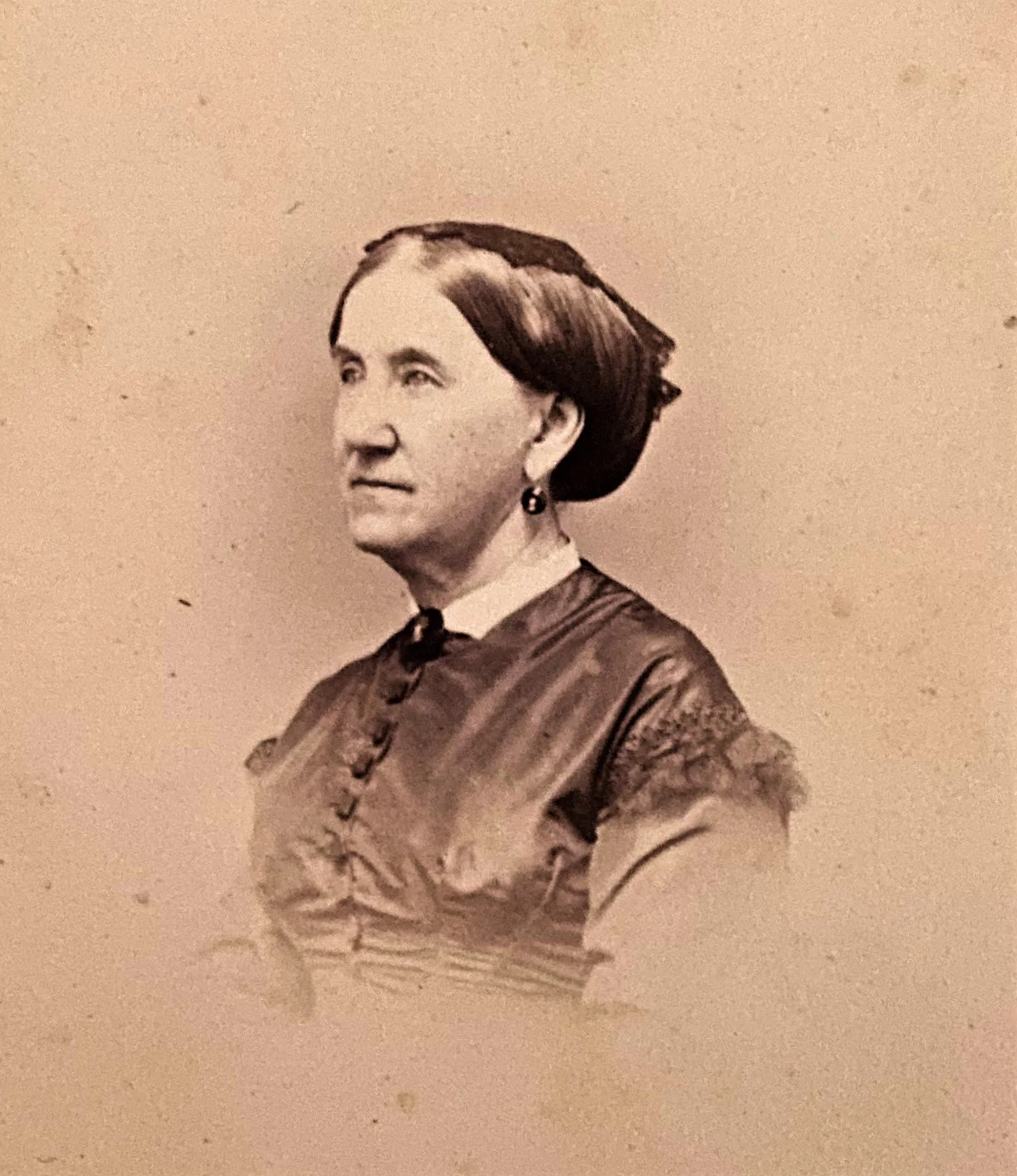
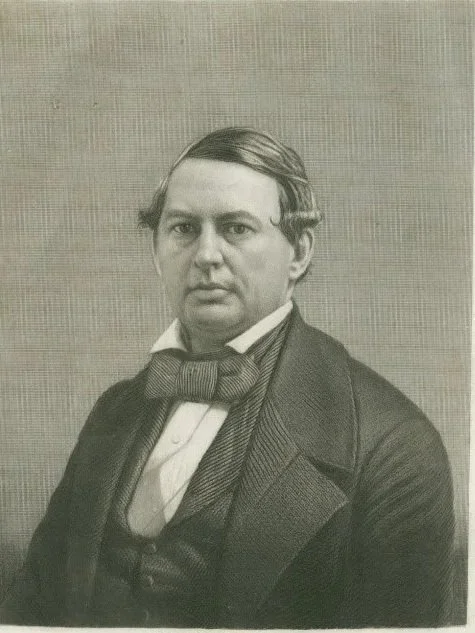
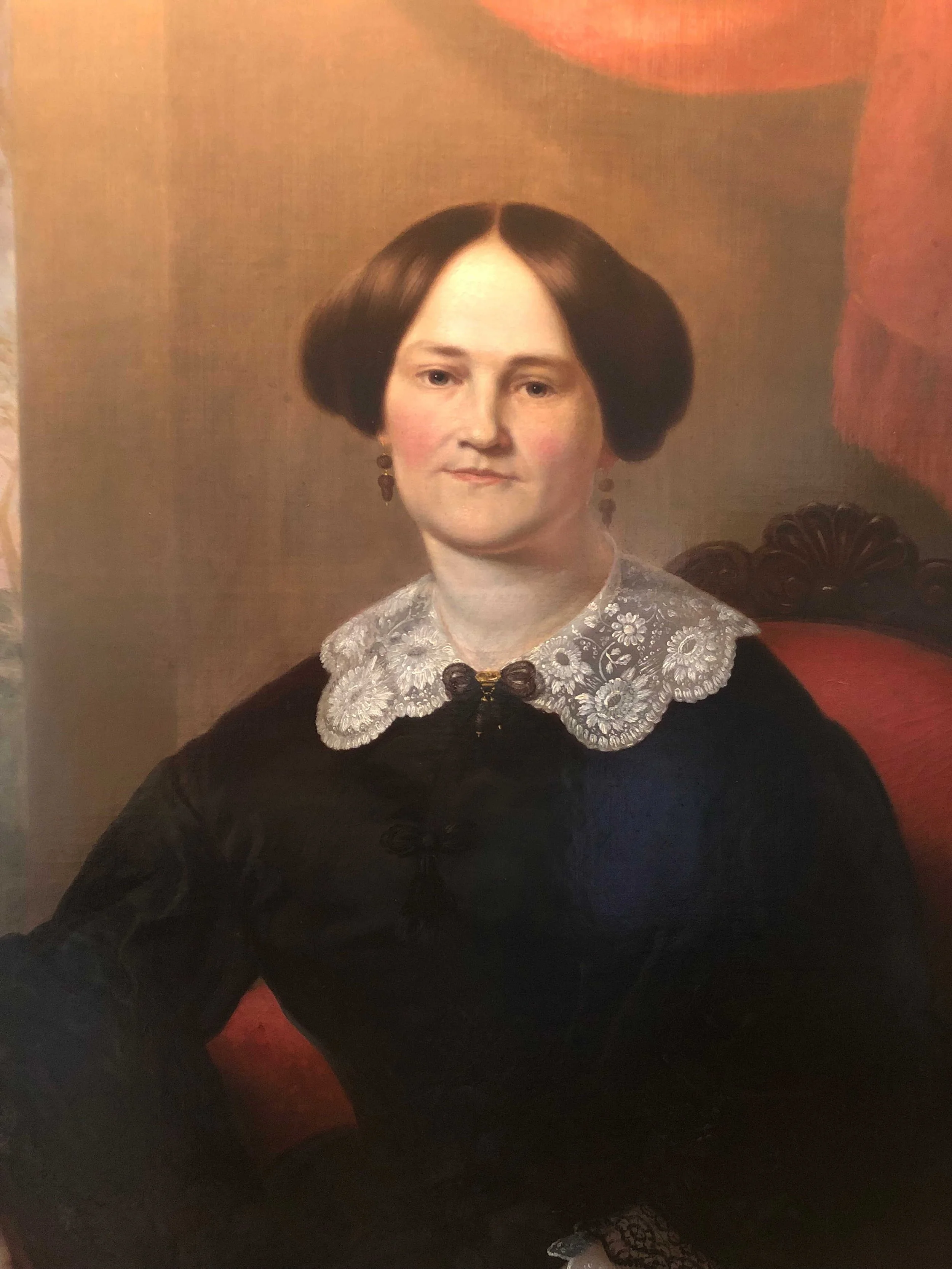
Daniel and his brother ran a store together and were part owners in numerous businesses related to shipping and the cotton trade. Although based in New Orleans, Daniel maintained the family home in Castine, returning each summer and eventually retiring here. The home stayed in the Johnston family until the early 20th century.
Daniel’s three sisters from Castine married men from New England who were also Daniel’s business partners in New Orleans. Each of these families purchased and sold enslaved people to labor in their homes or businesses from the 1830s up through the Civil War. One brother-in-law – J. P. Whitney of Lincolnville, Maine, a cousin to the Castine Whitneys – was engaged in the coastal slave trade during this time.
Castine residents visited the Johnston family in New Orleans and so it must have been common knowledge that they were enslavers. But following the Civil War their complicity was covered up.
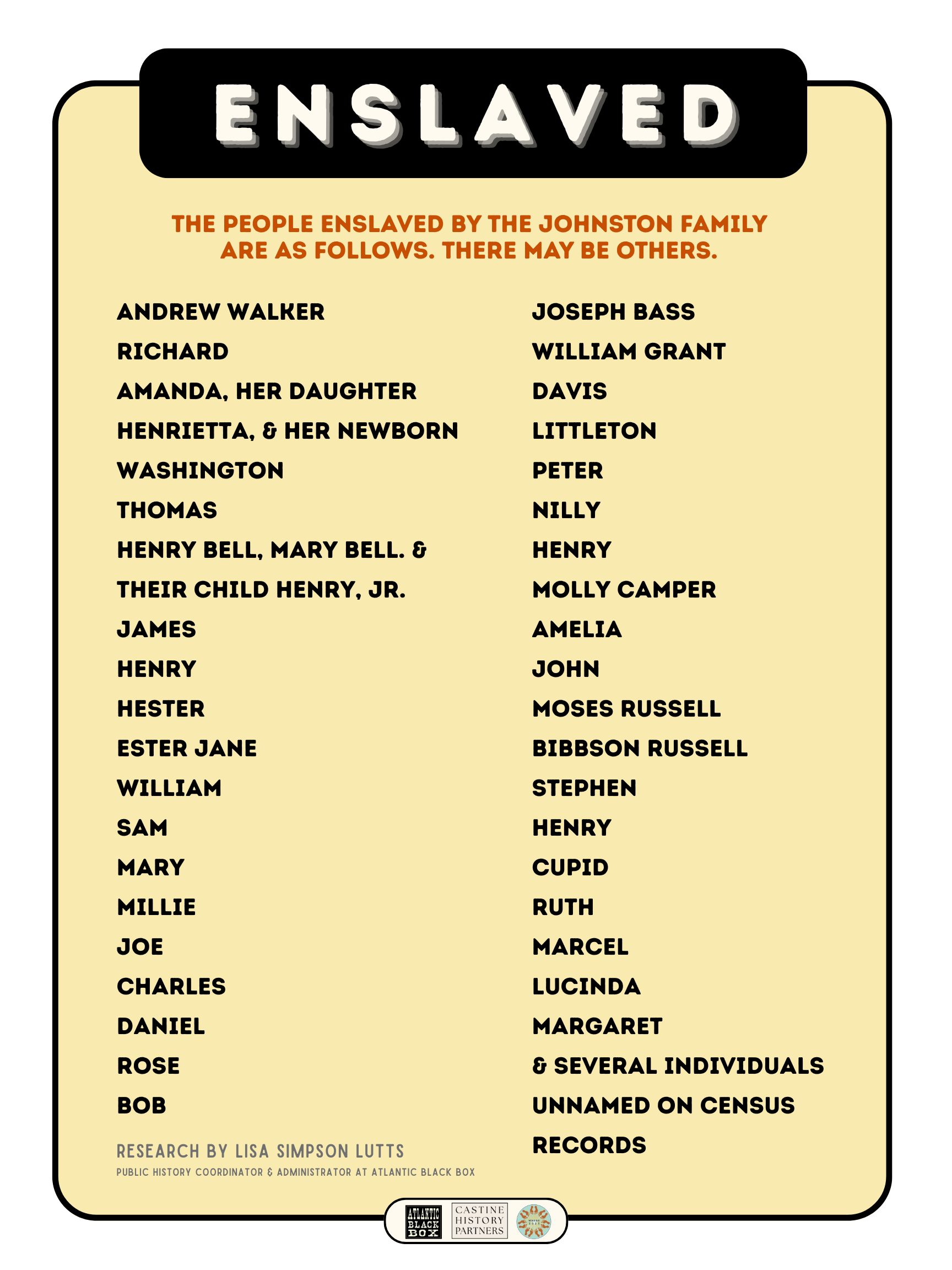
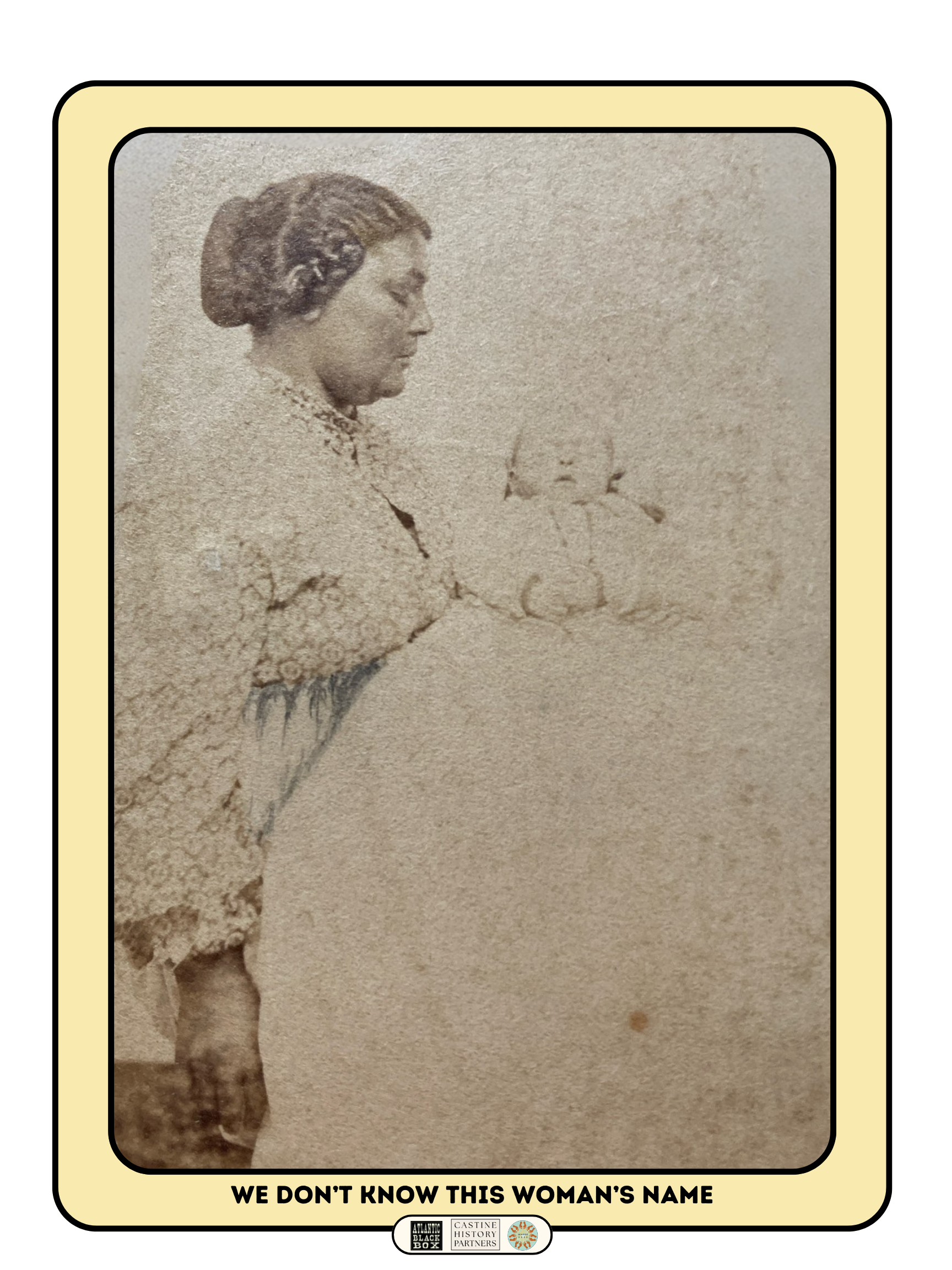
The names of many of the enslaved are now known thanks to primary documents uncovered in New Orleans archives. While we have found records of these enslaved individuals being purchased or sold out of the family, we have not found any emancipation documents.
The following members of Daniel’s extended family from Castine were enslavers (maiden names are in parenthesis):
Daniel and Sarah (Perkins) Johnston
Oliver and Phebe (Johnston) Palmes
J. P. and Temperance (Johnston) Whitney
The firm of J. P. and Samuel Whitney & Co.
R. B. and Harriet (Johnston) Sumner
Edward Johnston
Seth and Elizabeth (Perkins) Wakeman
Reflection Questions
How did wealth and mobility allow a New England family from Castine to purchase enslaved people?
What mental and geographic gymnastics did the family go through to engage “legally” in the economy of slavery?
How does the Johnston family story complicate or disrupt traditional characterizations of the North and South’s relationship to slavery?
This research was compiled as part of the Mači-pikʷátohsək: A Wayfinding Walk which took place in Castine on October 5, 2025. For more information about this walk, click here. For more research related to this area, click on the tags below. To download a hi-res version of the posters below for educational use, please contact where@atlanticblackbox.com.
This event was a collaboration between Castine History Partners (CHP) and the Walks for Historical & Ecological Recovery (WHERE), a series convened by Atlantic Black Box.
Castine History Partners is a collaboration originally established to create virtual history tours for Castine. CHP supports a variety of learning opportunities around the history of Castine. The partners include Castine Community Partners, Castine Historical Society, Castine Touring Company, Maine Coast Heritage Trust, Maine Maritime Academy, Wilson Museum, and Witherle Memorial Library.