The Nest: Early Cape Verdean Families in Maine
This piece was written by Michele Christle as part of Interco(a)stal: Reading Between the Ribs of Maine’s Maritime History. Read Michele’s related story on musician Major John “Jack” Douglass here.

Bald eagle, by Theodore Jasper Studer, from "Studer's Popular Ornithology” 1878
Type “Cape Verdean family” + “Prospect, ME” and “1800s” into your search bar. As of today (October 14, 2026) nothing pops up, just the good old AI summary patting your head like a robot nurse, saying, “There were no Cape Verdeans in Prospect in the 1800s. Maybe try Cape Cod. New Bedford. Rhode Island. Your search terms are wrong.”
Yet a few years ago a stranger I met on a nearby beach told me that tucked away in the woods on Bowden Point, a Prospect family had discovered an old Cape Verdean family’s cemetery on their land and that in 2012, descendants had come from all over the world for a dedication ceremony, noting how remarkable the whole thing was. I agreed. Despite living just three miles away (as the eagle flies) I had never heard anything about them, or this.
I haphazardly tried to find the cemetery once, thinking a cemetery with such an extraordinary story might have signage visible from the road. It didn’t. I started thinking I had made the story up or misheard the person who had told me. Earlier this year, I inquired with the Prospect Historical Society and learned that the cemetery in question does indeed exist and that it’s on private property. They shared with me the name of the family buried there: the DeSilvers and some information unearthed by the Gianni family of Prospect through the process of carefully rehabilitating the cemetery and researching who was buried there.
It turns out that the DeSilvers were not the only family of color in the hamlet of Prospect, Maine in the nineteenth century. They were part of a small but notable community of color there, including other immigrants from the Cape Verde islands, and were well-connected with other nineteenth-century communities of color in Maine. In Prospect, as in many small towns across Maine, New Hampshire, and Vermont, there were more people of color in the 1800s than there are now.[1]
But there’s more. My initial investigation of voyages between Prospect/Bucksport, Maine to the Cape Verdean islands between 1820 to 1840 seems to have turned up a pattern of Cape Verdean youth between the ages of 8–15 coming over to the US on ships captained by one man: Benjamin Shute (namely the brig Ruby and the brig Gambia). At least sixteen Cape Verdean youths arriving in Maine from at least nine voyages can be traced to vessels captained by Shute.[2]
Scholars of Cape Verdean immigration patterns have tended to focus on movements of mass migration, such as the large migration of Cape Verdeans during the latter half of the nineteenth century through whaling, seafaring, and cranberry picking, with large numbers of Cape Verdeans living in New Bedford, Boston, and Cape Cod. The movement of smaller numbers of people are less detectable and therefore less prevalent in the research. As Dr. Abel Djassi Amado, Associate Professor of Politics and Policy at Simmons University puts it, they may appear as just a footnote in someone’s research. Yet as far as I can tell from talking to Abel and others, it’s possible that the stories of these Cape Verdean youth leaving the islands in the early nineteenth century and moving to Maine, in particular, have not appeared in published literature, even as a footnote. The families who descended from them, however, have not forgotten.
*
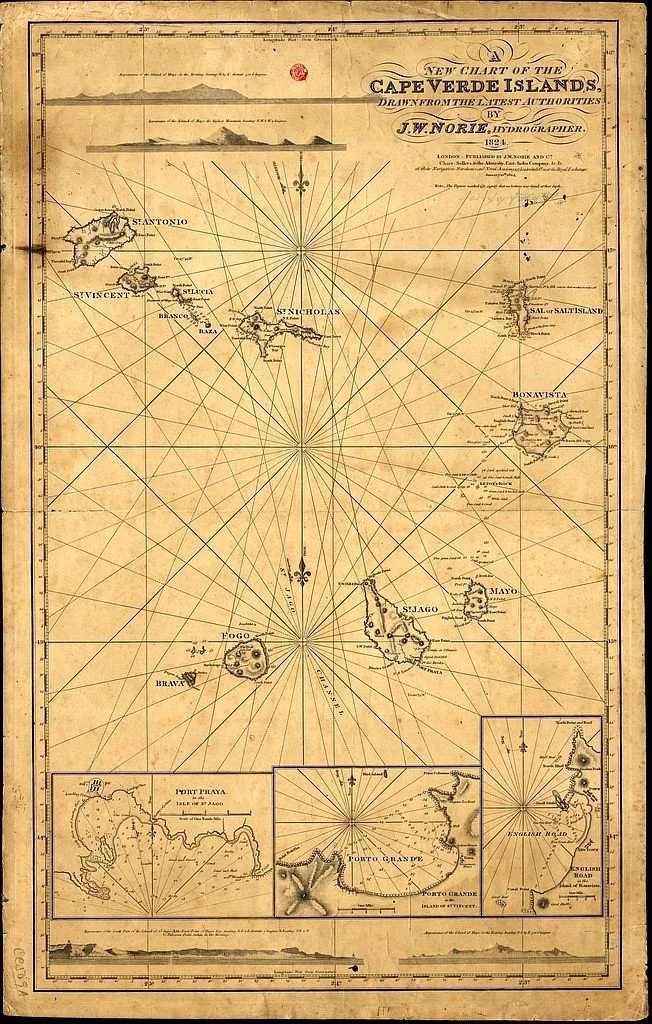
The first DeSilver arrived in Prospect in October of 1825—a passenger on the brig Ruby of Bucksport, Maine from São Nicolau—one of the Barlavento or Windward islands of Cape Verde—over 3,000 miles away. His name was Miguel de Silva and he was 11 years old.
The journey in a brig like the Ruby would have taken anywhere from 30–50 days. Upon arriving, there was a drought in Maine akin to the drought that had perhaps caused Miguel to climb aboard the Ruby in the first place, though the drought in Maine did not have the salt of colonial abuse and neglect smeared into the wounds that droughts in Cape Verde did—at least for Maine’s settlers. Deforestation and overgrazing had degraded the volcanic soil in many of the islands in the archipelago off the coast of Senegal, further exacerbating the impact of the droughts and causing catastrophic famines with thousands–significant percentages of the islands’ community members–dying. Families were consequently faced with excruciating decisions. Leaving by whatever means possible was often their only hope of survival, which included sometimes sending their young children off to ostensibly better–albeit perilous and uncertain–fates. These conditions, which persisted far beyond 1825, yielded the musical genre morna–songs of longing and sadness expressing heartache for ones they may never see again–made famous by Cabo Verdean singer Cesária Evora.
A digital transcription of the Ruby’s passenger list from that 1825 voyage lists Miguel’s occupation or career as “Ship Boy” but upon closer inspection, the passenger list appears to list Miguel as “Shute’s boy”—again, Benjamin Shute was the name of the captain of the brig Ruby. Below Miguel’s name is Anna Fatsoa—age 8. Occupation/career: “servant.”
*
While Captain Shute was ashore in São Nicolau, Cape Verde in July of 1825, a few months before setting sail with Miguel and Anna, three shots were fired at the brig Ruby. Not by a pirate or an enemy vessel, but by British naval officer Douglas Charles Clavering, captain of the HMS Redwing (part of the West Africa Squadron whose mission was to patrol the African coast to suppress the transatlantic slave trade). After firing these shots, Clavering sent a lieutenant to board and search the Ruby, alleging “they thought she might be a slaver.”
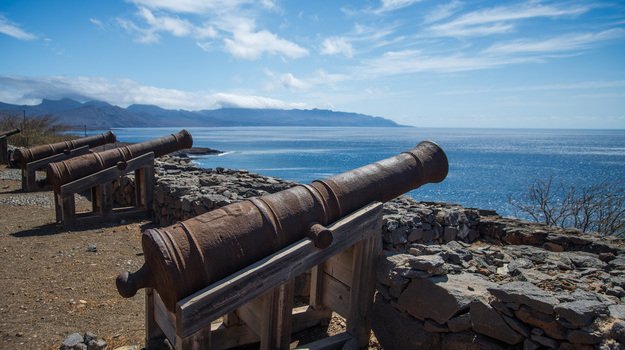
Canons at Forte da Preguiça, São Nicolau, Cabo Verde
The American consul was up in arms, later qualifying Clavering’s actions as a “flagrant outrage.” In 1825, the archipelago of Cabo Verde was still a colonial territory of Portugal. As such, it was illegal for British ships to police non-Portuguese vessels inside Portuguese territory (such as the port of São Nicolau) even if they were suspected of transporting captives.
While Shute and the Ruby emerged from the incident with a clean record, Captain Clavering and the Redwing went on to capture at least three slaving vessels between 1825-27, which is to say that Clavering likely acted on a reasonable hunch even if his investigations didn’t turn anything up.
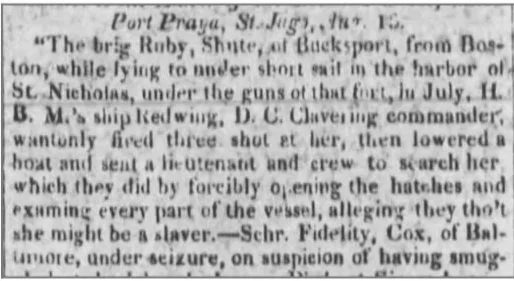
Sept. 30, 1825 - The Charleston Daily Courier (Charleston, South Carolina)
During this same period of time, a merchant in New Bedford who had contracted with Shute to deliver a cargo of sperm oil from Boa Vista—another of Cabo Verde’s windward islands—accused Shute of taking an additional two months beyond the specified contract to deliver the oil to New Bedford. The merchant alleged that the sperm oil had spoiled and claimed he was owed $1,500 for this loss (roughly $50,800 today).
Surely, there’s an explanation both for Clavering’s bold action in the harbor of São Nicolau, as well as for Shute being willing to forgo this $50,800 but both require much deeper dives into archival records than resources currently permit.
That said, Shute left other clues: cargoes of russet brogan shoes (cheap, coarse leather shoes with no left or right, designed to mold to the wearers’ feet over time, marketed to plantation owners) the brig Gambia transported from shoe manufacturers in Boston for sale in New Orleans in 1834; and a document certifying that his ship the Alkmaar transported three enslaved people by the names of Peter, Nancy, and Elney from Charleston, South Carolina, to New Orleans, Louisiana in 1846.
*
An 1892 article from the Sun Journal of Lewiston, Maine reported:
Fifty years ago, Prospect had some experience in settling a small colony of colored people along the shore of the Penobscot River in town. Capt. Benjamin Shute, who ran a packet to the Cape De Verde islands in the time of the famine there, brought Miguel DeVeries and young wife, Michael De Silvers and wife, one young fellow called Matthias and a young girl named Louisa Britch, and John, the Baptist. There was one young colored boy named Chromo. Besides these Capt. Odom of Prospect brought John Mahone from Port Mahone, Spain, and Major Jack Douglass, one of the greatest musicians in his day, with his wife and family settled here.
Benjamin Shute’s observations of the conditions of life in Boa Vista, Cape Verde during the famine(s) were republished in various forms across the United States in 1834, noting “distressful conditions” and that some had died of starvation. This article notes that the inhabitants of the islands “raise nothing there for their own support” and that “their sole dependence is upon supplies of provisions from other places, which are disposed to the inhabitants in exchange for salt.” Given how few vessels were passing through at that point in time, supplies that were arriving were far from sufficient. One 1834 article in The Daily News of New Orleans, Louisiana, stated, “These unfortunate islands seem destined to rest continually under scourge of God.” An estimated 35% of the population is thought to have died from starvation in the first half of the nineteenth century, before mass migration from Cape Verde began.
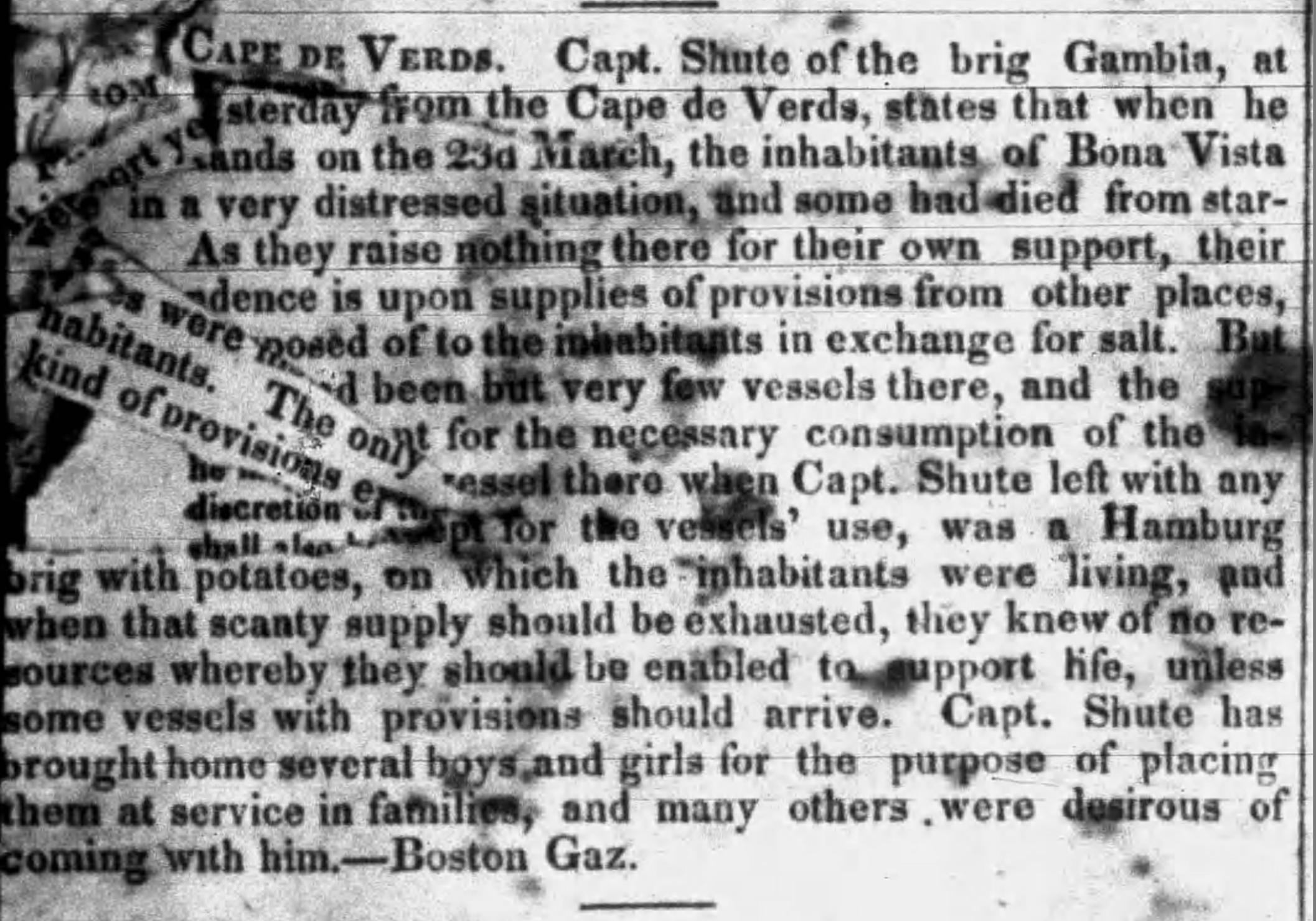
Boston Gazette - Thursday, April 24, 1834
The article containing Shute’s reports from Cape Verde in 1834 does not mention that the colonial government in Lisbon, Portugal—1,600 nautical miles away—prohibited island residents from owning fishing vessels, the environmental degradations that made poor conditions for farming, nor the same government’s abject neglect for the island’s inhabitants. That said, the existence of the American consul in Cape Verde–the first American consul in sub-Saharan Africa, established in 1818–facilitated communication between these two disparate locations in the maritime world. American whaling vessels had been traveling to the islands since the 1790s. As early as 1823, American vessels were bringing emergency relief supplies donated by churches and civic organizations –some of the first instances of international aid. In 1832, there were reports of relief vessels traveling from Portland, Maine to Cape Verde with provisions.
The 1834 article about the conditions in Boa Vista concludes: “Captain Shute has brought home several boys and girls for the purpose of placing them at service, and many others were desirous of coming with him.”
*
At least six of the Cape Verdean youth recorded in passenger lists aboard the brig Ruby and brig Gambia went on to live in Prospect, with at least two of them being officially indentured to Benjamin Shute—Narcezo Lisboa (technically of Lisbon, Portugal) and John Baptist.
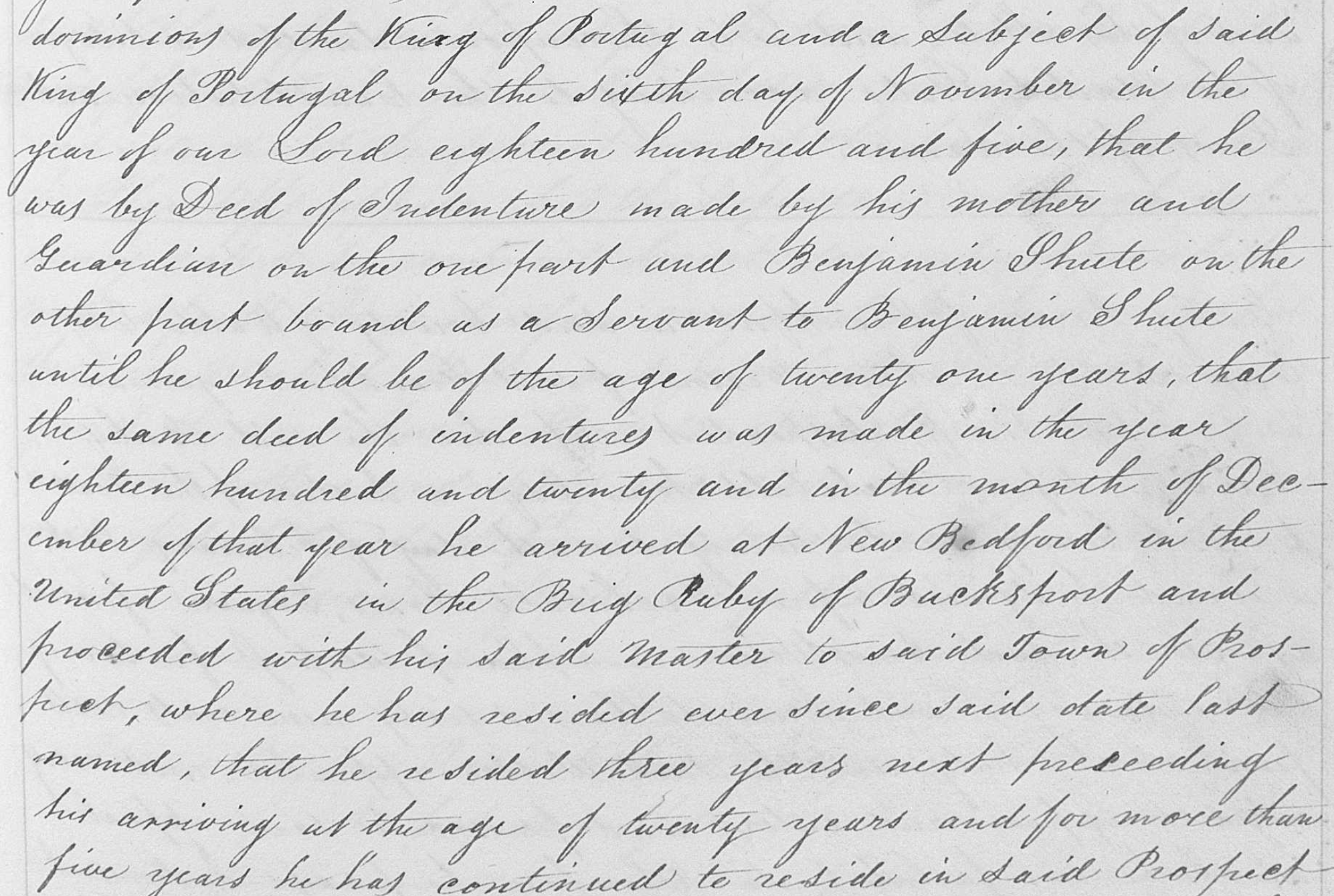
Narcezo Lisboa naturalization records 1830
“…that he was by Deed of Indenture made by his mother and Guardian on the one part and Benjamin Shute on the other part bound as a servant to Benjamin Shute until he should be of the age of twenty one years…”
After completing his contract as an indentured servant with Benjamin Shute, Narcezo Lisboa applied for naturalization in 1830. According to a 1835 deed, Narcezo (whose occupation was then listed as “mariner”) purchased land with a home or store on it in the town of Hampden, Maine with the financial assistance of a Captain Shute of Prospect. However, after 1835, I find no trace of him. The Hampden Historical Society has no known records of Narcezo’s property or store.

John Baptist, who was referred to in records as an indentured apprentice to Shute rather than a servant, escaped from these bonds in 1838, at the age of 19. While Shute’s ship, the Marcellus,[3] was docked in the Boston harbor, John absconded. Shute put a one cent reward for John in the Waldo Patriot newspaper, forbidding “all persons from harboring or trusting said Boy on my account, as I shall not be responsible for any debt of his contracting.”[4] An 1892 article claims that John Baptist “went back to the islands” but I’ve yet to find any documentation of him after his escape.
*
The fact that many people of color who came to the Prospect area with Shute went on to own homes (the DeSilvers, Vieiras, and the Matheas, for example) is in part due to the support of the Black community in Prospect–who came before the Cape Verdeans, as well as occasionally, Shute himself.
An 1894 article from the Bangor Daily News reported:
Another noted place in town [Prospect] is a farm on what is known as Poverty Shore.[5] This farm ever since the oldest inhabitants can remember has been in the possession of colored people and is noted for being the home of the famous colored musician, Jack Douglass…
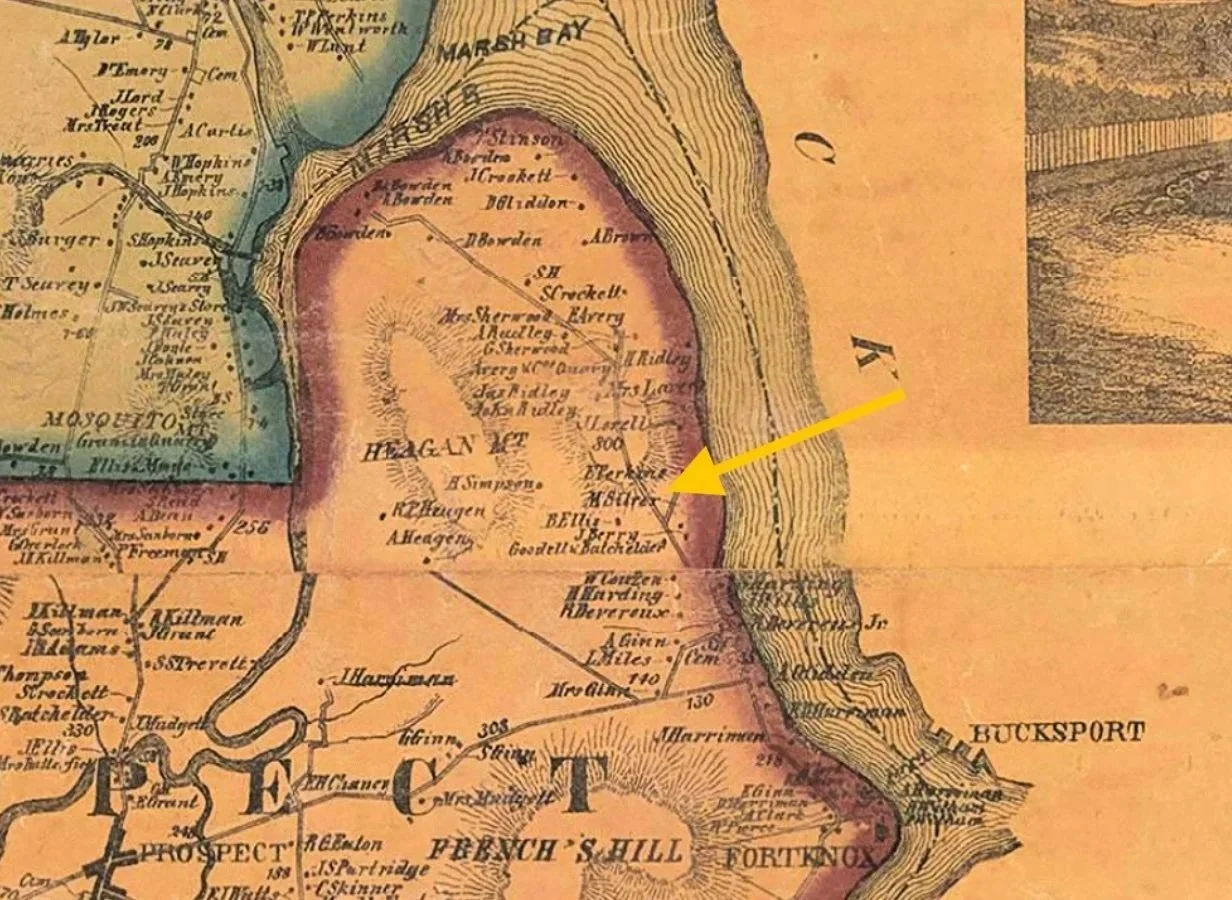
This 1859 map of Prospect shows where the DeSilver family farm was.
The first documented settler of color in Prospect was Giles Scott, a Jamaican man (son of a free “mulatto” woman and a white male, baptized in Kingston, Jamaica) who was initially sent to York, Maine “for his education” in the late 1700s.[6] By 1800, Giles was living on land he owned in Prospect with his wife Rhoda and their children. Seven years later, Giles sold the homestead to Jack Douglass, when Douglass married Sally/Sarah Scott.[7]
According to census records, among the 14 people living in Captain Benjamin Shute’s home in 1830 were two males of color between the ages of 10–24 and one male of color between the ages of 24–36 (perhaps Michael D., Miguel V., and Narcezo). Yet by the 1840 census, these three were no longer living with Shute. Three Black men of similar ages were, however, now living at this time in the home of musician Major John “Jack” Douglass. Nine people of color were documented as living in Jack’s house in the 1840 census, where at that point in time his family consisted of six.

DeSilver Family Farm in Prospect
The DeSilver family farm in Prospect, on Bowden Point, in an area once known as “Poverty Shore” was home to at least three Black families from three different nations across the African diaspora over five generations.
Photo courtesy of Tina Gagnon / the Prospect Historical Society
After being twice widowed, Jack married Mary Olney of nearby Winterport (then Frankfort)[8] where he then moved, selling his land and home to the DeSilver family. The Shute family is also implicated in this deed—Jack’s land was sold to Thomas Shute in trust to Michael DeSilver, presumably to protect DeSilver from creditors.
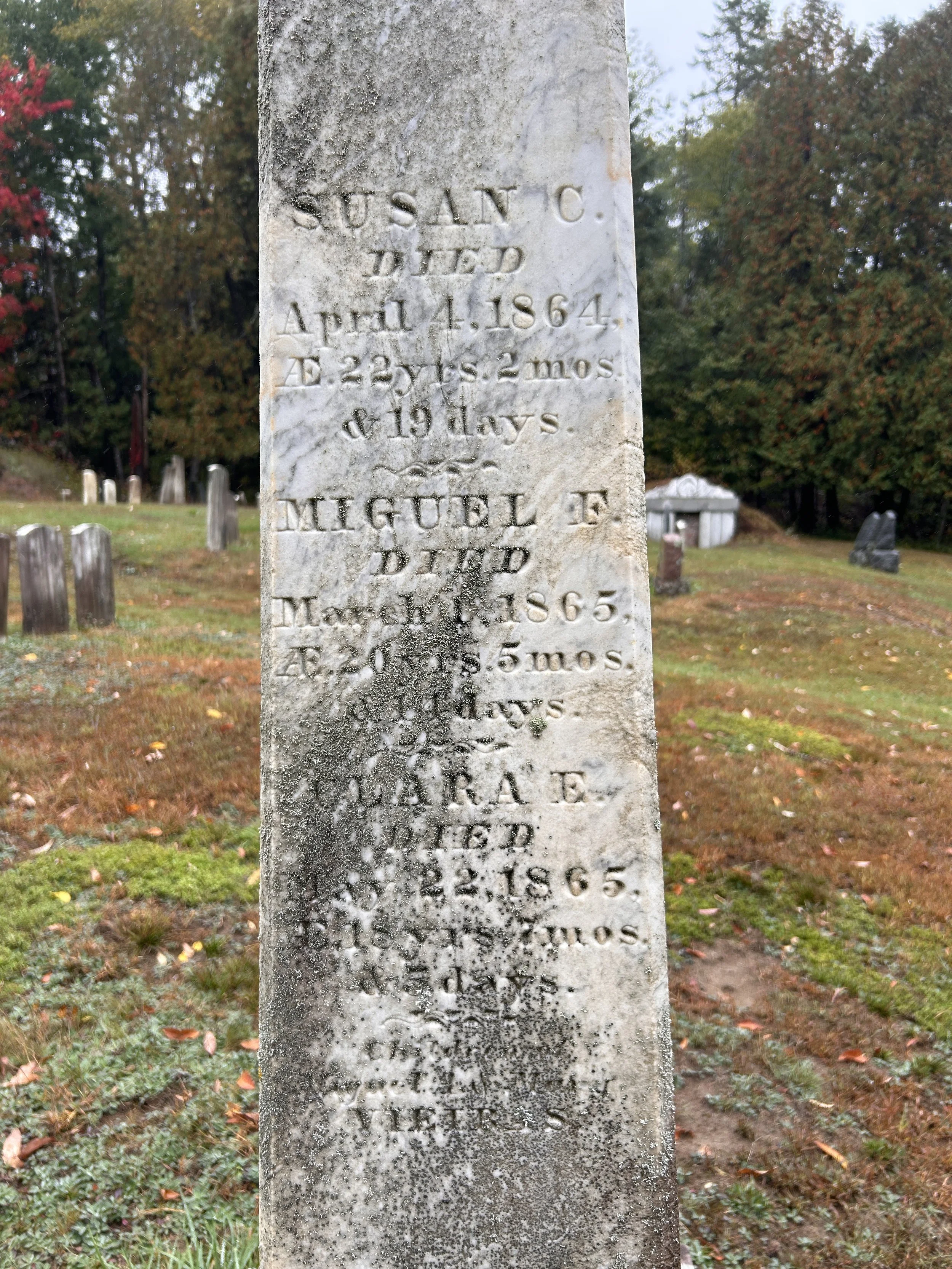
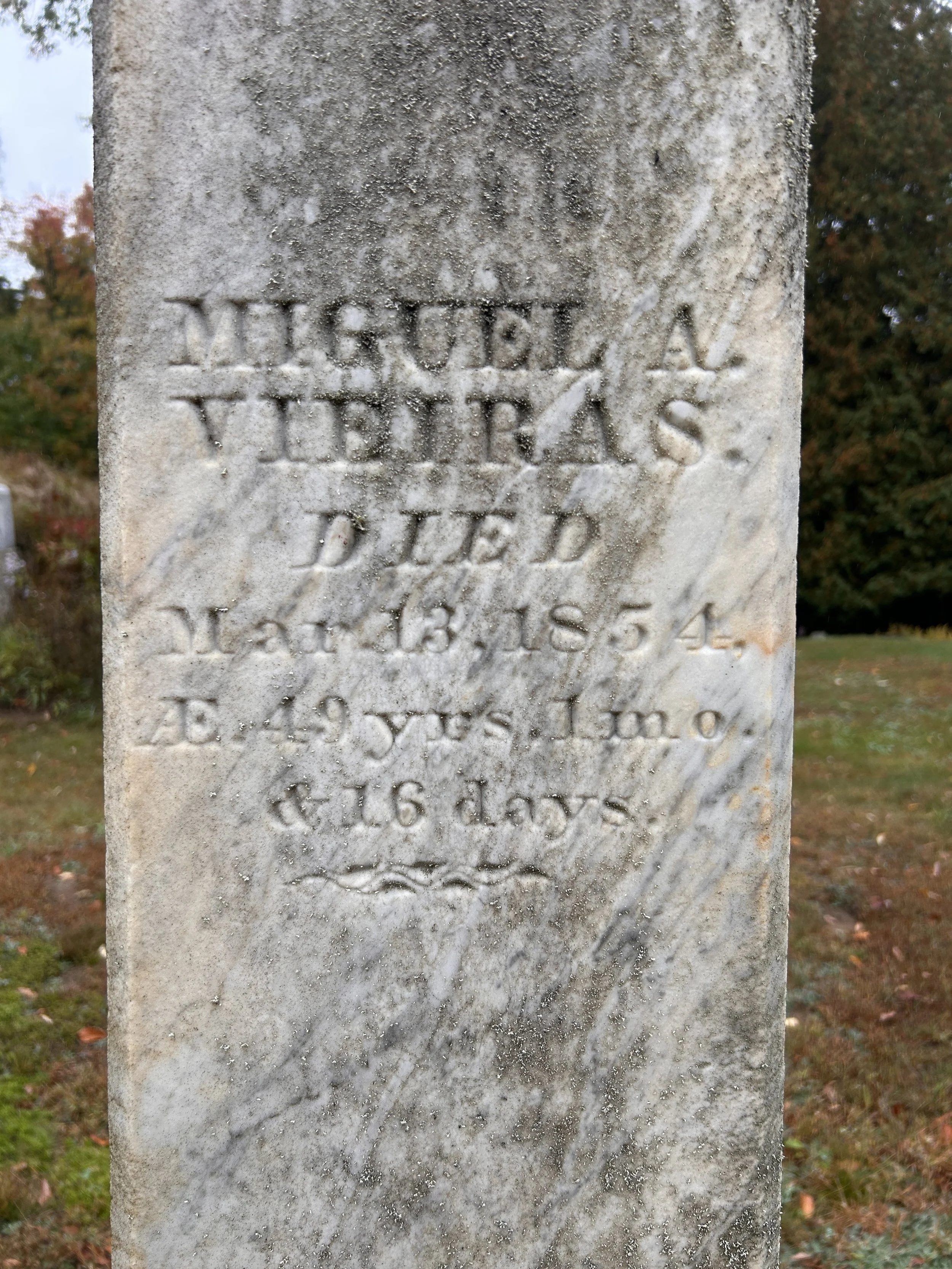
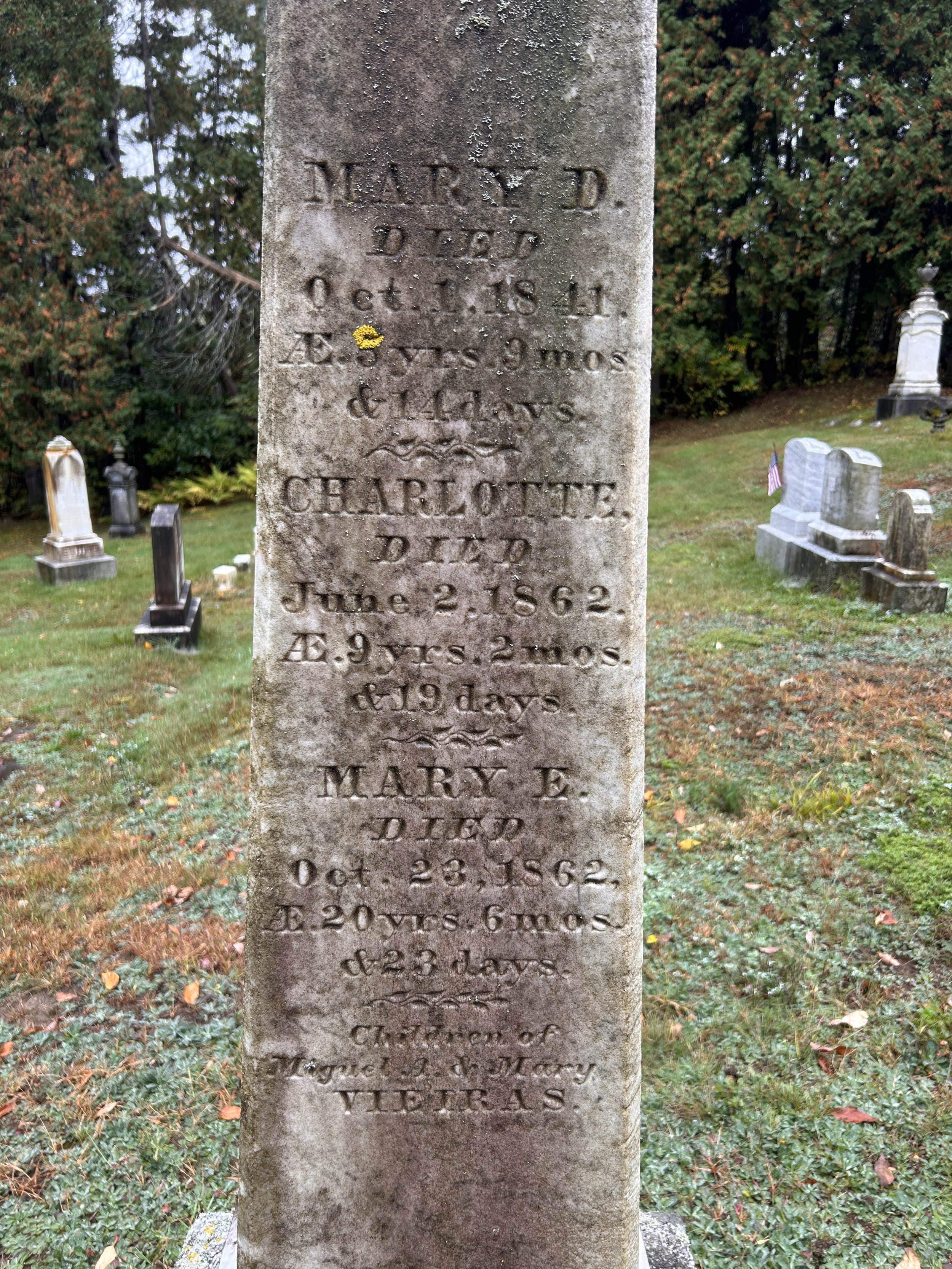
By the 1840 census, Miguel Vieiras was also living in his own household in Prospect, and had married another Cape Verdean: Mary Desaunt. We don’t yet know if Mary emigrated with Shute or arrived in another fashion. Together, they had six children. In 1854, Miguel, then a captain, sailed away with a ship full of granite from the quarries in Frankfort in the schooner Northern Eagle and was never heard from again. By 1865, all six of the Vieiras children had passed away, none of them living past the age of 22, their causes of death yet unknown to me but for one. Their family monument at the Narrows Cemetery in Stockton Springs[9] is an obelisk that rises six feet in the sky. Miguel’s back is to the river, three children face north, three south.The side of the obelisk that faces the river is blank. I’ve yet to find where Mary is buried.
*
Two twelve-year-olds named Roza and Narcizo arrived in Maine via the brig Gambia in 1834, along with three other youths (Francisco, 14; Apalina, 12; and Louisa, 10). “Apprentices” is written once in the occupation column, to describe them all. By 1846, Roza and Narcizo had married and were living in Bangor. In “The Coming of the Invisible People” a talk given by Bob Greene for the Maine Historical Society, Bob mentions a Roza and Narcizo who came to Maine from Cape Verde in their youth. While the handwriting of Roza and Narciso’s last names vary between the many documents they grace[10] it seems possible, if not likely, that it’s the same Roza and Narcizo.
According to Bob’s research, Narcizo became a pioneering and integral member of Bangor’s Black community—a firefighter and stagecoach driver who had his own delivery company. Their son, Fred, was also a firefighter and their grandson is thought to have been the first Black student at the University of Maine Orono. Bob also talks about Narcizo and Roza purchasing the Portuguese brig Joven Arthur, which had wrecked in the Penobscot River. They attempted to repair it so that they could sail back to Cape Verde, on their own terms. When the project became too expensive, they abandoned the ship, but not their dream. Eventually, they returned to the island of Santo Antone, where they purchased a home and plantation and spent their last years.
*
Like elsewhere in Maine, many of the men of color who came to Prospect worked on the water—albeit dangerous, it was one of few reliable income-generating prospects available. Prospect Ferry, where many of the people of color in Prospect lived, was next to the then-bustling Penobscot River (across from where the now defunct Bucksport Verso paper mill sits–a site that’s purportedly being eyed by a data center developer—known in the Penobscot language as elənαpayi-kʷəsaweyik or “the people’s point”). A ferry provided crossing between Prospect and Bucksport[11] and there were shipyards on either side of the river[12] as well as upstream and at the nearby marsh in Frankfort. Granite was being quarried and shipped all over the world from the adjacent Mount Waldo and in smaller quantities on Bowden Point, just north of Poverty Shore. Between 1844–69 Fort Knox, a massive granite fortress, was also being built to protect the valley from British naval incursions.[13] Cape Verdeans are well known for their maritime prowess and skills around the world–this was also true of the Cape Verdeans in Prospect. And, several of the Cape Verdean youth who came over with Captain Shute became captains themselves. Unfortunately, many of these men died on the water.
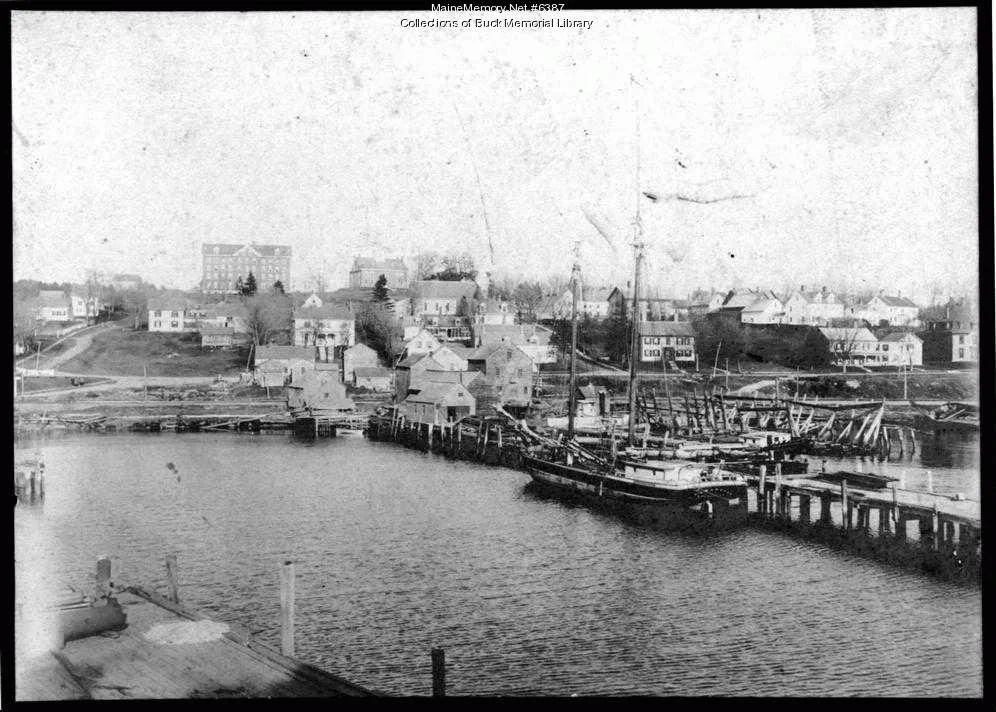
Bucksport waterfront, ca. 1860
The town of Bucksport, directly across the Penobscot River from Prospect, was easily accessible by ferry and had an active port and shipyards during the 1800s.
Photo courtesy of Buck Memorial Library via Maine Memory Network
An 1893 article in The Republican Journal of Belfast, Maine, entitled “Prospect’s Death Toll Revised: A Long List of Those Lost at Sea or Never Heard From” lists the following maritime deaths (among a much longer list): “John Mahone was lost overboard” (John was originally said to have been “brought” to Prospect from Spain by Captain John Odom, who we’ll hear more about shortly) and “Joseph Montero, colored, sailed away in a vessel from an adjoining town and was sold into Slavery in the Southern States and never heard from.”[14] Hope as I might to find Joseph Montero again, I have yet to succeed.[15]
Given the number of folks working in the maritime industry and record-keeping inconsistencies, the article likely contains a handful of omissions. Here are two: Jack’s son, John Douglass, who died while working as a stevedore on a ship in Portland and Bartholomew Monteiro, another Cape Verdean youth who came to Prospect with Shute. Bartholomew married musician Jack Douglass’ daughter Lucy, with whom he had two children, and drowned while aboard the schooner Sterling where he was working as a steward.
*
Back to Miguel de Silva (who came to be known as Michael DeSilver), the 11-year-old boy from the mountainous island of São Nicolau—an island that became famous for being the birthplace of the morna, “Sodade” popularized by Cesária Evora over a hundred years after his departure.
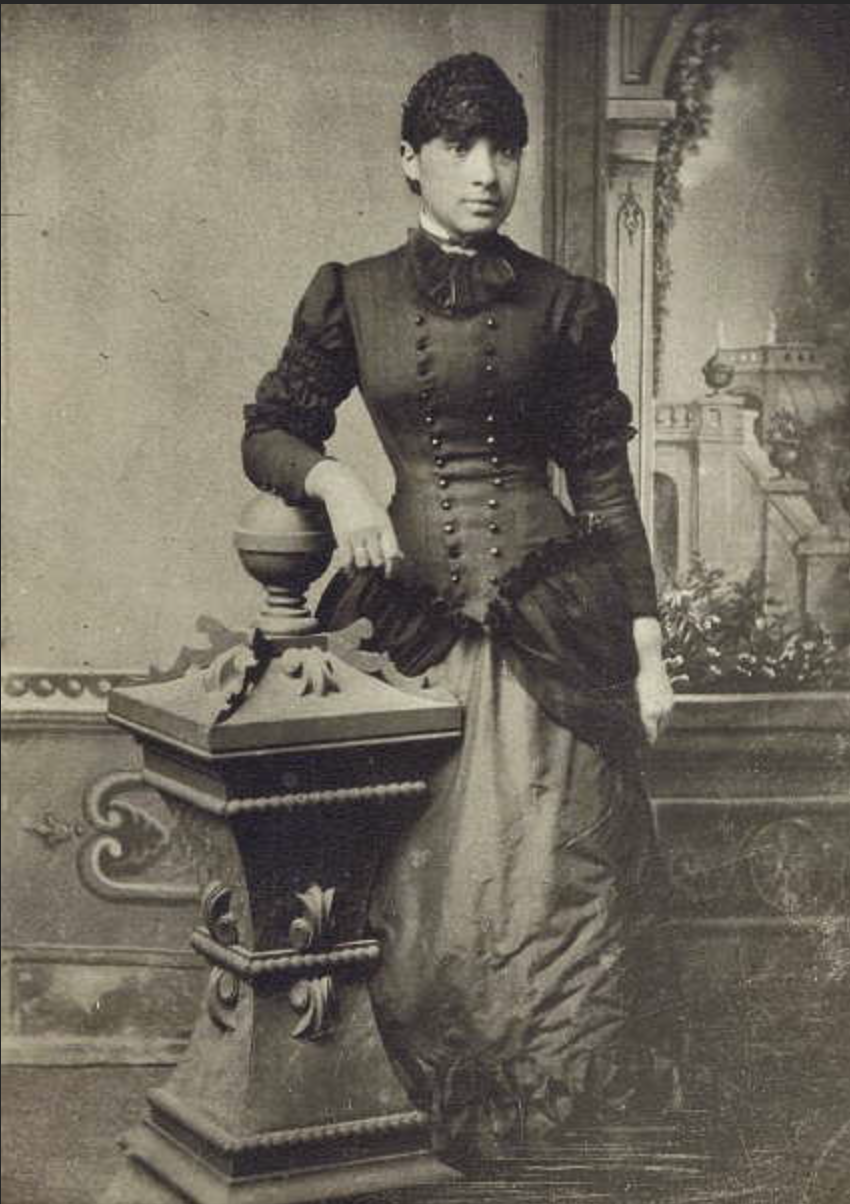
Charlotte (Lottie) Emmadline DeSilver Peters, year unknown
Charlotte, who married Cyrus Peters of Warren (Peterborough), was one of Miguel and Paulina’s daughters.
photo courtesy of Thomas Zeigler
Next spring, Michael’s descendants from Massachusetts, Texas, North Carolina, and Rhode Island will return to Maine for a reunion. They’ll visit–or revisit–the graves of Michael and Paulina DeSilver and remember the first generation of DeSilvers to live their whole lives in Maine: Rosa, John, Delia, Manuel, George, and Charlotte.[16] They’ll visit the site of the Peterborough colony in what’s now Warren, where musician Jack Douglass once lived and where Charlotte (Lottie) DeSilver moved after marrying Cyrus Hartwell Peters, great grandson of Sarah and Amos Peters, Peterborough’s founders.
Maybe they’ll remember Michael being featured in a 1913 newspaper article 30 years after his death about the 1863 draft riots in Prospect. A row was allegedly started on election day, by an old sea captain twice Michael’s age, Captain John Odom. Odom began to “twit” Michael by repeating racist taunts with increasing vigor while edging closer and closer to Michael. Eventually, with Captain John Odom sneering close enough for his spittle to land on him, Michael retorted with such righteous and indignant vigor that Odom retreated and went back to being thought of as the sweet lighthouse keeper of nearby Fort Point by the general public. Michael and his family were often referred to in newspaper articles as “good citizens" and “industrious.”
One year after this row, in 1864, Michael and Paulina’s son, John Henry, enlisted in the US Navy. He was 15. He served for four years, eventually moving to Pensacola, Florida, marrying three times, and having seven children.
Rosa DeSilver moved to Bangor and married a man named Samuel Guess. Born into slavery in Kentucky, Guess self-emancipated to Bangor, Maine in the 1860s, becoming a laborer and well-known member of Bangor’s Black community, and giving talks on his time as a slave. During one such talk in 1878, he reportedly invited their five children up on the stage with him to sing, “The Battle Hymn of the Republic.”
Listen, there they are now, singing “As He died to make men holy, let us live to make men free.”[17]
Surely there’s some hyperbole here, as with most newspaper stories from the nineteenth century, but a newspaper article from the Bangor Daily News reported that “the response from the audience was so enthusiastic that one of the children was nearly knocked over by a bouquet thrown through the air.”
Charlotte (Lottie) DeSilver moved from Warren to Boston and had four daughters and six sons. She died in Boston in September 1934, three days shy of her 68th birthday.
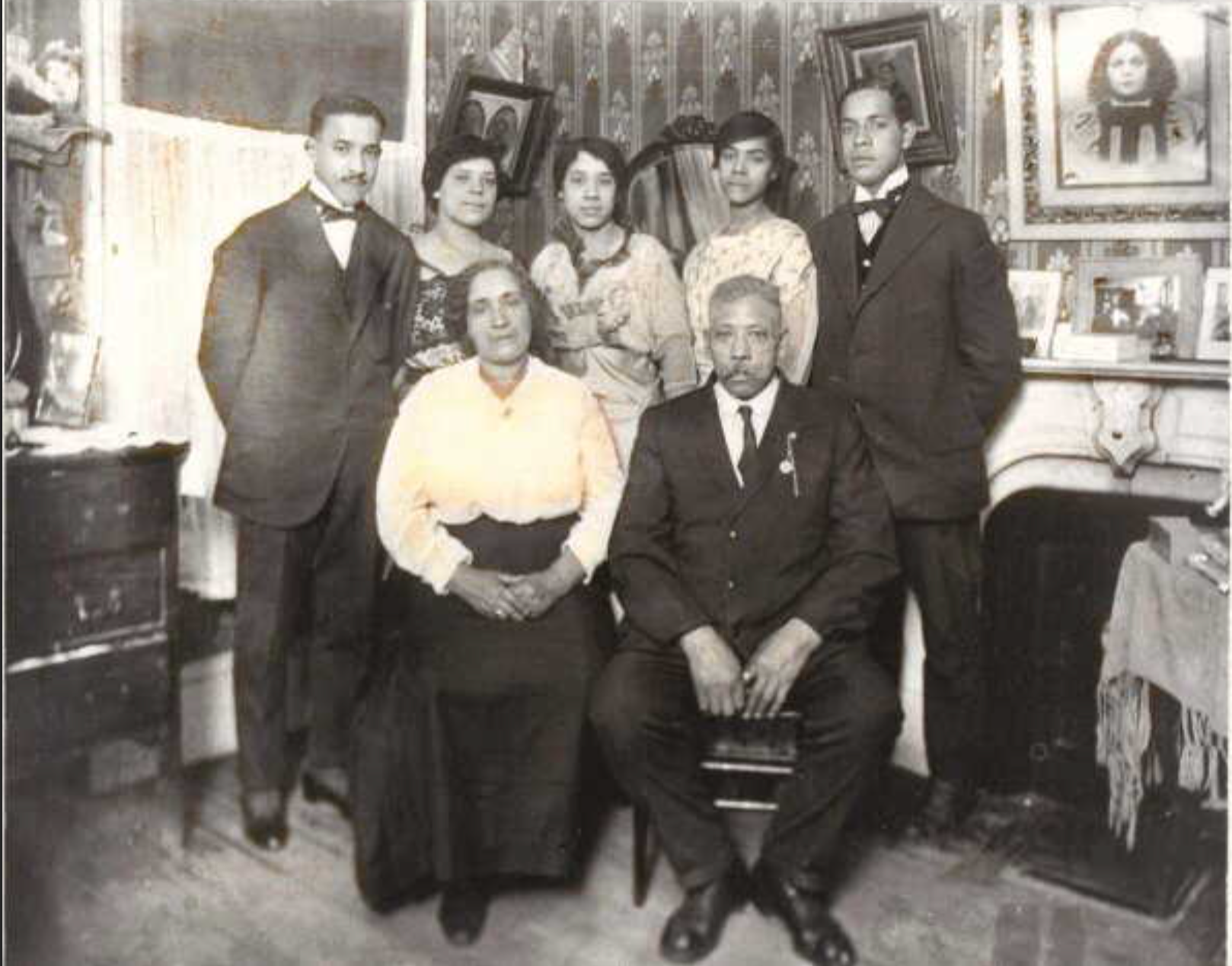
The Peters-DeSilver family in 1916
Charlotte (Lottie) Emmaline DeSilver Peters is seated at the front left.
photo courtesy of Thomas Zeigler
Delia DeSilver married Bucksport barber Abner Brown in 1874, with whom she had one daughter, Annie. When both Abner and Annie passed away in 1882, Michael deeded Delia the small parcel of land that became the family cemetery. Delia remarried and moved to the Bronx, NY, with her husband, Edward Le Blon, where she lived until her death in 1907, at the age of 52.
George was the last DeSilver to live in Prospect though he was not living at the family home when it suffered a fire in 1895, destroying the barn full of hay and damaging the home. George worked as a barber in Bucksport (likely with his brother-in-law, Abner Brown) and later as a sailor. He married Adeline Coffin Wilkinson in Boston in 1903 and died in 1917 at the age of 56.
In 1900, Charlotte, Delia, and George sold the land to the Harding family.
*
Next to the cellar hole that was once the foundation of the DeSilver, Douglass, and Scott home–a place that was home for at least three Black families from three different nations across the African diaspora over five generations—lilacs still grow.
Tucked into a tall pine tree nearby is an unusually large bald eagle nest that has existed at least since the 1960s when bald eagles were first listed as federally endangered. Eagles add material to their nests every year, suggesting that this nest had been in existence for much longer. When bald eagles were still low in number[18] and struggling to survive, the presence of this ample nest in Prospect gave people hope. According to a database managed by US Fish & Wildlife, when the nest near the DeSilver homestead was last checked in 2018, it, too, was unoccupied. Yet, the local eagles have clearly built a new home somewhere close by as they can be seen daily–soaring, swooping, and watching from on high.
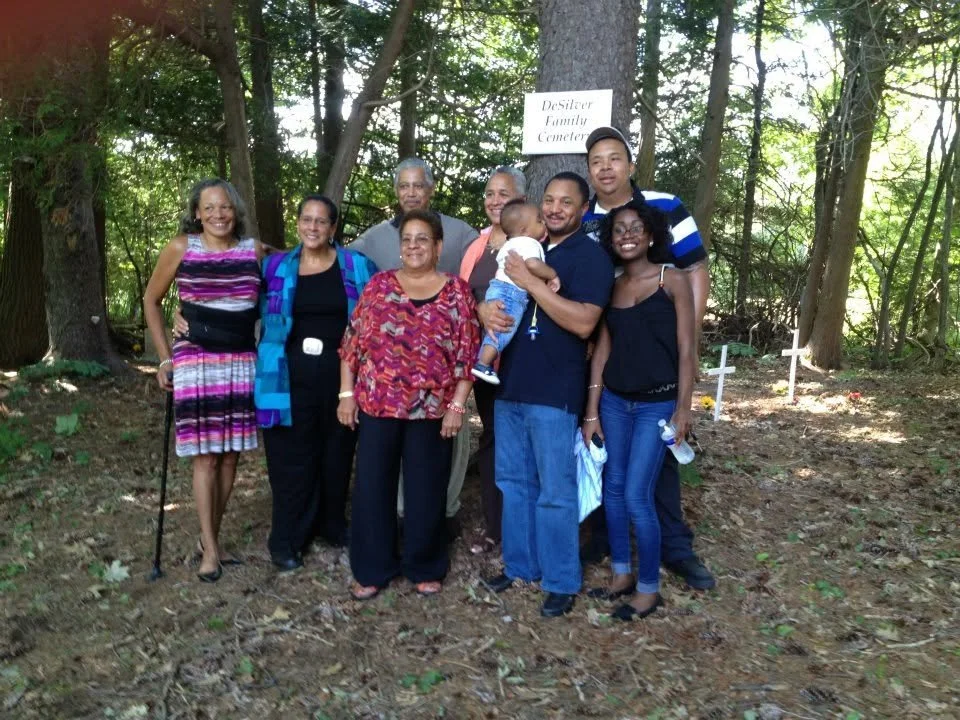
Members of the DeSilver-Peters family visiting the DeSilver family cemetery during the dedication ceremony in 2012.
Photo courtesy of Thomas Zeigler
Footnotes
[1] See Nineteenth Century Black Politics in Maine for additional information and context.
[2] This list is far from complete and additional research is required.
[3] The brig Gambia sank to the bottom of the sea a few days out from New York City to Portugal in 1837 in what was by all accounts a harrowing and gory disaster that also included a young “Portuguese” boy named Alexander who perished. Shute was not on board the Gambia at the time.
[4] Thank you to Tina Gagnon of the Prospect Historical Society for printing the binder of newspaper clippings related to Prospect where this advertisement was found.
[5] Named as such, I’m told, because the soil here was hard to farm, and thus those who farmed there were just barely scraping by.
[6] According to a 1789 entry in the diary of mariner and trader Jonathan Sayward of York, Maine.
[7] Likely Giles’ daughter.
[8] Mary was the daughter of a Penobscot woman (Susannah Olney) and a “Portuguese” man of color (who was reportedly “brought” to Maine by David Gilmoor, Jr. from Providence, RI).
[9] Stockton Springs broke off from Prospect in 1857, in part due to conflicting perspectives on abolition.
[10] Including at least one document signed by Paulina DeSilver, Miguel/Michael DeSilver’s wife, as the witness.
[11] The Penobscot name for this part of the river is etali-kʷsakahlαwələtimək, or “place where one crosses.”
[12] According to research by Kate McMahon, at least three vessels used to transport captives through the illicit slave trade were built in what is then Prospect during the 1850s.
[13] And, functionally, to keep the Penobscot people upstream of Verona Island–the Penobscot name for the Fort Knox area is kči-péskəhʷαtəyal or “big guns.”
[14] The article doesn’t state what year Joseph Montero was sold into slavery but due to the Negro Seamen’s Act of 1822, this abominable fate was not unheard of. See Seth Goldstein’s presentation, “Black Salts” for more context and information.
[15] Though I did find one “Portuguese” victualer of the same name, with a shop in Bangor in the 1830s.
[16] Curiously, Rosa and John were both born in Cape Verde. Despite the incredible work Thomas Zeigler, a DeSilver’s descendant, has done on his family’s genealogy, how Michael and Paulina knew each other and how and when Paulina left Cape Verde and arrived in Prospect remains a mystery.
[17] Technically, we don’t know if they sang this version of the lyrics to the famous Abolitionist song or, “As He died to make men holy, let us die to make men free” but after the Civil War many chose to sing “live” rather than “die.”
[18] There were just 21 mating pairs of bald eagles in Maine in 1967. There are now thought to be over 800 nesting pairs of bald eagles in Maine.
With many thanks to:
Abel Djassi Amado, Angelo Lopes Barbosa, Barbara Burgo, Tina Gagnon, Lois Gianni, Cipperly Good, Marilyn Halter, Kathy Harrison, Arlene Lamarche, Lisa Simpson Lutts, Alex Mann, Kate McMahon, Penobscot Marine Museum, Prospect Historical Society, Marsha Shute, Stockton Springs Historical Society, and Thomas Zeigler
About the Author
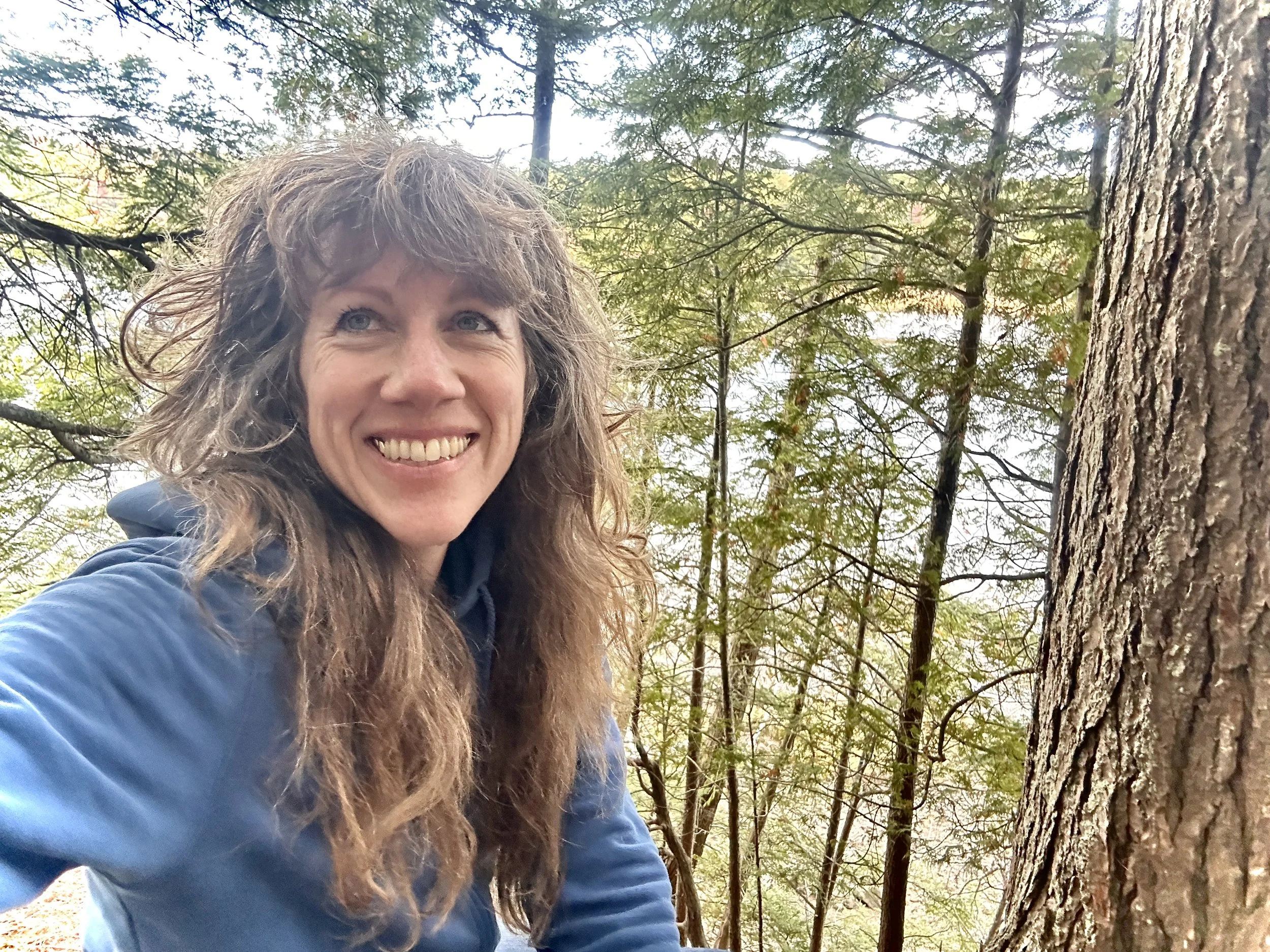
Michele Christle is a writer whose work explores culture, ecology, history, and place. Her writing has appeared in publications including The Kenyon Review, Down East, The Rumpus, and Cultural Survival Quarterly, and she has worked with organizations such as Maine Sea Grant, Maine Audubon, StoryCorps, and Atlantic Black Box’s WHERE. The recipient of a LEF/CIFF Fellowship and residencies at Hewnoaks and Shannaghe, Michele is currently working on a documentary project about eels and writes a newsletter called Tinker on the Marsh, documenting her research and explorations in and around the tidal marsh where she lives. Learn more at michelechristle.com.
To reach Michele about this ongoing research, email michelechristle.projects@proton.me.