The Three Cape Verdean Sailors on the Wyoming
The following was researched and written as part of Interco(a)stal: Reading Between the Ribs of Maine’s Maritime History. This piece is one of two inter-related pieces by Anne Farrow—read part 1: The Eight Black Seamen: Recovering the Forgotten Crew of the Wyoming here.
Men of color were the crewmen of choice aboard the early 20th century coal colliers, and of those Black men, a significant number were from the Cape Verdean islands, or Cabo Verde. A small archipelago of nine islands off the upper western coast of Africa and a key point of purchase and transfer of captives during the Trans-Atlantic Slave Trade, many of the stolen African people were shipped on to Caribbean plantations and to the American colonies.
And yet, because of changes in the trade, natural disasters and the neglect of the Portuguese government, which had colonized the islands, many Africans stayed there and established a culture that reflected Africa’s many cultures and that of the Portuguese. Droughts, hurricanes and starvation forced the emigration of huge numbers of Cape Verdeans to what had become the United States of America. They were, from the earliest part of the 19th century, superior mariners. They fought on Navy ships in the war of 1812, the Civil War, and were the backbone of the whaling trades and the coastal “Packet” trades which they themselves established.
Of the eight Black crewmen aboard the Wyoming, three listed their birthplace as Cape Verde Islands, and their country of citizenship as Prtgl, or Portugal. (Cape Verde became an independent nation in 1975, but Portuguese is still the national language.) John Lopes of Boston, John Medina of Norfolk, Va., and Antonio Santos, also of Norfolk, lived at the two ends of the coal shipping spectrum, and because we don’t know which island each man emigrated from, we can’t determine which form of the criolu, or island variation on Portuguese they would have spoken.
Of the seamen aboard the Edward J. Lawrence, another big Bath-built schooner, the crew list identifies some men as LB – which might signify “light brown,” or “light black” and possibly Cape Verdean in origin. Others are identified as LB or BB, which might identify shades of the seamen’s blackness of skin. Most of the 10 crewmen on that vessel appear to have been born in the United States, with one man from the British West Indies. The surviving crewlist for the Cora F. Cressey does not identify the birthplace or “complexion” of the seamen.
Barbara Burgo is a woman of Cape Verdean descent, and the granddaughter of Theodore Monteiro, a Cape Verdean seaman who sailed aboard the famous whaleship Charles W. Morgan in 1908. She is a scholar and co-founder and curator of the Cape Cod Cape Verdean Museum & Cultural Center in East Falmouth, Massachusetts. She is a fiery defender of her ancestors and her culture. And she is fiery when discussing the deep racism and discrimination Cape Verdeans have endured and pushed back against since the mid 18th century. When I told her late last winter that I was having trouble finding information about the seamen who perished aboard the Wyoming – she looked at me in disbelief. “Anne, those men did not even exist” to the white world, she said. “They were invisible.”
The Wyoming’s three Cape Verdeans might not have been fast friends, the curator said, but they would have been able to communicate with each other, and in so small a group, she thinks there would almost certainly have been some camaraderie among the three. If they were raised in the islands, they would have been educated to at least the fourth grade or a little longer, and were probably taught Catholic beliefs because the islands were primarily Catholic.
The curator, who is working on a book about the life and culture of Cape Verde, wonders whether, during the Wyoming’s final terrible hours the three seamen were able to speak or pray together, however briefly, and if there might have been a moment’s solace in hearing the sound of where they came from.
About the Author
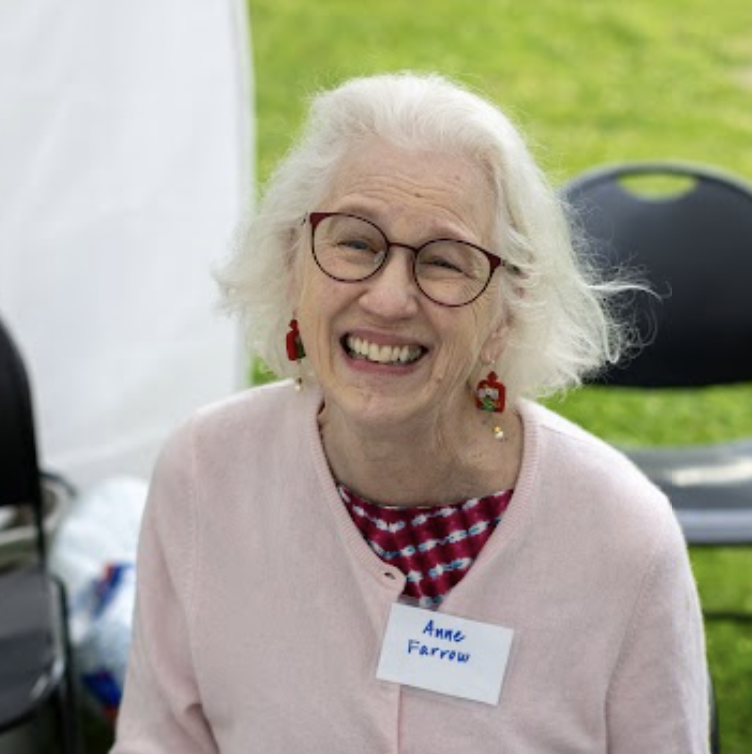
Anne Farrow is an award-winning journalist, author, and independent historian whose work has transformed public understanding of New England's deep ties to slavery. A former reporter for The Hartford Courant and two-time Pulitzer Prize nominee, she is co-author of Complicity: How the North Promoted, Prolonged, and Profited from Slavery and author of The Logbooks. For more than two decades, Anne has collaborated with museums, historical societies, and scholars to uncover and interpret the histories of slavery, the slave trade, and racial injustice in the Northeast. Her public history work—including the award-winning exhibition A Vanished Port: Middletown and the Caribbean, 1750–1824—has helped reshape how museums and communities engage with these histories.