To the Bitter End: Four Freedom Fighters and the Invisible Line Binding Maine to Jamaica
The following was researched and written by Kate Tremblay and Jill Whitchurch Dixon from Vaughan Woods & Historic Homestead, as part of Interco(a)stal: Reading Between the Ribs of Maine’s Maritime History.
An invisible line connects Maine and Jamaica through the stories of four enslaved men and the family that enslaved them—a family whose wealth, power, and ambitions stretched from Jamaica to Maine.
That line runs through land, family, trade, wealth, and ideas. British merchant and political radical Samuel Vaughan Sr. settled his sons in key Atlantic ports to advance their fortunes in trade and plantation ownership. Two settled in timber-rich Maine along the Kennebec River, creating a direct link between Hallowell and Jamaica. After his death in 1802, his sons continued to hold the family’s Jamaican plantations and the people they enslaved for another thirty years.
Among those enslaved on Vaughan plantations in St. James Parish, Jamaica were four men whose lives ended in the aftermath of Jamaica’s 1831 Christmas Rebellion.
Francois. Prince. Robin. Cyrus.
These four men worked, worshipped, raised families, learned skilled trades, formed relationships, and found ways to live within a system that claimed ownership of their lives—and they resisted it.
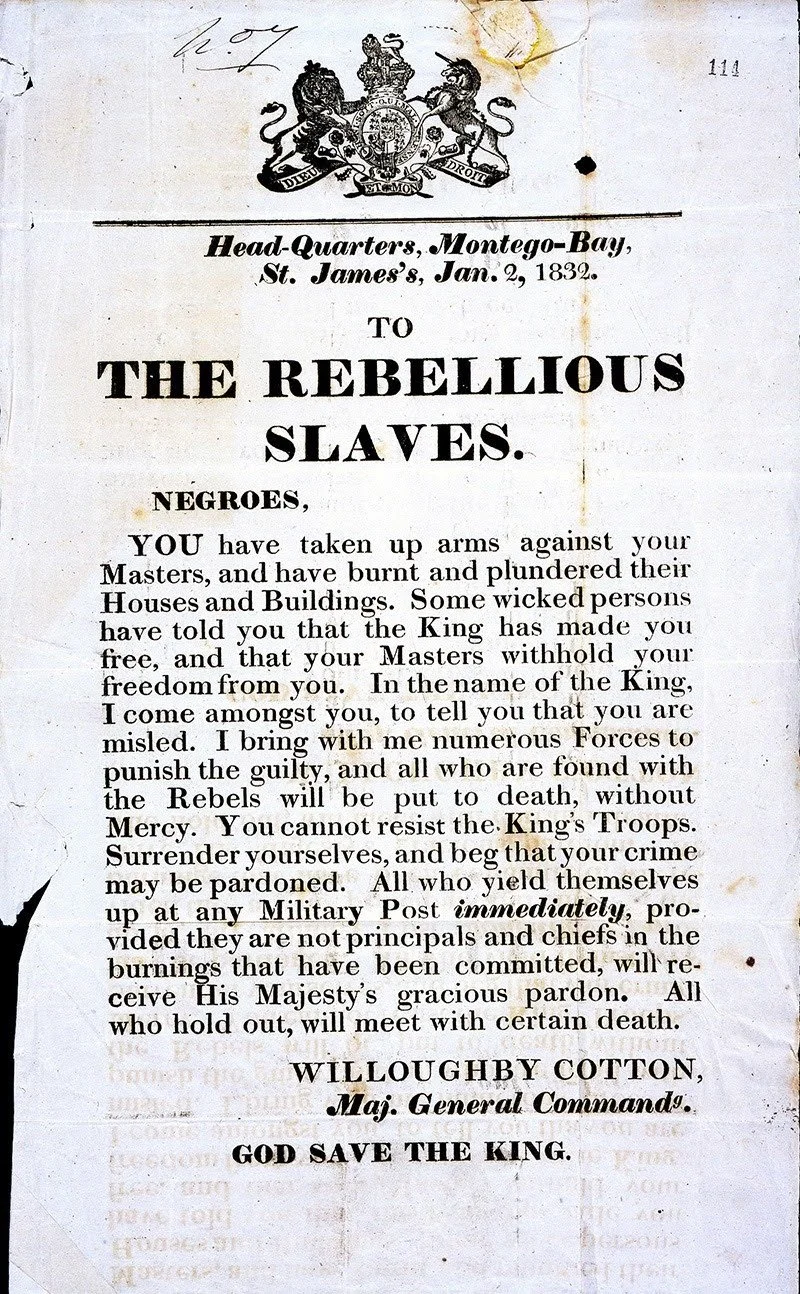
“To the Rebellious Slaves,” 1832, Jamaica
This dispatch from Jamaica reflects the campaign of repression that followed the 1831 Christmas Rebellion, when enslaved people were compelled to testify against others—including fellow enslaved people—in trials that often ended in execution. Their testimony helped colonial authorities pursue those who resisted slavery, including people connected to the Vaughan plantations.
Courtesy of the UK National Archives
In December 1831, resistance spread across western Jamaica. Led in part by the enslaved Baptist Deacon Sam Sharpe, the Christmas Rebellion began with enslaved people refusing to work and demanding freedom. The resistance, once lit, spread like a detonated fuse from plantation to plantation, and hundreds of plantation buildings were burned to ground.
Sharpe’s movement drew on networks that already existed within the enslaved community. Enslaved workers with special skills could move between plantations and communicate with others. Baptist churches provided another network for sharing ideas, information, and plans. Unwittingly, the Vaughans had played a crucial role in the creation of that network.
Samuel Vaughan Jr., who managed the family’s Jamaican plantations, wanted to be a different kind of planter. He embraced Enlightenment ideas about education, religion, and moral improvement, and hired Moses Baker, a free Black Baptist minister and barber, originally from America, to preach, teach, and morally improve the people he enslaved. Baker, who was taught and converted by Quaker leaders, possessed a reputation for non violent religious teachings. Baker went on to establish a network of Baptist churches across St. James Parish.
One of the people drawn into that religious community was Sam Sharpe, who became a Baptist deacon and eventually a leader of the Christmas Rebellion. Vaughan’s support for religious instruction was presented as evidence of enlightened plantation management. Yet the community he helped foster became part of the network through which enslaved Jamaicans shared ideas, organized, and eventually resisted.
Vaughan did not set out to undermine the plantations he depended upon. But the story exposes a fundamental contradiction in the idea of an “enlightened” slaveholder— ideas about education, religious freedom, moral worth, and human dignity were at odds with the slave holding system.
For Sam Sharpe and the people who joined him, those ideas helped point toward freedom.

Adolphe Duperly, The Destruction of Roehampton Estate in the Parish of St. James in January 1832, the Property of J. Baillie, Esq., 1833, lithograph.
This image captures the chaos and fires of the Christmas Rebellion of 1831 in Jamaica. The Vaughan plantations, not far from the Roehampton estate pictured here, shared its fate—burned to the ground by enslaved people rising up to claim their freedom.
Image courtesy of the National Library of Jamaica.
The Rebellion and the Courts
The Christmas rebellion was met with overwhelming force. Colonial authorities moved quickly to restore control. Enslaved people accused of participating in the uprising were brought before special courts and tried for offenses including rebellion, rebellious conspiracy, arson, and murder. The proceedings moved rapidly, and the consequences could be fatal.
Francois, alias Francis Vaughan; age 48, Creole; Occupation: Head Cooper; Residence: Flamstead; Crime: Rebellion and Arson; Sentence: Death; Remarks: Executed
Image courtesy of The National Archives, Kew, United Kingdom
For those convicted, there was little possibility of mercy. Death sentences were carried out across the island, sometimes at or near the plantations where the rebellion had taken place.
These executions were intended not only to punish individuals but to demonstrate colonial power at a moment when the plantation system itself had been challenged. The courts declared the rebels criminals; the executions reinforced the authority of those who claimed ownership of the plantations, the labor, and the people who lived on them.
The language of the proceedings was brutally simple: The King against Francois. The King against Cyrus. The King against Prince. The King against Robin. Their lives became case files. Their resistance became criminal charges. Their deaths became sentences.
The stories of the four freedom fighters survive unevenly. Francois emerges from the records as a skilled artisan and determined leader. Cyrus was a young man whose half-sister had already gained her freedom. Prince was drawn into the rebellion under circumstances that may not have been entirely of his choosing. Robin’s story remains largely hidden from us.
What we know is that all four were prosecuted and sentenced to death for their roles in the rebellion. All four were executed in 1832.
Francois
Francois was born around 1784. The 1817 register identifies him as a thirty-three-year-old “Creole” (born in the colonies) man enslaved at Flamstead, a Vaughan-owned plantation, and names his mother, Papa Polly, who was born in Africa.
At Flamstead, Francois was Head Cooper, a skilled artisan responsible for making and repairing the barrels essential to the sugar industry. Skilled workers such as carpenters, blacksmiths, masons, and wagon drivers occupied positions that gave them greater responsibility, mobility, and knowledge of the plantation system. Sam Sharpe recruited many of the rebellion’s leaders from among this enslaved “elite.” Francois was one of them.
During the Christmas Rebellion, he became the “Captain” of a large group of rebels from Flamstead and neighboring plantations. Colonial court records describe him organizing men, inspecting weapons, and leading the group toward a neighboring plantation, where buildings were set on fire.
Witnesses described Francois as an active and committed leader. One testified that he did not need to go with the party, but chose to. Another said Francois pressed enslaved men from neighboring plantations to join, at one point holding a pistol.
Francois was convicted of rebellion, rebellious conspiracy, and arson. The court valued him at £80 and sentenced him to death.
Rather than being executed at the jail, Francois was returned to Flamstead Estate and hanged there on April 7, 1832—a warning to those who had been enslaved alongside him of what resistance would bring.
Cyrus
Cyrus was born around 1811. The 1817 register identifies him as a six-year-old “Creole” boy enslaved at Vaughansfield, a Vaughan-owned plantation in St. James Parish, and names his mother, Lucia.
Cyrus had many siblings, including a half-sister, Eliza, about four years his senior, who was freed in 1826. Her freedom may have offered Cyrus a glimpse of possibility. Did he wonder if freedom might one day be his, too—or if he could somehow secure it for the rest of his family?
By 1832, the register lists Cyrus as nineteen years old and records his sale with the Vaughansfield Plantation.
Cyrus appears again in the records of the Christmas Rebellion. The formal case identifies Cyrus as a defendant in the prosecution for rebellion, rebellious conspiracy, and the murder of a white man, John McCallum. Witness testimony placed Cyrus at the scene and stated that “when Cyrus fired, said he, ‘McCallum fell.’” Cyrus was found guilty and sentenced to death.
His story survives in fragments. The records tell us his age, his mother’s name, the plantation where he was enslaved, and how the colonial courts condemned him. They cannot tell us what freedom meant to a nineteen-year-old who had already seen someone in his own family achieve it.
Prince
Prince first appears in the surviving Vaughan records in 1802, when he was listed among the enslaved people on the “List of Vaughansfield Negroes” prepared after Samuel Vaughan Sr.’s death. He was valued at £170.
The 1817 Jamaican slave register identifies Prince as a thirty-seven-year-old African man, meaning he had been born in Africa and forcibly brought to Jamaica. Like hundreds of others at Vaughansfield, his life had been reduced in the plantation records to age, origin, and monetary value.
Fifteen years later, Prince appears again—but this time in Jamaica’s colonial courts. Following the Christmas Rebellion, Prince was prosecuted for his role in the burning of Vaughansfield. Fellow enslaved people testified that he had set fire to the master’s house and to the coffee house. But another witness also testified that the leader of the group had “forced” Prince to go with them.
That testimony offers a glimpse of the difficult choices facing enslaved people during the uprising. Some participated willingly; others may have been pressured, compelled, or swept into events already underway. The court records cannot tell us exactly what Prince wanted or feared.
Prince was convicted, sentenced to death, and executed in 1832.
The man once reduced to a £170 valuation was condemned by the colonial courts for resisting the plantation system that claimed ownership of his life.
Robin
Robin was born around 1793. The 1817 register identifies him as a twenty-four-year-old “Creole” man, and names his mother, Sarah.
Fifteen years later, Robin appears in the colonial records of the Christmas Rebellion. The surviving court index identifies him as a man of Flamstead who was tried and sentenced to death for his role in the uprising. His trial is referenced in Folio 20, but that record has not yet been located.
For now, we cannot say exactly what Robin was accused of doing or how he participated in the rebellion. What remains is a name, a mother, a plantation, and a death recorded in the aftermath of the uprising.
The colonial court record reduced Robin to a defendant condemned for rebellion. Jamaica’s later recognition of him as a freedom fighter offers another way to understand him—not as a criminal, but as a person who resisted enslavement.
The Vaughans and the Bitter End
The rebellion also exposed a contradiction within the Vaughan family’s own history.
The Vaughan brothers inherited Enlightenment ideals about liberty, education, religion, and human progress. Some, like Samuel Jr., tried to put those ideals into practice. Yet they also inherited plantations, enslaved people, and wealth built through slavery.
Their father, Samuel Vaughan Sr., had instructed his sons in his will to sell the Jamaican plantations. But after his death in 1802, they did not do so. For the next thirty years, the Vaughan sons continued to hold and manage their Jamaican plantations and the people they enslaved.
They held on through three decades of growing opposition to slavery, changing ideas about freedom and human rights, and an increasingly difficult contradiction between Enlightenment ideals and slaveholding.
They held on until 1831, when the people they enslaved rose against the plantation system. The rebellion reached the Vaughan family’s own plantations. Buildings were burned. The system they had continued to defend was no longer simply something happening elsewhere. It had come to their doorstep—and, in the violence of the rebellion, their own enslaved people helped burn it down.
They held on to the bitter end. The phrase carries a painful irony. The enslaved people who resisted slavery fought to the bitter end. The colonial government fought to preserve the plantation system to the bitter end. And the Vaughan family held onto its Jamaican plantations and the people it enslaved to the bitter end.
These were not equal struggles. One side was fighting for freedom from a system that claimed ownership of their bodies and labor. The other was defending a system that produced wealth and property.
Remembering the Freedom Fighters
In 2017, Jamaica passed legislation absolving people who had been criminally prosecuted for their roles in the Christmas Rebellion. In 2018, Francois of Flamstead, Robin of Flamstead, Prince of Vaughansfield, and Cyrus of Vaughansfield were formally recognized as Freedom Fighters.
That recognition offers a different ending to the story than the colonial courts intended. The courts called these men criminals. Jamaica later called them freedom fighters.
Their stories also change how we understand the connection between Maine and Jamaica. It was not simply a story of trade, wealth, or Enlightenment ideas. It was a connection between people who accumulated wealth and the people whose labor produced it.
Francois, Cyrus, Prince, and Robin lived on that other side of the connection. Their names survive. Their resistance survives. And, long after the colonial government had declared them criminals, Jamaica chose to remember them differently.
They fought to the bitter end. Their stories endure.
About the Author(s)
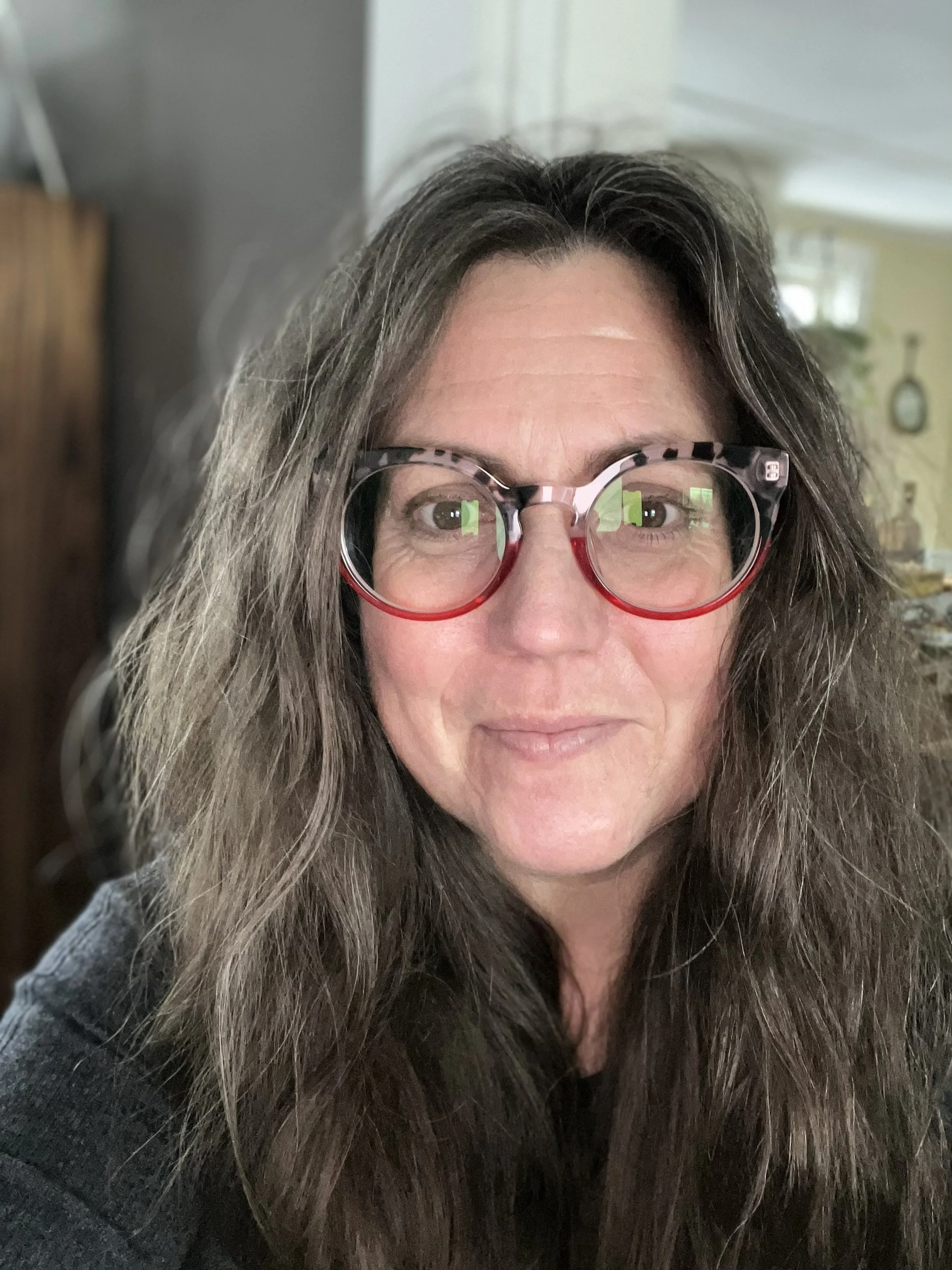
Kate Tremblay, Executive Director, Vaughan Woods and Historic Homestead
Kate Tremblay, M.Ed., is the Executive Director of Vaughan Woods & Historic Homestead in Hallowell, Maine. She holds a Master of Education from Lesley University and has spent her career creating engaging educational experiences that connect people with nature, history, and place. Before joining Vaughan Woods & Historic Homestead, she was a Registered Maine Guide and Director of Chewonki's Outdoor Classroom for Schools in Wiscasset. Today, she leads efforts to preserve and interpret the historic homestead and nature preserve with a recent emphasis on expanding public understanding of the Vaughan family's ties to slavery through exhibitions and archival research. She lives in Hallowell with her husband, two teenage children, and their old English Sheepdog.
Jill Whitchurch Dixon, Lead Interpreter, Vaughan Woods and Historic Homestead