Waponahki Corn
“Pęyeskamon” (Penobscot)
“Skamon” “Skamonal” (Abenaki)
“Peyeskomon” (Passamaquoddy/Maliseet)
Like Indigenous peoples across Turtle Island (North America), corn was a vital staple for the Waponahki, cultivated as far north as the Kennebec River.
Alongside squash and pole beans, it forms the “Three Sisters,” grown together on floodplains and forest clearings created through controlled burns. Planting coincided with alewife runs so that the fish could be used as fertilizer. Beans enriched the soil with nitrogen, benefiting the corn and squash. After several seasons, gardens were left to renew the forest growth cycle.
“Before colonization, the Wabanaki region was rich in food; Wabanaki Tribes had excellent knowledge of their environment and knew where to find each resource, when it was abundant, and in what quantities. They utilized natural resources and foods respectfully, creating little or no waste. This sustainable approach to food and natural resources made the Wabanaki among the healthiest people in the world.”
Cured squash and dried beans were easily stored in underground caches below the frost line, ensuring nutritious food year-round. These hidden stores sustained families during travel for hunting, fishing, and gathering, and through the late winter scarcity.
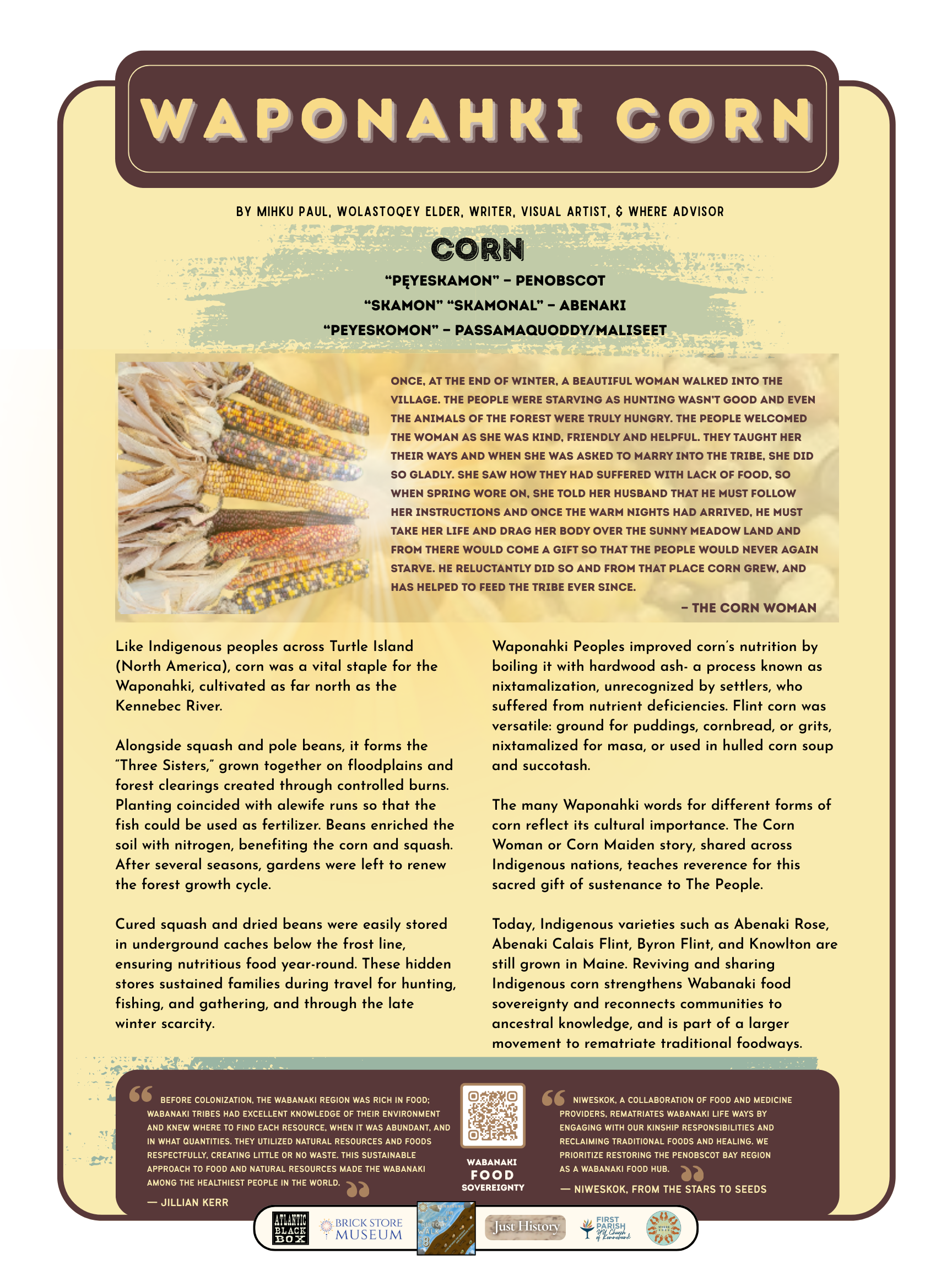
Waponahki Peoples improved corn’s nutrition by boiling it with hardwood ash- a process known as nixtamalization, unrecognized by settlers, who suffered from nutrient deficiencies. Flint corn was versatile: ground for puddings, cornbread, or grits, nixtamalized for masa, or used in hulled corn soup and succotash.
The many Waponahki words for different forms of corn reflect its cultural importance. The Corn Woman or Corn Maiden story, shared across Indigenous nations, teaches reverence for this sacred gift of sustenance to The People.
Today, Indigenous varieties such as Abenaki Rose, Abenaki Calais Flint, Byron Flint, and Knowlton are still grown in Maine. Reviving and sharing Indigenous corn strengthens Wabanaki food sovereignty and reconnects communities to ancestral knowledge, and is part of a larger movement to rematriate traditional foodways.
The Corn Woman
“Once, at the end of Winter, a beautiful woman walked into the village. The people were starving as hunting wasn’t good and even the animals of the forest were truly hungry. The People welcomed the woman as she was kind, friendly and helpful. They taught her their ways and when she was asked to marry into the tribe, she did so gladly. She saw how they had suffered with lack of food, so when Spring wore on, she told her husband that he must follow her instructions and once the warm nights had arrived, he must take her life and drag her body over the sunny meadow land and from there would come a gift so that The People would never again starve. He reluctantly did so and from that place corn grew, and has helped to feed the tribe ever since.”
Additional Resources
This research was compiled as part of the Just History Walk: Lives Between Two Rivers, which took place in Kennebunk on November 8, 2025. For more information about this walk, click here. For more research related to this area, click on the tags below. To download a hi-res version of the poster below for educational use, please contact where@atlanticblackbox.com.
Poster design by Meadow Dibble